


TLDR
- The CLARITY Act could define SEC and CFTC roles across United States digital asset markets.
- Altcoins may gain clearer classification rules if they meet network and decentralization standards.
- Exchanges could receive clearer registration, disclosure and listing rules for United States crypto trading.
- DeFi developers are watching protections for non-custodial protocols and open-source blockchain infrastructure.
- The bill faces timing risks as Senate negotiations approach the August recess and midterms.
The Digital Asset Market Clarity Act is moving closer to a possible Senate floor vote after clearing the Senate Banking Committee in May. The bill is viewed as the most advanced attempt to create a comprehensive United States crypto market structure law.
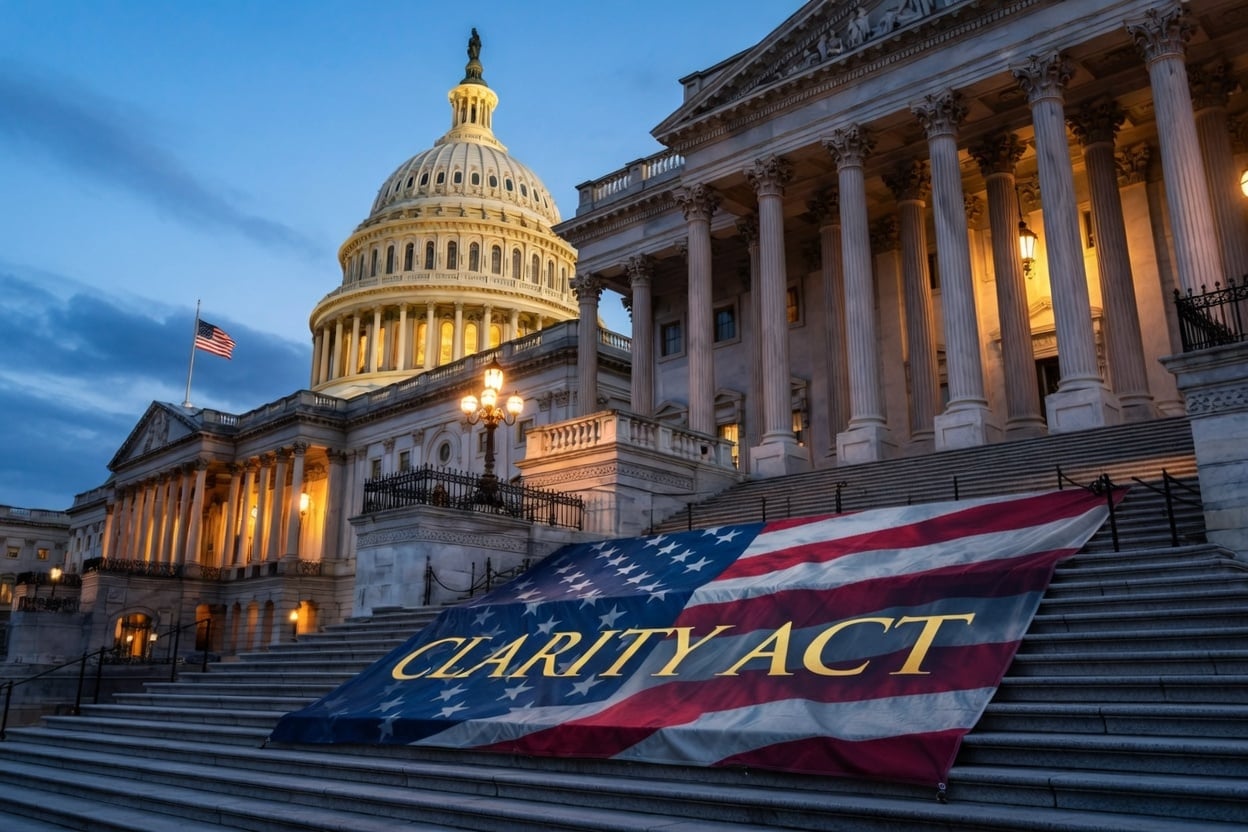
The CLARITY Act is close: what happens if crypto’s biggest US bill passes is now a central question for exchanges, token issuers, DeFi developers and financial institutions. The proposal would define clearer roles for the SEC, the CFTC and banking regulators.
Senate Banking Chair Tim Scott said the bill would bring digital assets into a clearer regulatory framework with stronger safeguards and tools to address misconduct. Supporters say the legislation would replace enforcement-driven oversight with rules written for crypto markets.
Token Classification Could Change
The bill aims to clarify whether a digital asset should be treated as a security or a commodity. The SEC would retain authority over assets that resemble investment contracts, while the CFTC would oversee digital commodities and related spot markets.
Bitcoin is already widely treated as a commodity, while Ether has gained broader acceptance as a commodity-like asset. Many altcoins remain in a gray area because they are linked to active teams, foundations or developing networks.
Under the CLARITY Act, some network tokens could fall outside securities rules if they meet decentralization and functional standards. Tokens tied to active management teams or investor profit rights could still remain under securities oversight.

DeFi and Exchanges Watch Closely
Crypto exchanges could receive clearer rules for registration, listings and disclosures if the bill becomes law. That could make it easier for regulated platforms to serve United States users and institutions.
The latest draft also includes protections for some non-custodial developers and decentralized protocols. Those provisions are being watched by DeFi teams, wallet developers and open-source software projects.
Banking regulators would continue to oversee crypto links to traditional finance, including stablecoins and custody. This structure could help banks evaluate whether to build tokenized settlement, custody and on-chain financial products in the United States.
Political Window Remains Uncertain
The bill still faces Senate floor negotiations, disputes over ethics provisions and debate over DeFi protections. Timing remains a major concern because the August recess and midterm season could narrow the legislative window.
JPMorgan analysts have said passage could act as a positive catalyst for crypto markets in the second half of the year. Galaxy Digital researchers reportedly lowered the odds of passage before year-end to about 60% from 75%.
TD Cowen’s Jaret Seiberg said the political environment has weakened for the bill, while Senator Cynthia Lummis warned that failure this year could delay market structure legislation until at least 2030. The next Senate steps will determine whether the CLARITY Act becomes the first major US crypto market structure law.
Get 3 Free Stock Ebooks
Discover top-performing stocks in AI, Crypto, and Technology with expert analysis.
- Top 10 AI Stocks - Leading AI companies
- Top 10 Crypto Stocks - Blockchain leaders
- Top 10 Tech Stocks - Tech giants



