



Key Takeaways
- Military strikes between Israel and Iran ended a ceasefire maintained since April
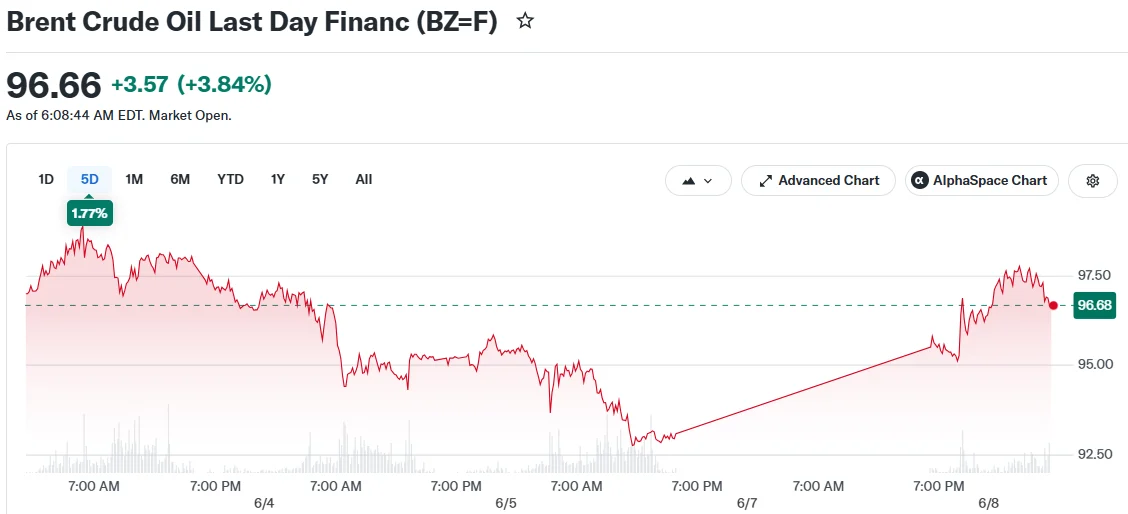
- Brent crude prices surged more than 5% to approach $98 per barrel on Monday
- Critical Strait of Hormuz waterway remains significantly restricted, constraining worldwide energy distribution
- Despite Trump’s appeals for restraint, diplomatic negotiations continue to falter
- OPEC+ announced July production increases, though market analysts view the decision as mostly ceremonial
Monday witnessed a dramatic escalation in Middle Eastern tensions as Israel and Iran conducted reciprocal missile and drone operations, effectively terminating a ceasefire agreement that had held since April. The military confrontation triggered immediate upheaval in global energy markets as investors recalibrated risk assessments.
Brent crude futures experienced a sharp rally exceeding 5%, pushing prices toward the $98 per barrel threshold during morning sessions. West Texas Intermediate followed a parallel trajectory, advancing to approximately $94.59 per barrel. Year-to-date gains for both benchmarks now exceed 60%.
The military actions proceeded despite direct entreaties from US President Donald Trump, who called upon Israeli Prime Minister Benjamin Netanyahu and Iranian leadership to exercise restraint. Trump utilized his Truth Social platform to demand an immediate cessation of hostilities.
Israeli military officials confirmed strikes against Iranian military installations, characterizing the operations as proportional responses to prior Tehran-launched missile attacks. The Israeli Defense Forces indicated the military campaign might extend across multiple days, with possible activation of reserve personnel.
In remarks to the Financial Times, Trump asserted his authority over negotiations. “I call the shots. I call all the shots,” he declared regarding prospective US-Iran diplomatic arrangements.
Strategic Hormuz Waterway Creates Global Energy Bottleneck
The persistent near-blockade of the Strait of Hormuz continues generating significant disruptions to international petroleum, refined products, and liquefied natural gas shipments. This narrow passage serves as the primary conduit for Persian Gulf energy commodity exports.

US Central Command reported intercepting two Iranian unmanned aerial vehicles that posed threats to commercial maritime operations in Hormuz waters during the previous weekend. Additionally, six ballistic missiles targeting Bahrain and Kuwait on Friday were successfully neutralized.
Yemeni Houthi forces announced comprehensive restrictions on Israeli-affiliated maritime traffic through Red Sea corridors. Industry observers noted the immediate shipping impact remained contained, as numerous vessels had already rerouted away from the contested region.
European natural gas quotations also advanced Monday. The continent currently operates in its peak summer storage accumulation period, making liquefied natural gas export interruptions particularly problematic.
At conflict peak levels, Brent crude touched approximately $130 per barrel. While Oil remained beneath the $100 threshold Monday, market analysts cautioned circumstances could deteriorate rapidly.
Saxo Bank’s Ole Hansen characterized lasting peace arrangements as “increasingly elusive.” He noted energy market participants anticipate sustained elevated pricing environments.
OPEC+ Production Expansion Viewed as Largely Ceremonial
OPEC+ members reached consensus Sunday to implement additional July production increases, representing the fourth consecutive monthly output expansion. Market specialists contend the adjustment carries minimal practical significance while Hormuz transit disruptions persist.
Saudi Arabia simultaneously reduced pricing for its benchmark crude grade supplied to Asian customers by $6 per barrel. The adjustment reflected diminished Chinese crude demand stemming from reduced refinery utilization rates.
Even assuming successful diplomatic resolution, energy flow normalization would require substantial time. Hormuz waterway mine clearance operations, infrastructure rehabilitation projects, and idled production field restarts could extend across months.
Trump administration officials continue developing a memorandum of understanding framework with Iran addressing Hormuz reopening. Negotiations remain deadlocked over Tehran’s nuclear development activities and Iranian demands for access to internationally frozen financial assets.
The recently announced Israel-Lebanon cessation of hostilities encountered immediate complications, with Hezbollah rejecting proposed ceasefire conditions. Military engagements between Israeli forces and Hezbollah units persisted throughout the weekend period.
Get 3 Free Stock Ebooks
Discover top-performing stocks in AI, Crypto, and Technology with expert analysis.
- Top 10 AI Stocks - Leading AI companies
- Top 10 Crypto Stocks - Blockchain leaders
- Top 10 Tech Stocks - Tech giants



