


Key Takeaways
- SpaceX plans to complete its IPO this week, seeking to generate $75 billion at a $1.75 trillion market cap — making it the biggest public offering ever recorded
- The Starlink division boasts more than 10 million users with Ebitda margins exceeding 60%; Baron Capital forecasts 300 million subscribers by 2036
- The company has secured agreements with Anthropic and Alphabet to provide computing infrastructure worth approximately $26 billion annually
- A majority of investment experts polled indicated they would avoid purchasing shares immediately, pointing to volatility concerns and lack of profitability
- Corporate governance raises red flags — Elon Musk maintains complete control over voting shares and board composition
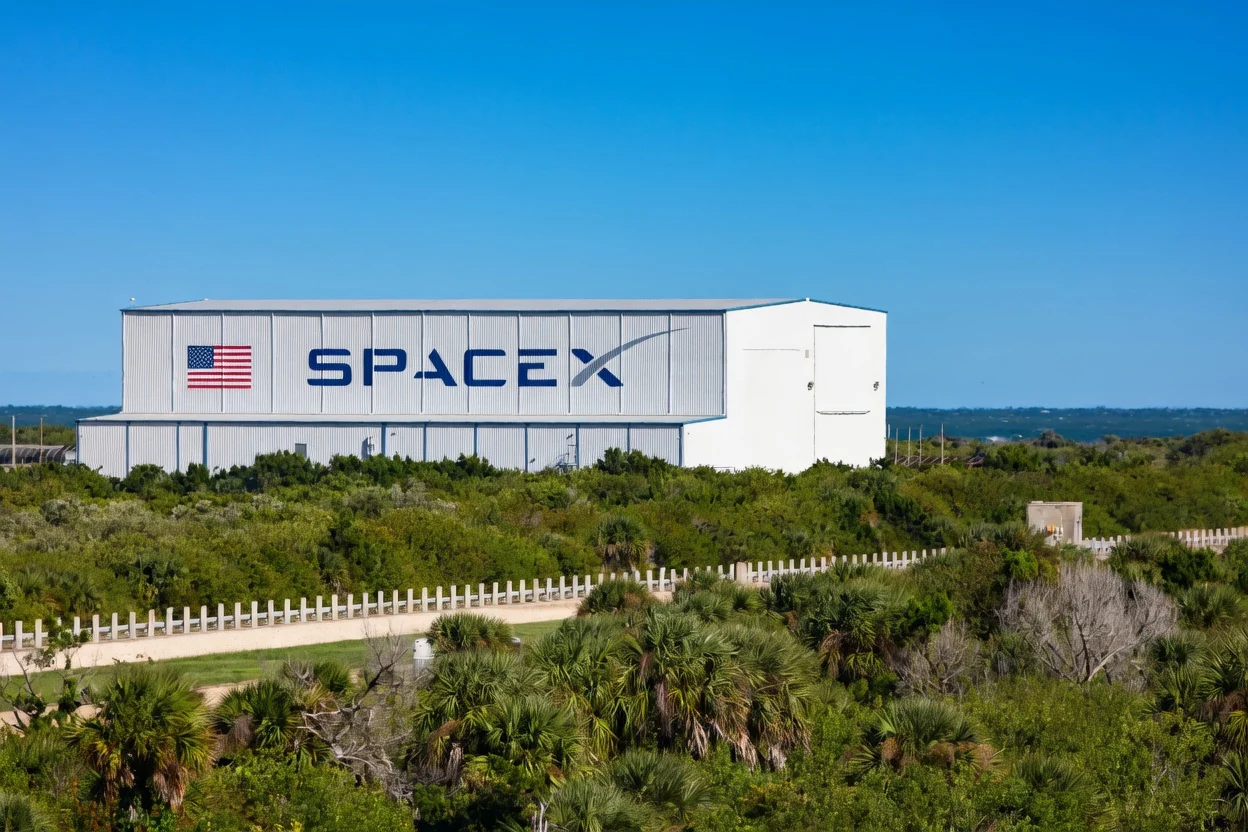
SpaceX plans to finalize its initial public offering pricing within days. The aerospace manufacturer seeks to generate $75 billion in capital, establishing a market capitalization of $1.75 trillion. This would establish a new record for the largest public debut in market history.
The upcoming listing has created divergent perspectives throughout the investment community. While some view it as an exceptional opportunity, the majority counsel patience.
Arguments Supporting the Investment
The primary expansion narrative revolves around Starlink, SpaceX’s satellite-powered internet platform. The service currently serves over 10 million paying customers while delivering Ebitda profitability margins surpassing 60%.
Ron Baron of Baron Capital anticipates Starlink will reach 15 million subscribers by the conclusion of 2026 and expand to 300 million by 2036. These projections suggest potential annual revenues of $500 billion and Ebitda of $300 billion by the middle of the next decade.
The company has additionally entered the artificial intelligence infrastructure sector. Recent partnerships with Anthropic and Alphabet involve leasing computational resources for approximately $26 billion yearly. According to ARK Invest’s calculations, this generates roughly $52 billion in SpaceX revenue.
Elon Musk has publicly outlined ambitions to expand AI computing capabilities by a factor of 100. Using existing rate structures, this expansion would yield $2.6 trillion in theoretical AI infrastructure revenue.

Supporting these ventures is SpaceX’s dominance in orbital launch services and the ongoing Starship program, featuring complete reusability for heavy payload missions. Once fully operational, Starship could drive orbital access costs down from thousands of dollars per kilogram to merely hundreds.
Arguments Against the Investment
The primary skepticism centers on the fact that these numbers represent distant forecasts rather than current performance. Starship remains in development. The proposed AI satellite network lacks operational validation at commercial scale.
Professor Robert Johnson of finance cautioned that the company’s valuation “assumes all of its growth projections play out perfectly.” He advised typical investors to avoid participation.
Andy VandenBerg referenced Truist research demonstrating that prominent technology IPOs experience an average maximum decline of 55% during their initial twelve months. He suggested investors will likely find superior entry opportunities later.
Keith Fitz-Gerald cautioned that individual investors are “not prepared” for the institutional trading dynamics that typically accompany high-visibility public listings.
Mike Serio highlighted Meta as an example, noting it failed to exceed S&P 500 returns until over a decade following its initial public offering.
Governance Structure and Control
Corporate governance represents a point of universal concern. The company’s organizational framework provides Musk with absolute authority over voting equity and board membership. Yumi Narita from the New York City Comptroller’s Office characterized the structure as “unprecedentedly bad.”
Lockup provisions also deviate from conventional IPO standards. Rather than implementing a uniform 180-day restriction expiration, SpaceX employs staggered lockups partially connected to equity performance metrics.
Barron’s analysis concluded SpaceX represents superior value at $90 per share compared to the anticipated IPO pricing of $135.
Among eight investment professionals surveyed by Business Insider, six indicated they would decline to purchase shares on the initial trading day.
Get 3 Free Stock Ebooks
Discover top-performing stocks in AI, Crypto, and Technology with expert analysis.
- Top 10 AI Stocks - Leading AI companies
- Top 10 Crypto Stocks - Blockchain leaders
- Top 10 Tech Stocks - Tech giants



