



Key Highlights
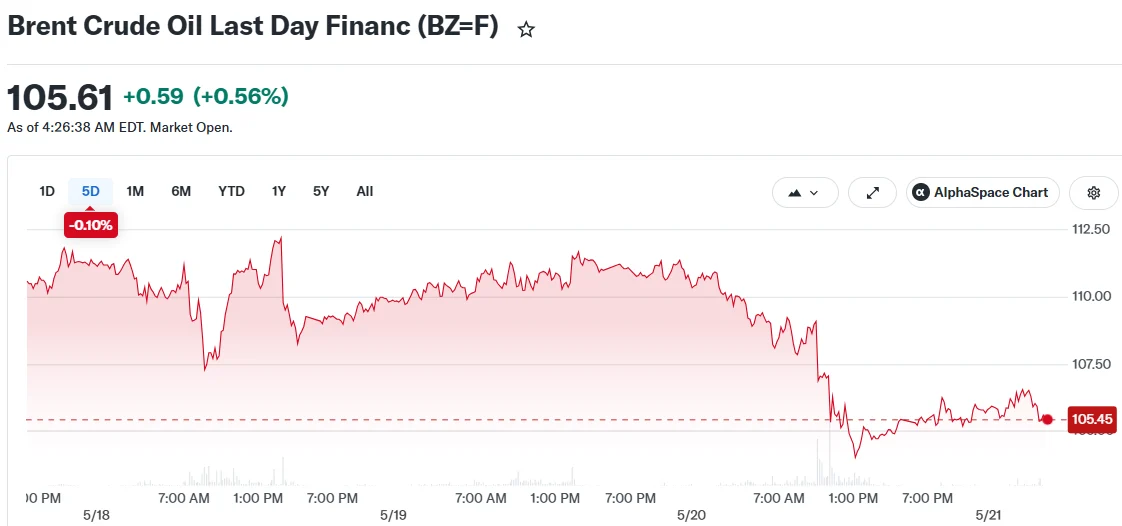
- Crude prices gained Thursday following Wednesday’s sharp 5.6% decline
- President Trump indicated US-Iran negotiations are in “final stages” while cautioning about possible military action
- Tehran established a new “Persian Gulf Strait Authority” to oversee Hormuz shipping
- Weekly US crude stockpiles dropped 7.9 million barrels, far exceeding the 2.9 million barrel forecast
- Complete Hormuz shipping normalization unlikely before late 2027
Crude markets rebounded Thursday after experiencing significant losses a day earlier, with uncertainty surrounding US-Iran diplomatic efforts maintaining volatility in energy markets.
Brent crude approached $106 per barrel following Wednesday’s 5.6% plunge. West Texas Intermediate traded above $99. The volatility reflected contradictory messages emerging from both American and Iranian officials.
President Trump informed journalists that Washington has reached the “final stages” of diplomatic discussions with Iran. However, he cautioned that military intervention remains an option should negotiations fail, describing the situation as “right on the borderline.”
The President noted he could hold off “a few days” before taking further measures.
Tehran’s Response and Hormuz Developments
Iranian officials indicated they are examining Washington’s most recent draft proposal in response to Tehran’s comprehensive 14-point peace framework. According to semi-official Iranian news sources, no official response has been issued.
Tehran simultaneously cautioned that additional American or Israeli military operations would prompt counterattacks extending beyond Middle Eastern borders.

Iran this week inaugurated a new “Persian Gulf Strait Authority” designed to regulate commercial vessel passage through the Strait of Hormuz. Previously, the nation had announced intentions to implement toll charges on ships traversing the strategic waterway.
The strait continues to experience severely restricted traffic. Although two Chinese oil tankers successfully navigated the passage Wednesday, overall shipping volume remains dramatically below historical norms.
The Strait of Hormuz facilitates approximately 20% of worldwide petroleum supply. Abu Dhabi National Oil CEO Sultan Al Jaber stated Wednesday that even with immediate conflict resolution, Middle Eastern crude flows would not achieve complete normalization until late 2027 or beyond. He characterized the blockage as the most severe supply interruption in recorded history.
Sharp Decline in US Crude Stockpiles
Government data published Wednesday revealed a substantial decrease in American crude reserves. Inventories declined 7.9 million barrels during the week concluded May 15, significantly surpassing analyst expectations of a 2.9 million barrel reduction.
The substantial draw resulted from elevated US petroleum exports as Washington increased crude shipments to nations seeking alternatives to Middle Eastern supplies.oil p
Gasoline stockpiles decreased 1.5 million barrels, below the anticipated 2.1 million barrel withdrawal. The smaller-than-expected decline prompted questions regarding weakening fuel consumption as retail gasoline prices escalate.
Goldman Sachs reported that global inventories of crude oil and refined products are declining at unprecedented rates throughout the current month.
Rabobank analysts emphasized that even successful peace negotiations would not provide instant market relief. “It takes up to 55 days to get oil from the Persian Gulf to its destination,” explained Joe DeLaura, global energy strategist at Rabobank.
Oil prices remain elevated more than 40% compared to levels before the conflict commenced in late February.
Three massive oil tankers made attempts to traverse the Hormuz strait recently, representing the latest indication of marginally improving traffic conditions. Iranian authorities asserted 26 vessels passed through within a 24-hour period, though maritime tracking systems suggest lower actual figures.
Get 3 Free Stock Ebooks
Discover top-performing stocks in AI, Crypto, and Technology with expert analysis.
- Top 10 AI Stocks - Leading AI companies
- Top 10 Crypto Stocks - Blockchain leaders
- Top 10 Tech Stocks - Tech giants



