



TLDR
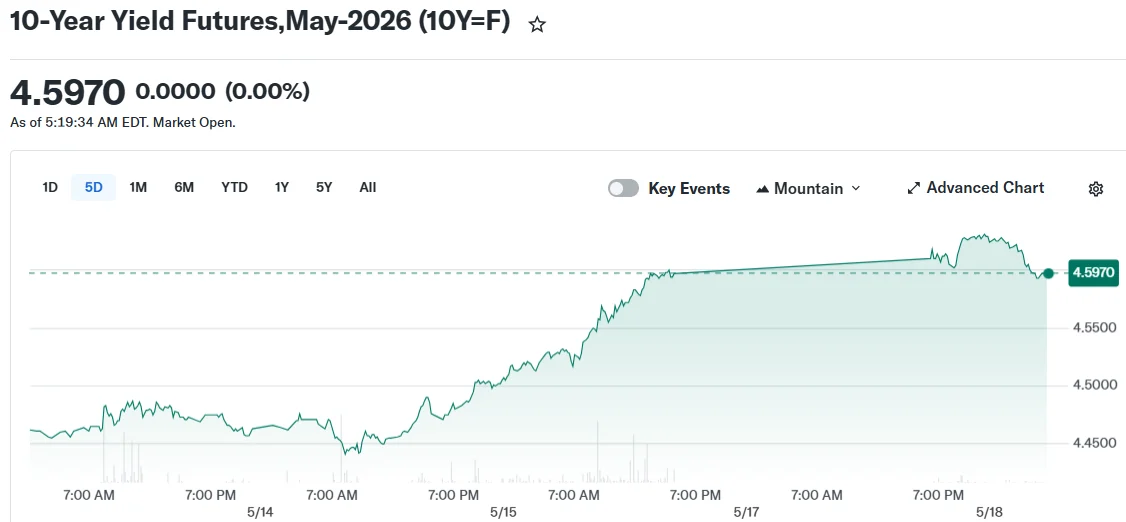
- U.S. Treasury yields surged dramatically, with the 30-year reaching 5.14% (highest in 20 years) and the 10-year climbing to 4.62% (15-month peak)
- Elevated yields threaten stock valuations, with the S&P 500’s forward P/E ratio of 21.3x significantly exceeding the historical norm of 16x
- Robust first-quarter earnings growth of 28% year-over-year continues to support equity prices
- Geopolitical tensions involving Iran and the closure of the Strait of Hormuz have propelled crude oil beyond $100 per barrel, amplifying inflation concerns
- Market experts caution that equity investors may be underestimating the threat of sustained inflationary pressures
Bond markets experienced a significant selloff on Monday, sending U.S. Treasury yields soaring to levels not seen in years. The move has prompted concerns among market participants that equity markets may be overlooking mounting inflation threats.
The benchmark 10-year Treasury yield advanced to 4.62%, marking its most elevated reading in 15 months. Meanwhile, the 30-year Treasury bond yield climbed to 5.14%, establishing a two-decade record.
The pressure extended internationally. Germany’s 10-year bund yield advanced to 3.18%, and Japan witnessed its 10-year government bond yield jump 13 basis points to reach 2.74%.
This surge in borrowing costs arrives as newly appointed Federal Reserve Chair Kevin Warsh confronts accelerating consumer price increases and elevated import expenses. The situation intensifies scrutiny on policymakers heading into an upcoming G7 finance ministers gathering in Paris.
Oil markets are compounding inflationary worries. Brent crude climbed to $111.16 per barrel on Monday, with U.S. West Texas Intermediate reaching $107.56. Prices remain heightened amid ongoing uncertainty surrounding a fragile ceasefire agreement between the United States and Iran.

Why Stocks Are Still Holding Up
Despite mounting pressure in fixed income markets, U.S. equities have demonstrated resilience. The S&P 500 has gained over 8% in 2025, despite experiencing a near 1% decline last Friday.
Corporate earnings performance provides the primary explanation. American companies reported first-quarter earnings approximately 28% above year-ago levels, representing the strongest annual growth rate since the latter part of 2021.
Jeremiah Buckley, a portfolio manager at Janus Henderson, highlighted artificial intelligence-driven productivity improvements as a crucial supporting factor. He suggested these efficiency gains might persist through 2027.
However, the S&P 500’s current valuation of 21.3 times projected earnings sits substantially above its historical average of 16x, prompting questions about the sustainability of further gains.
“Traders don’t want to turn bearish if there is a possibility that the Strait of Hormuz situation could be cleared up in just a few weeks’ time,” said Tim Murray of T. Rowe Price.
The Risks Investors Are Watching
Some investment professionals are adopting defensive positioning. Paul Karger of TwinFocus disclosed he maintains substantial allocations to cash, gold, and commodity investments alongside large-cap growth equities.
Jack Ablin of Cresset Capital warned that even a few months of delay in reopening the Strait of Hormuz could create “a brand new inflation regime for which investors just aren’t prepared.”
Producer price data showed the sharpest increase in four years during April. Peter Tuz of Chase Investment Counsel noted that inflation appears entrenched in the economic system and could trigger market declines if it continues.
Capital Economics cautioned its clients that equity valuations fail to reflect the risk of an extended Hormuz closure to the same degree that bond markets do.
Matthew Gertken of BCA suggested the Iranian crisis possesses the capacity to fundamentally alter market trajectories throughout the remainder of the year.
The landscape remains highly uncertain. With crude oil trading above $100, bond yields at multi-year extremes, and the Iran ceasefire remaining precarious, financial markets confront a potentially volatile period in the weeks ahead.
Get 3 Free Stock Ebooks
Discover top-performing stocks in AI, Crypto, and Technology with expert analysis.
- Top 10 AI Stocks - Leading AI companies
- Top 10 Crypto Stocks - Blockchain leaders
- Top 10 Tech Stocks - Tech giants



