


TLDR
- United Arab Emirates departing OPEC this Friday, enabling production expansion beyond cartel restrictions
- Trump administration planning extended Iranian port blockade strategy
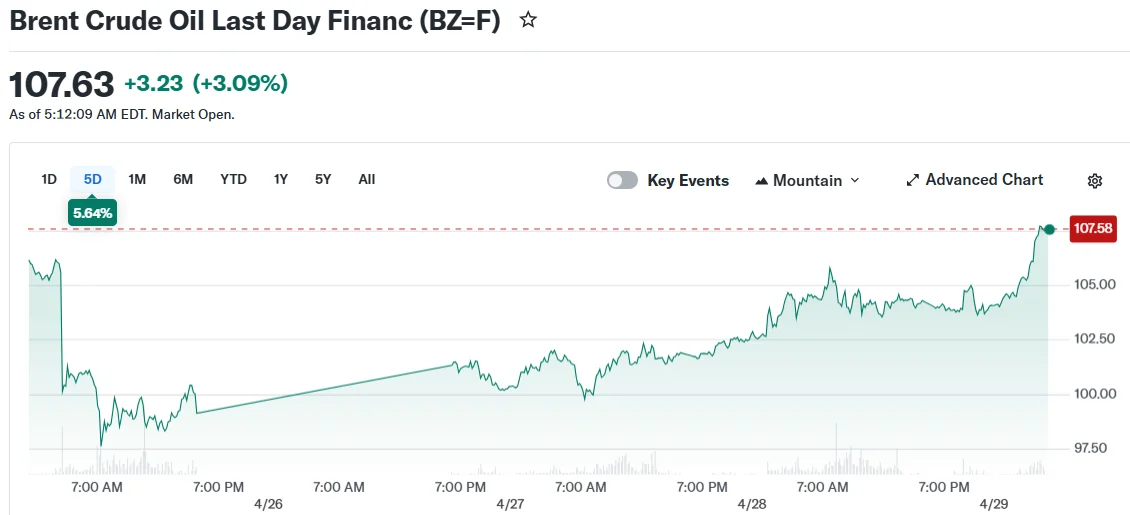
- Brent crude surged 3.3% reaching $114.93 per barrel; WTI climbed 3.8% to $103.65 per barrel
- Diplomatic negotiations between Washington and Tehran remain deadlocked, Strait of Hormuz closure continues
- Approximately 20% of global oil supply transits through Hormuz Strait, maintaining supply anxiety
Energy markets experienced significant volatility Wednesday following two pivotal announcements: the United Arab Emirates declared its withdrawal from OPEC, while intelligence suggested the Trump administration is organizing a sustained Iranian blockade.
Brent crude futures, serving as the international pricing standard, advanced 3.3% to settle at $114.93 per barrel. Meanwhile, U.S. West Texas Intermediate futures increased 3.8% to reach $103.65 per barrel.
The Emiratis announced their OPEC departure takes effect Friday, stating the decision allows greater pursuit of “national interests.” Historical tensions between the UAE and OPEC regarding production ceilings suggest the nation will likely expand output once freed from cartel obligations.
This withdrawal creates friction with Saudi Arabia, OPEC’s primary power broker, during a period when the organization faces mounting pressure from the continuing Iran conflict and widespread supply chain disruptions.
Nevertheless, any UAE production expansion will remain constrained until the Strait of Hormuz resumes operations. This critical waterway along Iran’s southern coastline handles approximately 20% of global petroleum shipments and currently experiences virtually no commercial traffic.

Blockade Strategy Elevates Market Concerns
The Wall Street Journal disclosed Tuesday that Trump has instructed advisors to develop contingency plans for an extended Iranian port blockade. This strategic initiative aims to severely restrict Iran’s petroleum exports while compelling Tehran toward diplomatic concessions.
Trump has additionally dismissed an Iranian counterproposal to restore Strait access and terminate hostilities. The administration insists upon more stringent nuclear program constraints before entertaining any settlement.
Tehran maintains that blockade removal must precede substantive diplomatic engagement. Despite Trump’s indefinite ceasefire extension with Iran announced last week, attempts to facilitate bilateral negotiations have proven unsuccessful.
ANZ market analysts noted that diplomatic impasse heightens prospects for indefinite Persian Gulf supply disruption. They emphasized that market normalization following eventual Strait reopening “will require years.”
What Analysts Are Saying
Several market observers interpret the UAE’s departure as reflecting fundamental shifts in oil markets. Julius Baer analyst Norbert Rücker identified the genuine challenge confronting petroleum producers as intensifying competition from American shale operations, South American offshore drilling, and expanding Chinese hybrid vehicle adoption. His long-term price projection centers around the upper $60s per barrel.
Capital Economics analysts propose the UAE’s actions may indicate strengthening alignment with American and Israeli interests. The Emirates signed the Abraham Accords early and has committed substantial AI sector investments in America.
Recently, the UAE initiated discussions with Washington regarding potential currency swap arrangements, expressing concern over economic ramifications from the Iran conflict.
Market participants now await developments in peace negotiations and this week’s U.S. crude inventory data for insight into stockpile depletion rates.
Get 3 Free Stock Ebooks
Discover top-performing stocks in AI, Crypto, and Technology with expert analysis.
- Top 10 AI Stocks - Leading AI companies
- Top 10 Crypto Stocks - Blockchain leaders
- Top 10 Tech Stocks - Tech giants



