


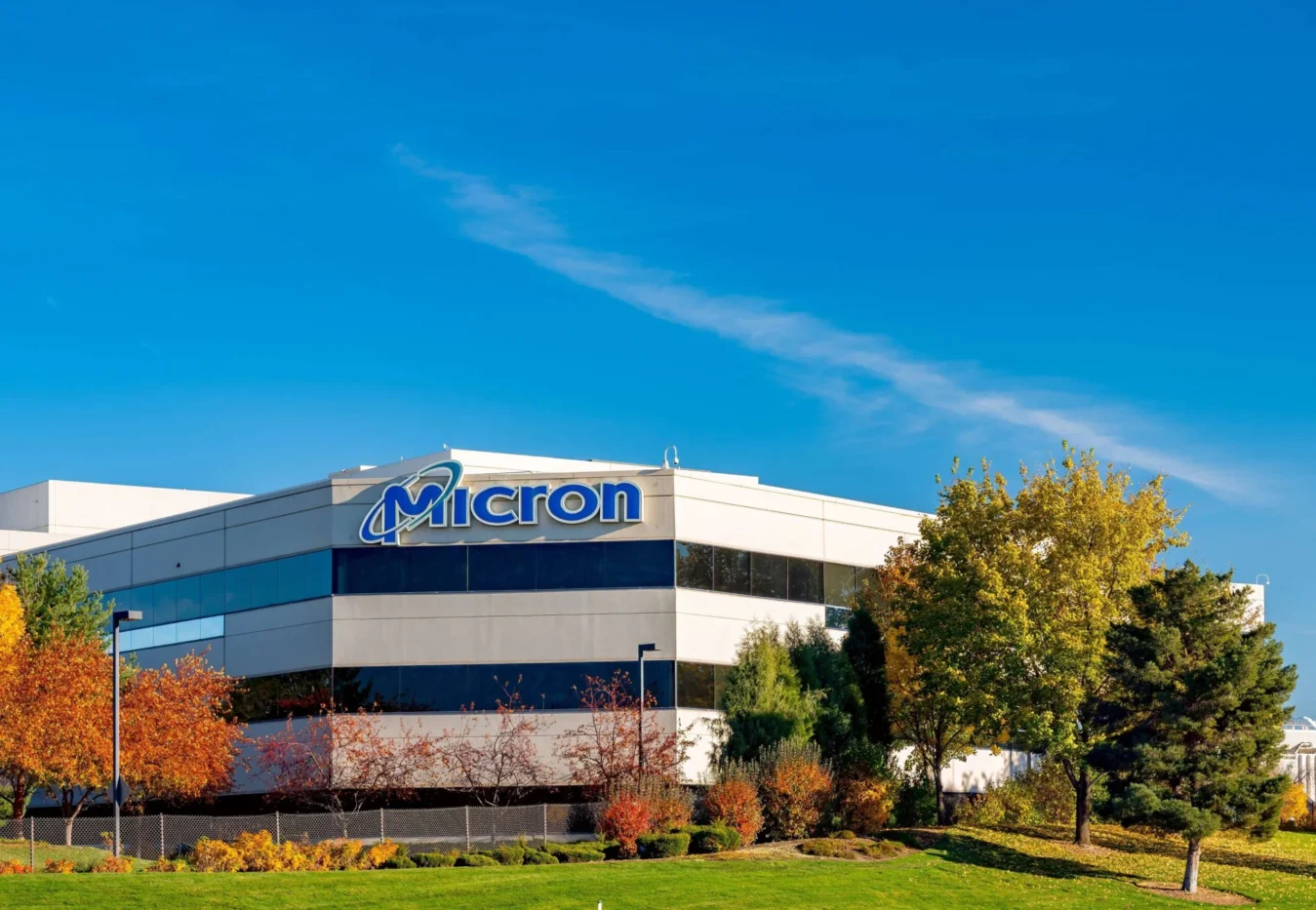
Key Highlights
- DA Davidson launched coverage on Micron (MU) with a Buy recommendation and unprecedented $1,000 price objective
- Analysts believe artificial intelligence is generating an extended memory cycle with sustainably elevated demand levels
- The ambitious $1,000 projection represents approximately 90% potential gain from Micron’s recent $524 close
- TD Cowen elevated its forecast to $660, emphasizing sustained demand strength over short-term earnings growth
- Melius Research launched coverage with Buy rating and $700 objective, projecting AI memory expansion through decade’s end
On Tuesday, DA Davidson launched coverage on Micron (MU) with a Buy recommendation alongside a $1,000 price objective — establishing the most optimistic target across Wall Street by a substantial margin.
This projection surpasses the prior peak of $700, established merely 24 hours earlier by Melius Research, representing approximately 90% potential appreciation from Micron’s most recent $524 closing price.
Analyst Gil Luria presented the argument that artificial intelligence has fundamentally disrupted conventional memory market patterns. Traditionally, memory sectors have exhibited cyclical behavior — production capacity expands excessively, profit margins contract, and consumer demand weakens. Luria contends this pattern no longer holds.
“We believe artificial intelligence is creating a longer-than-usual memory cycle as compute deployment and demand generation exist in a positive feedback loop, creating a structurally higher ceiling for memory pricing and demand,” he wrote.
Simply stated: every successive generation of AI computing infrastructure doesn’t merely satisfy existing requirements — it generates additional demand. This represents a fundamentally different framework compared to previous cycles.

Production Leadership and Contract Advantages
Luria additionally emphasized Micron’s manufacturing capabilities. The corporation has achieved four straight generations of technological advancement leadership in DRAM and three in NAND, which he suggests accumulates advantages over time through reduced production costs and enhanced market competitiveness.
He further noted extended supply contracts as a competitive advantage. These long-duration agreements provide Micron with enhanced demand forecasting and a measure of price consistency historically uncommon in the memory sector.
“The market is still framing the cycle through the lens of prior downturns, which appears to underestimate the demand environment,” Luria wrote.
The $1,000 forecast significantly exceeds the 12-month Street consensus. According to 30 analyst evaluations compiled by TipRanks during the preceding three months, the mean price objective for MU registers at $574.67 — suggesting roughly 9.55% appreciation potential from present levels.
Broader Analyst Optimism Emerges
DA Davidson represents just one voice in a growing chorus of optimism toward Micron this week.
TD Cowen analyst Krish Sankar increased his price objective to $660 from $550 on April 28, maintaining a Buy recommendation. His perspective differed slightly — he indicated the “next leg for the stock is more about durability than earnings upside.”
Sankar perceives limited opportunity for his 2027 EPS projection of $110 to expand further. However, he maintains the stock can continue advancing provided demand indicators validate the sustainability argument.
Melius Research, separately, launched coverage on April 27 with a Buy rating and $700 objective. The research firm positions memory manufacturers as critical to its AI investment thesis, contending they occupy the convergence point of AI chip production, infrastructure hardware, and cloud computing giants.
Melius additionally suggested the market could ultimately grant higher valuation multiples to memory companies considering the “unusual durability of the margin and demand profiles” that artificial intelligence generates across HBM, DRAM, and NAND technologies. The firm simultaneously initiated coverage on SanDisk with a Buy rating.
Micron has delivered year-to-date returns of 66.3% through April 27.
Get 3 Free Stock Ebooks
Discover top-performing stocks in AI, Crypto, and Technology with expert analysis.
- Top 10 AI Stocks - Leading AI companies
- Top 10 Crypto Stocks - Blockchain leaders
- Top 10 Tech Stocks - Tech giants



