



TLDR
- Solana traded at $84.15 while exchange net position change rose to 1,321,484 SOL.
- Kamino Prime Market USDC reserve reached 100% utilization with no liquidity left.
- Several Solana USDC vaults moved above 95% utilization during market stress.
- Long-term holders added about 487,000 SOL between April 16 and April 19.
- SOL support stood at $82.93 while resistance remained at $85.42 and $90.79.
Solana tried to stabilize near key support, but DeFi stress added fresh pressure to the market. On-chain data showed that 1.32 million SOL moved to exchanges in four days, while Solana lending markets faced sharp USDC demand after the KelpDAO rsETH hack.
Solana Tries to Rebound but Selling Pressure Builds
Solana traded at $84.15 on the 12-hour chart after bouncing from support at $82.93. The move followed a brief recovery attempt after a sharp pullback from $90.79 on April 17.
Trading data showed a “hidden bullish divergence” between April 15 and April 19. During that period, price made a higher low, while the Relative Strength Index made a lower low. That pattern can point to fading downside momentum.
Even so, the rebound faced resistance from rising sell volume. The chart suggested that sellers continued to use each bounce to reduce exposure. That kept upside moves small and capped price recovery.
The first level above current price stood at $85.42. Above that, resistance remained at $90.79, which was the recent swing high. On the downside, a move below $82.93 could weaken the rebound setup.
Kamino USDC Markets Tighten After DeFi Outflow Spreads
The pressure on Solana came as DeFi stress spread from Ethereum-linked markets to Solana. After the KelpDAO rsETH hack, several USDC pools on Kamino saw utilization rise quickly.

Kamino’s Prime Market USDC reserve, valued at about $178 million, reached 100% utilization. Available liquidity fell to zero, according to the market data cited in the report. Other vaults, including Steakhouse USDC Vault and RockawayX RWA USDC, also moved above 95%.
That tightening raised concerns about available stablecoin liquidity on Solana. When USDC becomes harder to access in lending markets, traders and funds may need to sell other assets to meet cash needs. In this case, SOL appeared to be one of those assets.
The report said the market structure matched a “forced-selling thesis.” It noted that DeFi users with blocked or limited USDC access may have sold SOL on spot markets. That would help explain why sell-side volume rose during rebound attempts.
Exchange Inflows Rise as Long-Term Holders Absorb Supply
On-chain data added support to that reading. SOL Exchange Net Position Change rose from 109,932 SOL on April 15 to 1,321,484 SOL on April 19. That marked a 1,102% increase in four days.
A rise in exchange balances often means more coins are available for sale. That does not confirm immediate selling, but it can show that traders are preparing to move funds. In this case, the timing aligned with tighter USDC liquidity on Solana.
At the same time, long-term holders moved in the other direction. SOL Hodler Net Position Change rose from 2,434,566 SOL on April 16 to 2,921,661 SOL on April 19. That meant older wallets added roughly 487,000 SOL in three days.
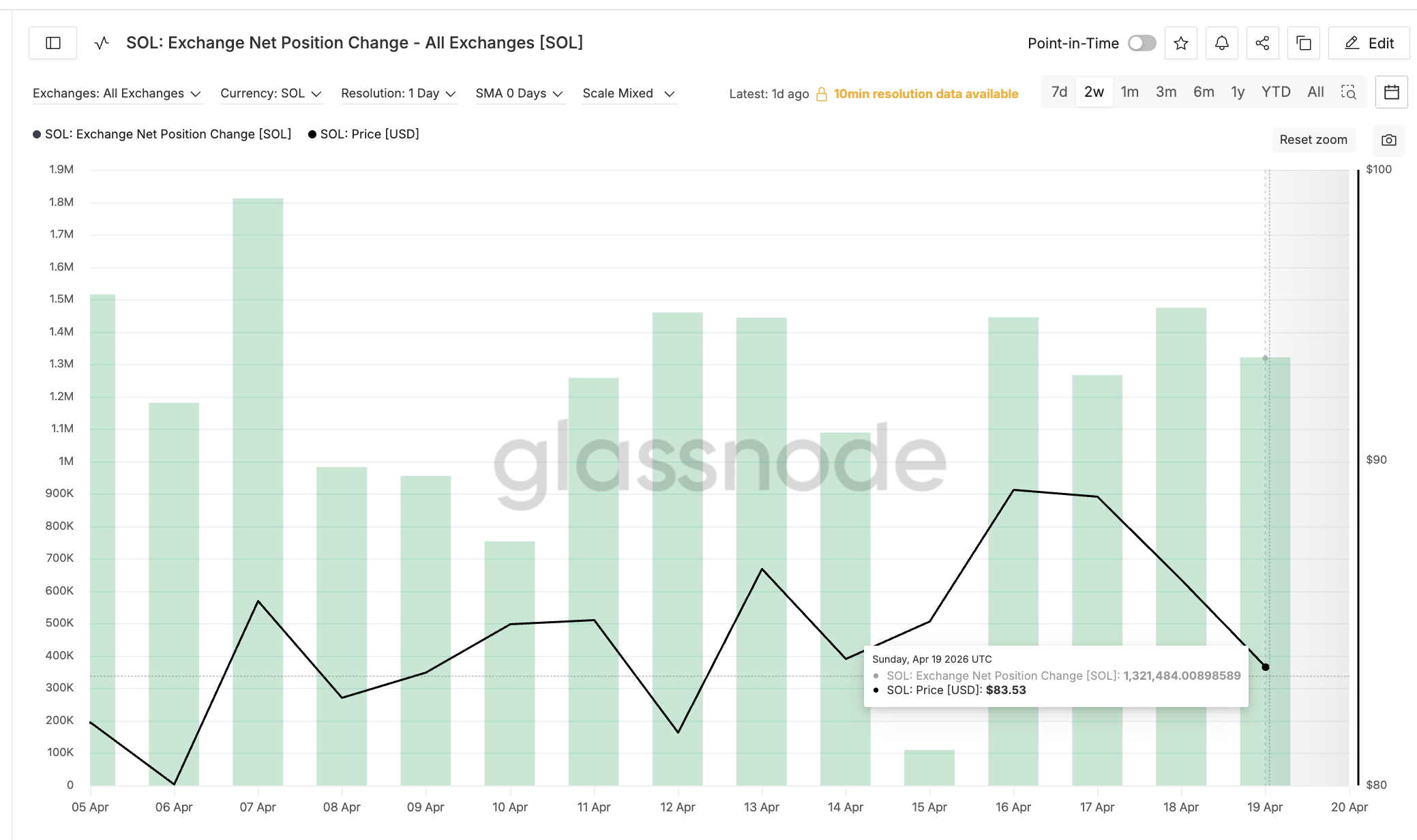
This split shaped the near-term outlook for Solana. Exchange inflows pointed to active selling pressure, while long-term accumulation helped absorb supply. As a result, Solana held above key support, but it did not show a clean breakout.
For now, $82.93 remains the key support level. If that breaks, the next downside levels stand at $82.11, $79.95, and $76.74. If buyers push SOL above $85.42 and then reclaim $90.79, the rebound may gain more strength.
Get 3 Free Stock Ebooks
Discover top-performing stocks in AI, Crypto, and Technology with expert analysis.
- Top 10 AI Stocks - Leading AI companies
- Top 10 Crypto Stocks - Blockchain leaders
- Top 10 Tech Stocks - Tech giants



