


TLDR
- Bullion declined almost 2% following weekend incidents at the Strait of Hormuz
- A US Navy operation targeting an Iranian vessel escalated tensions, with mutual ceasefire violation accusations
- Crude oil jumped as much as 7%, triggering renewed inflation concerns that pressured gold
- The greenback strengthened by 0.2%, creating additional headwinds for dollar-denominated commodities
- Bullion has shed approximately 9% since late February when the Iran conflict escalated
Precious metals experienced significant selling pressure Monday as escalating tensions near the Strait of Hormuz created market volatility and fueled an energy price rally, sending bullion down nearly 2% during its deepest intraday decline.
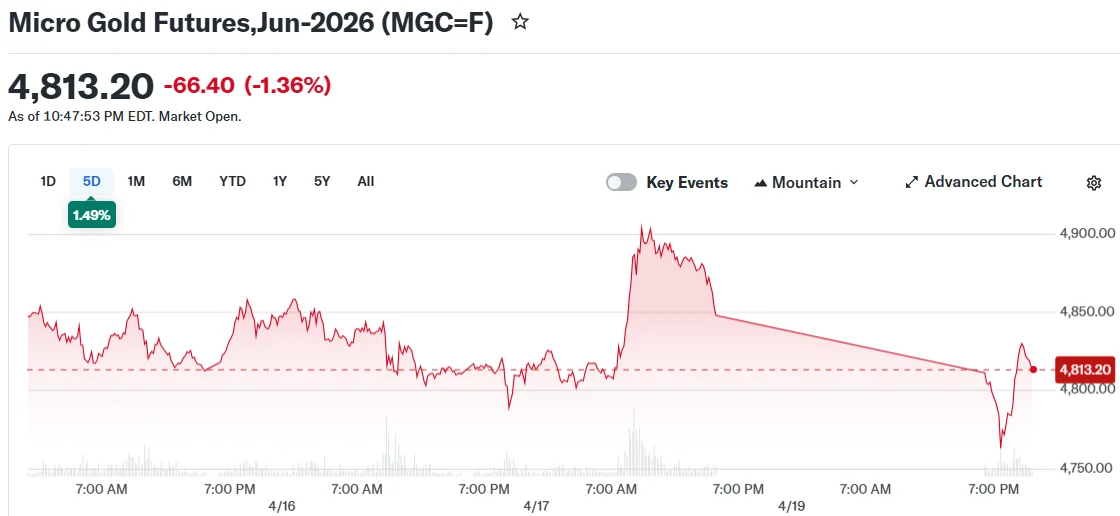
Spot gold retreated 0.9% to settle at $4,786 per ounce during Asian market hours. Gold futures contracts slipped 1.5% to reach $4,804 per ounce. While both commodities bounced modestly from session troughs, they continued facing downward momentum.
President Donald Trump disclosed over the weekend that US Naval forces engaged and captured an Iranian commercial vessel attempting to circumvent a maritime blockade. Tehran responded by declaring that any vessels approaching the Strait of Hormuz corridor would constitute breaches of the ceasefire agreement.
Multiple ships were compelled to reverse course from the critical maritime passage mere hours after Iran announced the waterway had reopened on Friday. This sudden policy reversal intensified skepticism regarding prospects for lasting peace.
The two-week ceasefire agreement reaches its conclusion on Tuesday. While Trump indicated optimism for a potential diplomatic resolution, he simultaneously repeated warnings about striking Iranian critical infrastructure. Iranian officials countered that meaningful dialogue appeared unlikely in the near term.

Diplomatic discussions were scheduled to convene in Islamabad, though Iranian state media indicated Tehran had made no commitment to participate in subsequent negotiating sessions.
Oil and the Dollar Add Pressure
Oil prices rocketed upward by as much as 7% Monday after experiencing declines in the prior trading session. Natural gas commodities also posted gains. The dramatic spike in energy costs rekindled anxieties about inflation pressures stemming from the persistent supply disruption.
A strengthening dollar compounded difficulties for gold. The Bloomberg Dollar Spot Index advanced 0.2%, making bullion more costly for international buyers transacting in alternative currencies.
Gold has now surrendered roughly 9% of its value since hostilities with Iran intensified in late February. The military confrontation has triggered an energy supply crisis that elevated inflation and diminished expectations for central bank rate reductions, thereby eroding demand for non-interest-bearing assets such as gold.
Fed Watch and Rate Outlook
Market participants are closely monitoring the US Senate confirmation proceedings for Kevin Warsh, Trump’s nominee for Federal Reserve chair, slated for Tuesday.
Analysts suggest that any indication Warsh supports accommodative monetary policy could bolster gold valuations. Conversely, a more hawkish position on inflation management might accelerate price declines.
Strategists at OCBC indicated they anticipate gold’s trajectory will remain dependent on overall risk appetite and the evolution of ceasefire negotiations. They advised accumulating positions during price pullbacks rather than pursuing momentum, projecting a near-term trading band between $4,700 and $4,900 per ounce.
Lorenzo Portelli, head of cross asset strategy at Amundi, suggested the inflationary consequences from the energy price shock will prove transitory rather than persistent.
Silver declined 1.5% to $79.62 per ounce. Silver had outpaced gold during the preceding week following an industry assessment highlighting an intensifying supply shortage anticipated for 2026. Platinum and palladium also registered losses on Monday.
Spot gold was quoted at $4,786 as of mid-afternoon trading in Singapore.
Get 3 Free Stock Ebooks
Discover top-performing stocks in AI, Crypto, and Technology with expert analysis.
- Top 10 AI Stocks - Leading AI companies
- Top 10 Crypto Stocks - Blockchain leaders
- Top 10 Tech Stocks - Tech giants



