


Key Takeaways
- Jefferies moved Starbucks from Underperform to Hold and increased its price target from $86 to $92
- The rating change comes after the company completed its China joint venture transaction on April 2
- Among major global quick-service restaurant chains, Starbucks now holds the smallest international presence
- The firm’s profit forecasts of $2.27 and $2.73 per share for fiscal 2026 and 2027 trail broader market expectations
- Starbucks commands a ~35x forward P/E multiple, significantly above the ~21x industry average
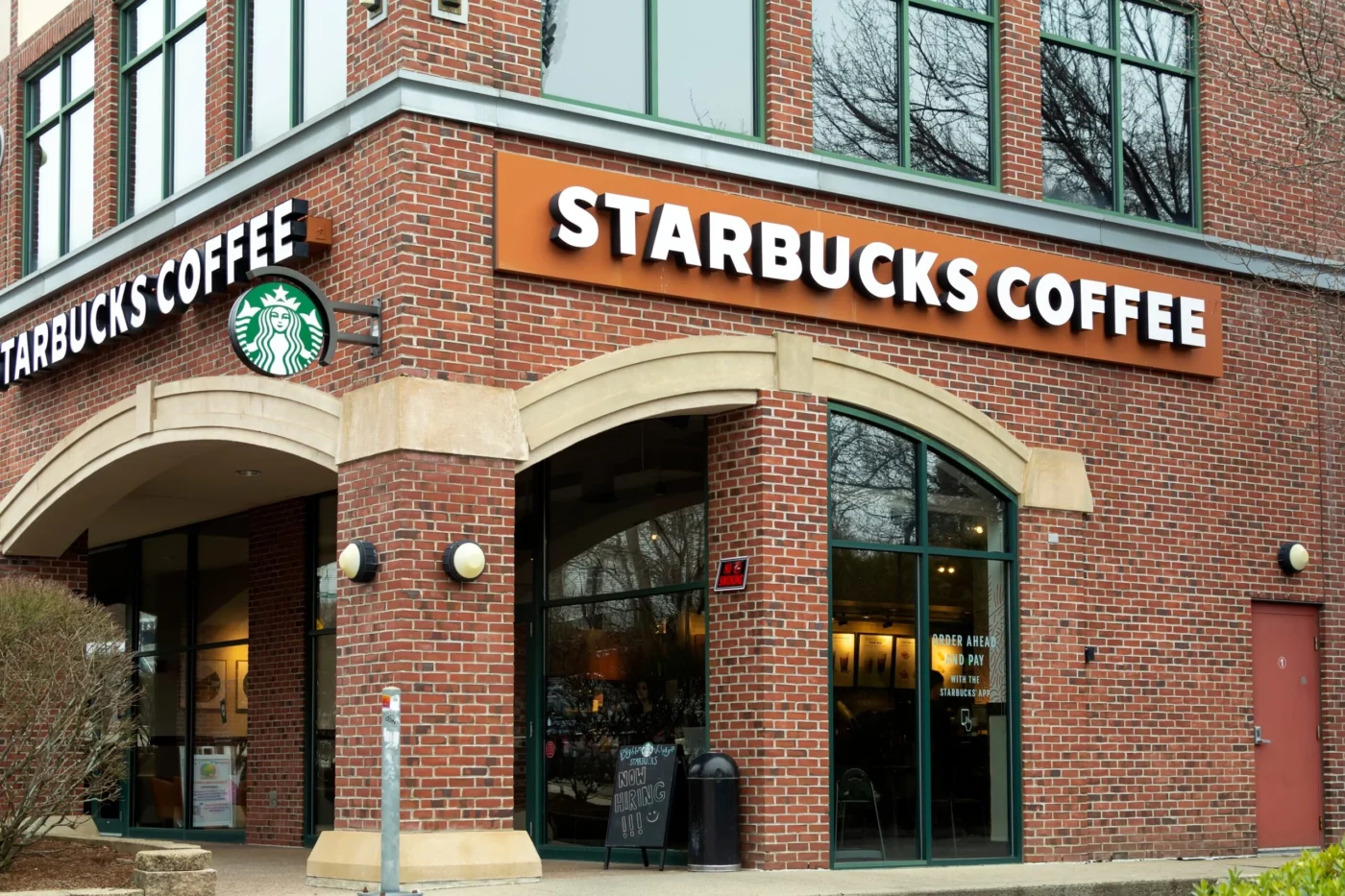
Jefferies shifted its stance on Starbucks (SBUX) this Monday, elevating the coffee giant from Underperform to Hold while boosting the price objective to $92 from the previous $86. The timing follows the completion of the China joint venture transaction on April 2 and emerging signs of stabilization domestically.
The China joint venture transaction dramatically reduces Starbucks’ global footprint. Prior to finalization, international operations represented approximately 33% of worldwide system sales, 27% of total revenue, and 25% of operating income.
Following the franchising of China operations, Starbucks now maintains the smallest international presence among major global quick-service restaurant operators. This peer group encompasses McDonald’s, Yum Brands, Restaurant Brands International, and Domino’s Pizza.
Analyst Andy Barish and colleagues noted that the finalized transaction, paired with improving domestic fundamentals, provides shareholders with enhanced clarity regarding the transformation led by CEO Brian Niccol. Niccol assumed leadership approximately 18 months prior.

Yet the upgrade doesn’t signal complete confidence. Jefferies maintains earnings projections of $2.27 per share for fiscal 2026 and $2.73 for fiscal 2027, trailing consensus estimates of $2.30 and $2.95, respectively.
Understanding the Forecast Divergence
The firm’s tempered projections stem from conservative comparable sales assumptions and an operating margin outlook roughly 100 basis points under Street expectations. Jefferies anticipates continued workforce investments and uncertain cost reduction prospects.
“We maintain a slightly more conservative outlook than the Street through FY27, which we think will require strong execution across most sales- and cost-initiatives,” the team said.
Regarding valuation metrics, the disparity stands out prominently. Starbucks currently commands approximately 35 times forward earnings. Similar global franchised restaurant operators trade near 21x multiples. The broader S&P 500 hovers around 22x.
Jefferies characterized the valuation premium as “unwarranted” while acknowledging that market expectations have adjusted to more achievable benchmarks following a challenging period.
Catalysts for Share Price Appreciation
Barish’s group indicated that mid-single-digit comparable sales expansion during the latter portion of fiscal 2026 would probably be necessary to drive meaningful stock gains. They view this target as feasible yet not assured.
Macroeconomic conditions introduce additional complexity. Consumer spending patterns, workforce expenses, and margin compression represent ongoing challenges for a premium coffeehouse attempting to maintain pricing power while attracting budget-conscious patrons.
Nevertheless, the rating improvement suggests diminished probability of worst-case outcomes. Eliminating China exposure addresses a significant concern that had dampened the investment thesis for multiple quarters.
Niccol’s transformation strategy emphasizes operational excellence, brand reinforcement, and profitability restoration. The China transaction represents tangible progress toward these objectives.
Jefferies’ $92 price objective suggests limited appreciation from present trading levels. The firm’s below-consensus projections indicate a preference for demonstrated results before adopting a more optimistic posture.
Shares declined 0.33% concurrent with the rating announcement.
Get 3 Free Stock Ebooks
Discover top-performing stocks in AI, Crypto, and Technology with expert analysis.
- Top 10 AI Stocks - Leading AI companies
- Top 10 Crypto Stocks - Blockchain leaders
- Top 10 Tech Stocks - Tech giants



