


Key Highlights
- March registrations in South Korea reached 11,134 vehicles, representing a 330% annual increase.
- Tesla achieved a milestone as the first imported automaker to surpass 10,000 units in a single month.
- Electric vehicles captured 47.8% of imported vehicle sales, overtaking hybrids for the first time.
- First-quarter deliveries totaled 20,964 units in South Korea, marking the company’s second-strongest quarter in the region.
- Chinese manufacturer BYD broke into South Korea’s top four imported brands.
March proved to be a landmark month for Tesla in South Korea. The electric vehicle manufacturer recorded registrations of 11,134 units in the country, representing a remarkable 330% increase compared to the previous year, based on data from market analyst Carisyou.
TESLA SEES S.KOREAN CAR REGISTRATIONS RISE 330% TO 11,134 VEHICLES IN MARCH FROM YEAR EARLIER – MARKET RESEARCHER CARISYOU
— *Walter Bloomberg (@DeItaone) April 6, 2026
This performance established a new benchmark in South Korea’s automotive industry. Tesla became the pioneering imported automobile manufacturer to exceed the 10,000-unit threshold within a single month in the nation’s history.
The transformation within the broader automotive landscape proved equally remarkable. Electric vehicle sales surpassed hybrid sales for the first time in South Korea, with EVs commanding 47.8% of the imported vehicle segment.
Examining the complete first quarter, Tesla achieved 20,964 deliveries in South Korea—representing the company’s second-strongest quarterly performance in the market. The 335% year-over-year expansion was partially attributed to accelerated government EV incentive implementation, which was completed in January instead of the traditional March timeline.

Tesla additionally implemented strategic price reductions on its Chinese-manufactured Model Y and Model 3 variants, triggering intensified pricing competition throughout South Korea’s electric vehicle sector.
March’s brand hierarchy revealed a significant development. Tesla, BMW, and Mercedes-Benz secured the leading three positions—positioning a pure-electric manufacturer alongside two established German automakers that continue offering combustion and hybrid powertrains.
Model Y L Generates Excitement at Seoul Showroom
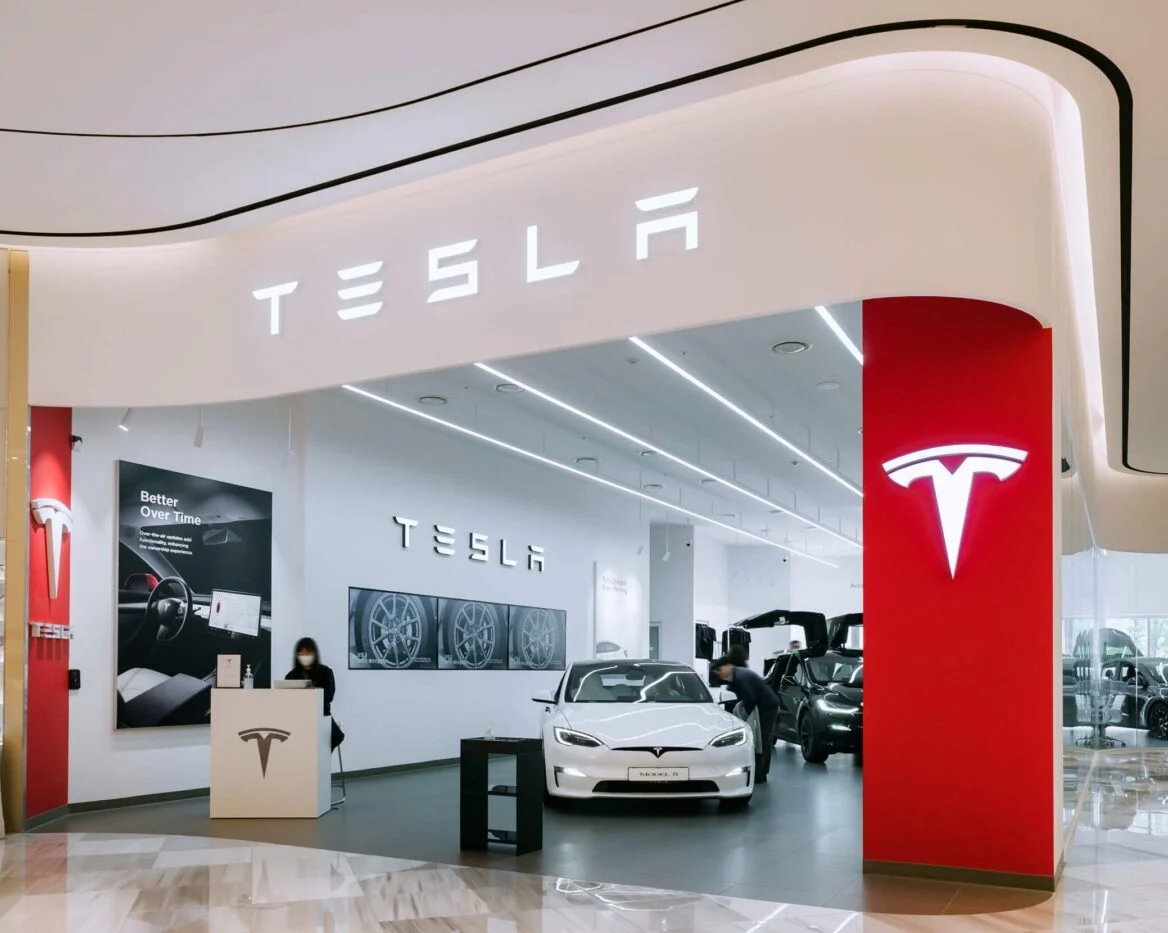
Interest is already building around the upcoming release. Tesla’s newly unveiled six-passenger Model Y L has attracted substantial visitor traffic at its Starfield Hanam location in Seoul prior to the official market introduction.
The Model Y L incorporates an extended wheelbase measuring approximately 150mm longer, an authentic 2-2-2 passenger configuration, and an advertised driving range of 543km. The vehicle has secured regulatory clearance in South Korea and is currently showcased with several exterior finish selections.
Tesla has simultaneously launched Model Y L reservations throughout eight Asian territories, encompassing Japan, Hong Kong, and Singapore.
BYD Makes Strategic Market Entry
Tesla’s dominance faces emerging competition. Chinese automaker BYD secured a position among South Korea’s top four imported manufacturers for the first time—representing a meaningful transformation in a market historically controlled by European marques.
BYD leverages substantial production capacity and an extensive electric vehicle portfolio, frequently offered at aggressive price points. Its emergence indicates that South Korea’s EV landscape has evolved beyond a simple competition between Tesla and German premium brands.
Tesla’s worldwide delivery figures provide additional perspective. Global deliveries decreased 14% sequentially in the most recent quarter, falling short of analyst projections. Should production capacity and logistics fail to match South Korean market appetite, competitive brands will find opportunities for expansion.
The upcoming months will prove critical—determining whether March’s historic figures and preliminary Model Y L enthusiasm convert into consistent sales performance throughout the second quarter.
Get 3 Free Stock Ebooks
Discover top-performing stocks in AI, Crypto, and Technology with expert analysis.
- Top 10 AI Stocks - Leading AI companies
- Top 10 Crypto Stocks - Blockchain leaders
- Top 10 Tech Stocks - Tech giants



