



Key Takeaways
- Charles Guillemet, CTO of Ledger, warns that artificial intelligence is dramatically reducing the barriers to launching cyberattacks against cryptocurrency platforms
- Hackers stole more than $1.4 billion worth of digital assets in the previous year, and AI technology is expected to accelerate this alarming trend
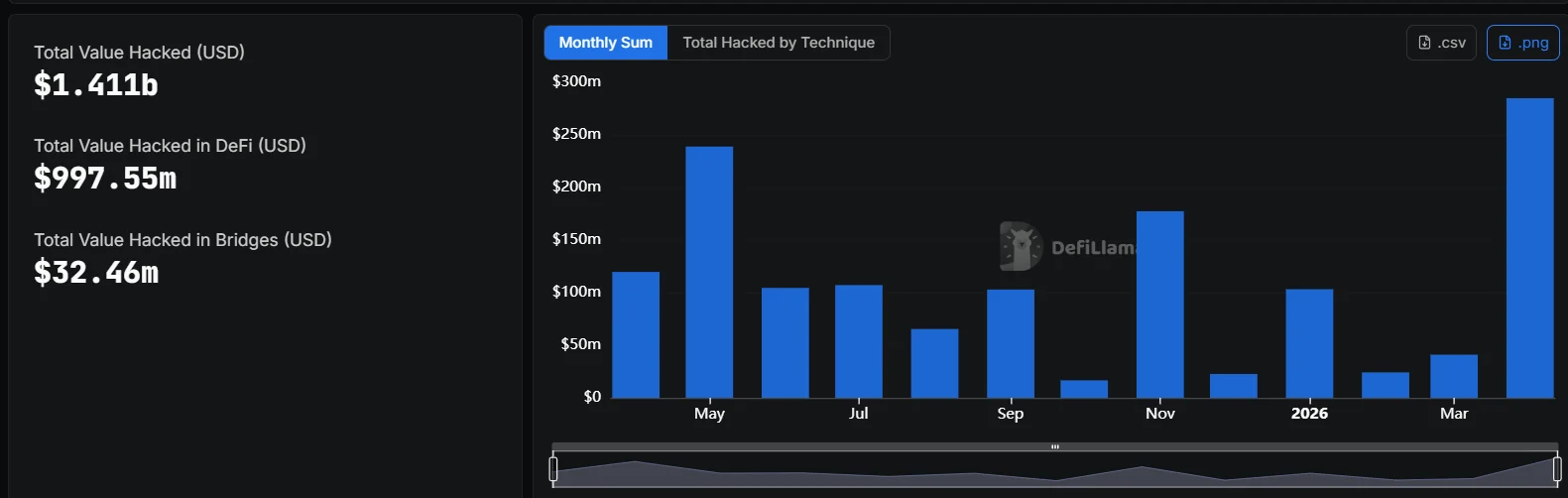
- Major security breaches this month include a $285 million attack on the Drift protocol and a $25 million theft from Resolv
- Security experts recommend formal verification methods, hardware storage devices, and cold storage solutions for enhanced protection
- Crypto holders should operate under the assumption that most digital platforms will face security compromises
The emergence of artificial intelligence as a tool for cybercriminals is creating unprecedented challenges for cryptocurrency security professionals, according to the chief technology officer at Ledger. The resources and technical expertise needed to discover and weaponize security flaws are declining rapidly, placing intense strain on the digital currency ecosystem.
In a recent conversation with CoinDesk, Charles Guillemet highlighted how AI is transforming the threat landscape. Activities that previously required months of work from specialized security researchers can now be completed within seconds using sophisticated AI-powered tools.
“Discovering security weaknesses and taking advantage of them has become remarkably simple,” Guillemet explained. “The financial and time investment is approaching zero.”
The relevance of these observations became immediately apparent this week. The Solana blockchain’s Drift DeFi platform suffered a devastating $285 million security breach. Just seven days prior, the Resolv yield protocol experienced its own $25 million loss from a coordinated attack.
Data compiled by DefiLlama reveals that cryptocurrency platforms and users lost or had stolen over $1.4 billion in digital assets during the past twelve months. Guillemet anticipates that AI technology will drive these losses significantly higher in coming years.
The fundamental issue stems from a dramatic transformation in cybersecurity economics. Historically, defensive measures proved effective because the cost and effort of mounting an attack exceeded potential gains. Artificial intelligence is demolishing this protective equilibrium.

Cryptocurrency protocols face particularly severe exposure since smart contract code directly controls substantial financial reserves. Guillemet emphasized the unforgiving nature of this environment: “You must achieve perfection.”
Dangers Lurking in AI-Authored Code
The threat extends far beyond external malicious actors. As software developers increasingly turn to AI platforms for code generation, security vulnerabilities can be embedded into systems from their inception, often going unnoticed until exploitation occurs.
“There’s no simple ‘activate security’ switch,” Guillemet noted. “We’re creating massive amounts of code that contains fundamental security flaws from the outset.”
He also outlined an emerging category of malicious software that systematically searches compromised mobile devices for cryptocurrency wallet recovery phrases. Once obtained, attackers can empty accounts completely without requiring any action from the victim.
This attack vector presents enormous challenges for detection and prevention, rendering conventional security measures like code reviews significantly less effective.
Recommended Security Measures
Guillemet advocates for formal verification techniques as a superior alternative to conventional security audits. This methodology employs rigorous mathematical proofs to validate that software functions exactly as designed, substantially reducing opportunities for exploitable vulnerabilities to hide.
He also emphasized the critical importance of hardware wallet devices for enhanced security. By maintaining private cryptographic keys on specialized devices that remain permanently offline, users dramatically minimize their vulnerability to internet-based threats.
“Using a purpose-built device that never connects to the internet provides inherently superior security,” he stated.
For regular cryptocurrency users, Guillemet’s guidance was unambiguous: never assume the platforms and services you rely on are secure.
“The vast majority of systems in everyday use cannot be trusted,” Guillemet cautioned.
He predicts a growing division in the cryptocurrency industry. Digital wallet providers and established protocols will likely allocate substantial resources toward implementing robust security measures and evolving their defenses. However, broader software ecosystems may struggle to maintain adequate protection.
The most recent major incident reinforces the urgency of his warnings. This week’s $285 million Drift security breach ranks among the most significant cryptocurrency thefts recorded in 2026 thus far.
Get 3 Free Stock Ebooks
Discover top-performing stocks in AI, Crypto, and Technology with expert analysis.
- Top 10 AI Stocks - Leading AI companies
- Top 10 Crypto Stocks - Blockchain leaders
- Top 10 Tech Stocks - Tech giants



