



Key Highlights
- Bitcoin plummeted from $75,000 to $66,000 throughout the week; Ethereum broke below the critical $2,000 threshold
- Major U.S. equity indices all dropped into correction territory, with the S&P 500 recording its most extended decline since 2022
- Crude oil prices exceeded $100 per barrel amid escalating Middle East tensions, driving investors toward safe-haven assets
- Coinbase unveiled cryptocurrency-backed home loans, and Tether engaged KPMG for its first comprehensive audit
- David Sacks resigned from his position as White House Crypto Czar following a one-year tenure
Financial markets experienced significant turbulence this week. Both digital currencies and traditional equities suffered substantial losses as crude oil prices climbed and market participants fled risky investments.
Bitcoin declined from its weekly peak of $75,000 to reach a low of $66,000 by Friday, March 27. Ethereum slipped beneath the $2,000 threshold, a critical resistance point closely monitored by market analysts.
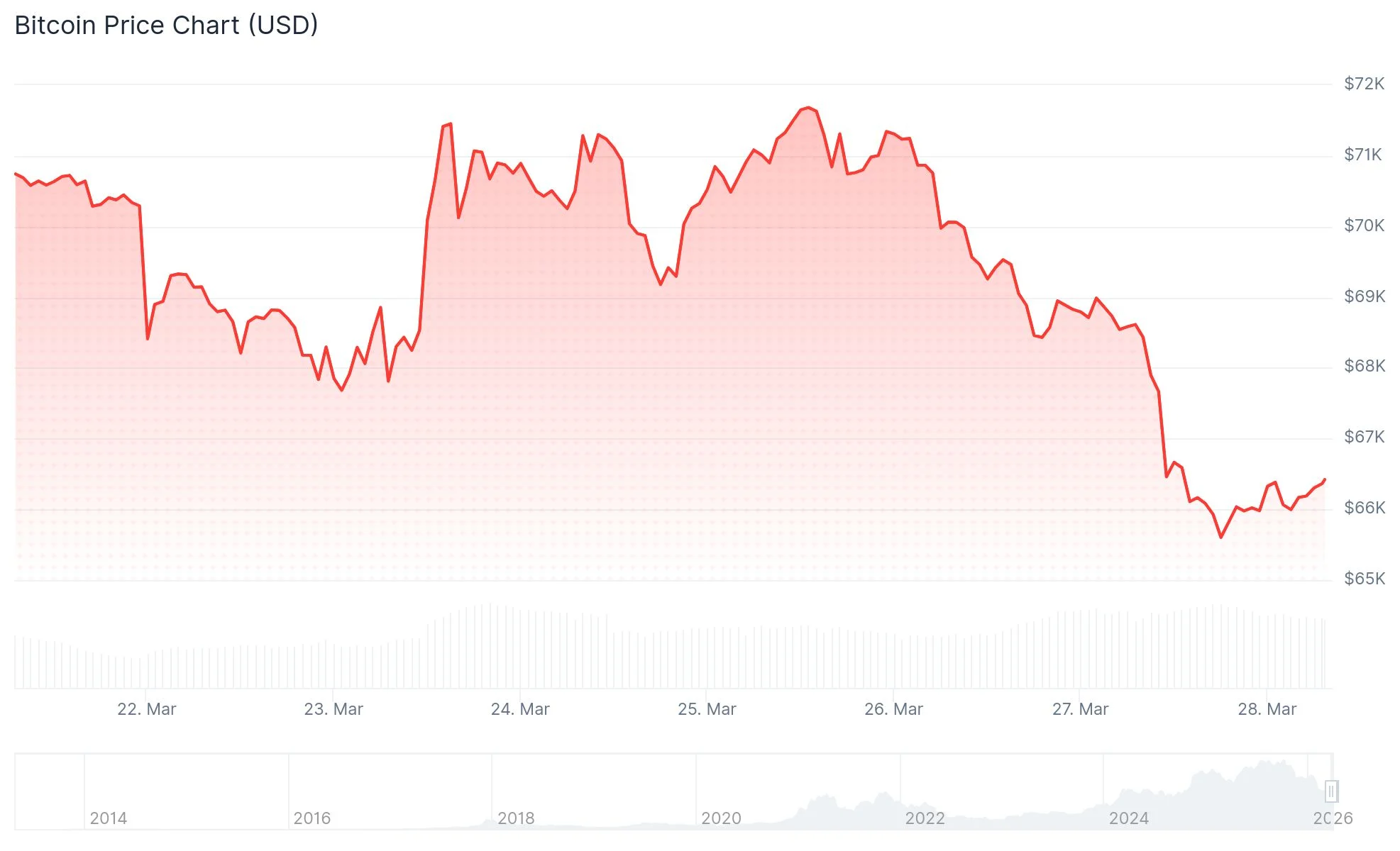
Both Solana and XRP concluded the week with significant losses. The overall cryptocurrency sector mirrored the equity market downturn as anxiety pervaded the financial landscape.
In equity markets, the S&P 500 registered its fifth consecutive weekly decline, marking its most prolonged losing streak since 2022. The Dow Jones Industrial Average officially entered correction territory, falling more than 10% from its latest peak.
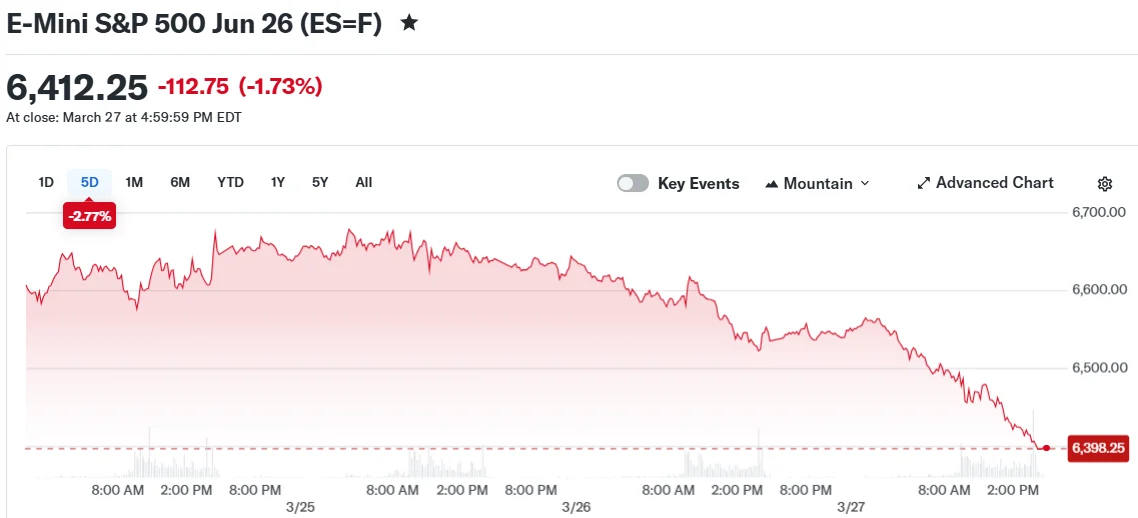
The Nasdaq experienced a 2.1% decline on Friday alone, deepening its correction. The “Magnificent Seven” technology giants saw their combined market capitalization shrink by over $330 billion in just one trading session.

Oil served as the primary catalyst for the market downturn. Brent crude traded above $106 per barrel while West Texas Intermediate exceeded $100, as regional attacks throughout the Middle East sparked concerns about prolonged conflict extending through April.
President Trump postponed his Iran deadline by 10 days, giving the nation until April 6 to comply with U.S. requirements or face attacks on its energy infrastructure. Financial markets continued to show volatility despite the extension.
Notable Cryptocurrency Sector Developments
Coinbase revealed plans to provide cryptocurrency-backed home loans across the United States. The platform is collaborating with Better Home & Finance to enable home purchasers to utilize Bitcoin for down payments, with government support backing the initiative.
Major stablecoin provider Tether appointed accounting giant KPMG to conduct an audit of its $185 billion USDT stablecoin. This decision represents Tether’s strategic effort to penetrate the U.S. marketplace. The announcement contributed to a 24% weekly decline in Circle Internet Group shares.
The New York Stock Exchange’s owner, Intercontinental Exchange, committed $600 million to prediction platform Polymarket. This investment provides Polymarket with resources for growth as conventional market participants enter the prediction market sector.
Policy and Regulatory Developments
David Sacks resigned from his White House Crypto Czar position after serving for one year. During his tenure, Sacks guided initial White House cryptocurrency initiatives, including the successful passage of the GENIUS Act, and has transitioned to the President’s Council of Advisors on Science and Technology. His successor has not yet been announced.
Prediction platform Kalshi experienced a valuation surge to $22 billion in its most recent funding round, doubling from $11 billion in December. This funding occurred during the same week Arizona prosecutors filed 20 criminal charges against Kalshi, alleging operation of an unlicensed gambling enterprise.
Approximately $15 billion worth of Bitcoin options contracts reached expiration on Deribit on March 27, accounting for 40% of the exchange’s total open interest. A comparable $19 billion expiration event last September is believed to have triggered Bitcoin’s ongoing decline, which has now reached 40% from its October highs.
Get 3 Free Stock Ebooks
Discover top-performing stocks in AI, Crypto, and Technology with expert analysis.
- Top 10 AI Stocks - Leading AI companies
- Top 10 Crypto Stocks - Blockchain leaders
- Top 10 Tech Stocks - Tech giants



