


Key Takeaways
- Procurement records reveal four Chinese academic institutions, including two with People’s Liberation Army connections, acquired Super Micro servers containing export-restricted Nvidia A100 processors within the last twelve months.
- Federal authorities recently indicted three individuals associated with Super Micro, including a company co-founder, for their alleged role in a $2.5 billion smuggling operation involving advanced U.S. AI technology destined for China.
- Super Micro maintains it was victimized by the smuggling scheme and emphasizes the company itself was not charged in the indictment.
- Two United States senators have petitioned Commerce Secretary Howard Lutnick to immediately suspend all export authorizations for cutting-edge Nvidia AI processors to China and intermediary nations in Southeast Asia.
- Beihang University and Harbin Institute of Technology — both institutions currently listed on the U.S. export restriction blacklist — have been identified among the purchasing entities.
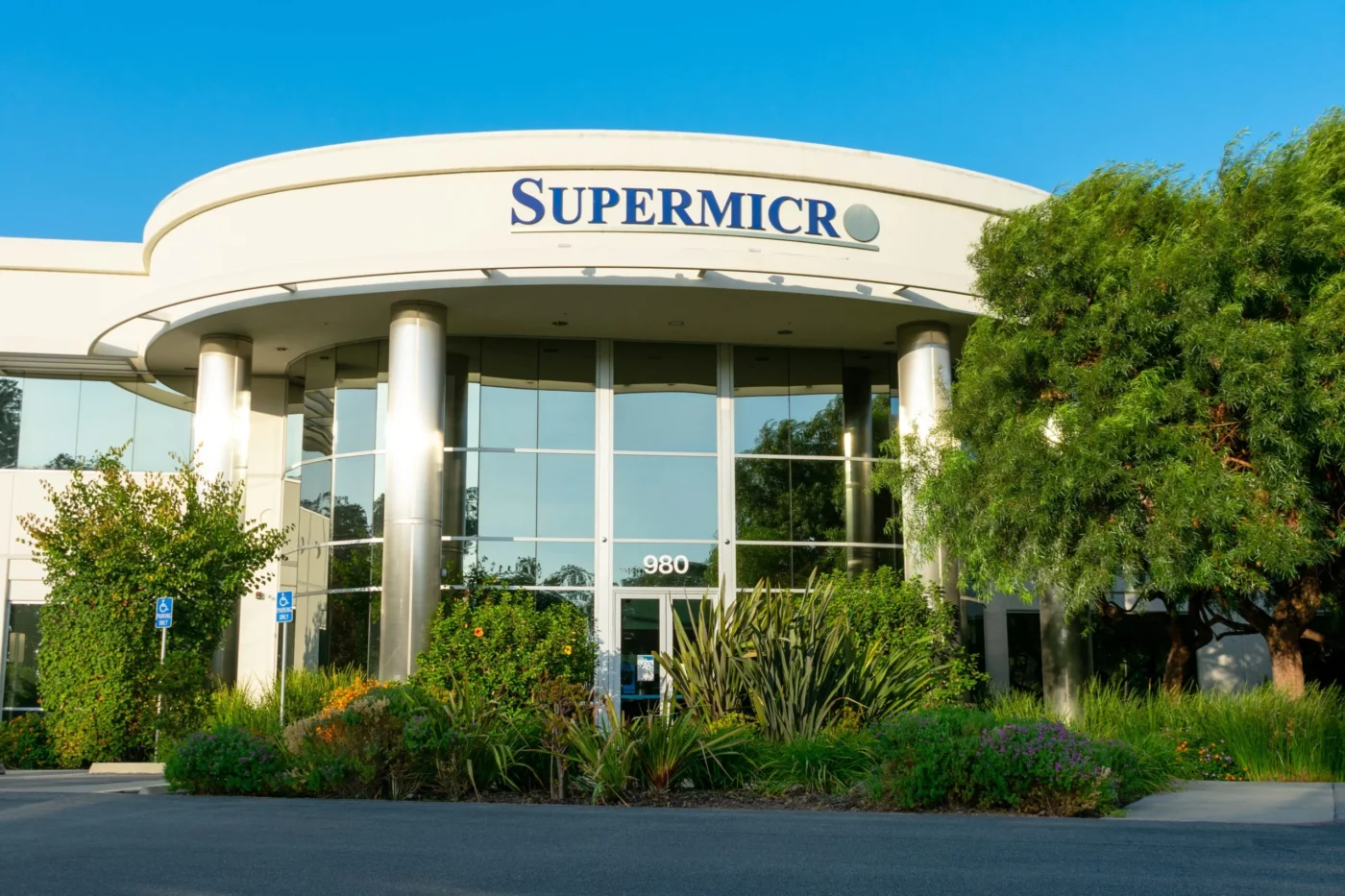
Shares of Super Micro Computer (SMCI) and Nvidia (NVDA) experienced significant declines on Thursday following a Reuters investigation revealing that Chinese academic institutions with established connections to the People’s Liberation Army had successfully obtained Super Micro servers outfitted with export-controlled Nvidia AI processors.
Super Micro Computer, Inc., SMCI
According to procurement documentation examined by Reuters, four Chinese universities completed purchases of these servers during the previous year. Two of these institutions maintain documented ties to the PLA.
Since 2022, the United States government has imposed restrictions on the export of specific Nvidia processors, including the A100 model, to China. The rationale behind these export controls centers on concerns that sophisticated AI processing capabilities could enhance China’s military technological advancement.
These revelations emerge less than a week after federal prosecutors charged three individuals with Super Micro connections — one being the company’s co-founder — with allegedly orchestrating a smuggling network that moved at least $2.5 billion in advanced U.S. artificial intelligence technology to China.

The indictment did not name Super Micro as a defendant. Company officials have stated that Super Micro was exploited as an unwitting participant in an sophisticated smuggling operation executed by the charged individuals.
Reuters’ investigation also uncovered that two other universities — one with documented military affiliations — initiated efforts to acquire similar equipment, though confirmation of completed transactions remains uncertain.
Super Micro representatives declined to provide commentary regarding the procurement documentation. Nvidia issued a statement affirming its ongoing collaboration with customers and U.S. government agencies to ensure compliance with export regulations.
Universities With Defense Ties Identified in Purchase Documents
Beihang University in Beijing, recognized as one of China’s “Seven Sons of National Defense,” appears in the confirmed purchaser list. Documentation dated March 16 reveals the institution acquired a machine-learning workstation constructed around a Super Micro platform incorporating four Nvidia A100 processors.
The Harbin Institute of Technology (HIT), another “Seven Sons” institution renowned for its research programs in missile technology, satellite systems, and robotics, obtained a Super Micro configuration equipped with eight Nvidia A100 processors, according to procurement notices published in July.
Both educational institutions appear on the U.S. export restriction blacklist, creating substantial legal barriers for American companies seeking to supply them with controlled technology. Neither university provided responses to media inquiries.
Lawmakers Demand Suspension of Export Authorizations
Two United States senators submitted a formal letter to Commerce Secretary Howard Lutnick on Monday in response to these developments. The correspondence urged consideration of an immediate suspension of all export licenses permitting advanced Nvidia processors and server platforms to reach China or distribution networks operating in Southeast Asian nations.
The Trump administration had previously granted authorization for sales of Nvidia’s H200 processors — which exceed the performance capabilities of currently restricted products — to China, subject to specific conditions. Industry sources indicated this month that Nvidia has also secured approval from Beijing authorities to market the H200 within China, although confirmed transactions have not yet materialized.
Neither China’s commerce ministry nor the U.S. Department of Commerce have issued statements in response to Reuters’ requests for comment.
Get 3 Free Stock Ebooks
Discover top-performing stocks in AI, Crypto, and Technology with expert analysis.
- Top 10 AI Stocks - Leading AI companies
- Top 10 Crypto Stocks - Blockchain leaders
- Top 10 Tech Stocks - Tech giants



