


Key Takeaways
- President Trump ordered a five-day suspension of U.S. military operations targeting Iran’s energy facilities
- Sunday negotiations between the U.S. and Iran yielded “major points of agreement,” according to Trump
- Defense sector showed mixed performance — NOC and LMT slipped below 1%, while GD and L3Harris edged higher
- The iShares Aerospace & Defense ETF has declined approximately 9% since Iranian hostilities commenced
- Industry analysts cite federal budget uncertainties and Congressional deadlock as additional sector challenges
President Donald Trump disclosed via Truth Social on Sunday that he had directed the Department of War to delay planned military operations against Iranian electrical generation facilities and energy assets for a period of five days.
According to Trump, diplomatic discussions occurred Sunday under the leadership of Middle East envoy Steve Witkoff alongside Jared Kushner. Speaking to the press Monday, the president indicated that both nations had achieved “major points of agreement” and suggested a comprehensive deal might materialize quickly if negotiations maintain momentum.
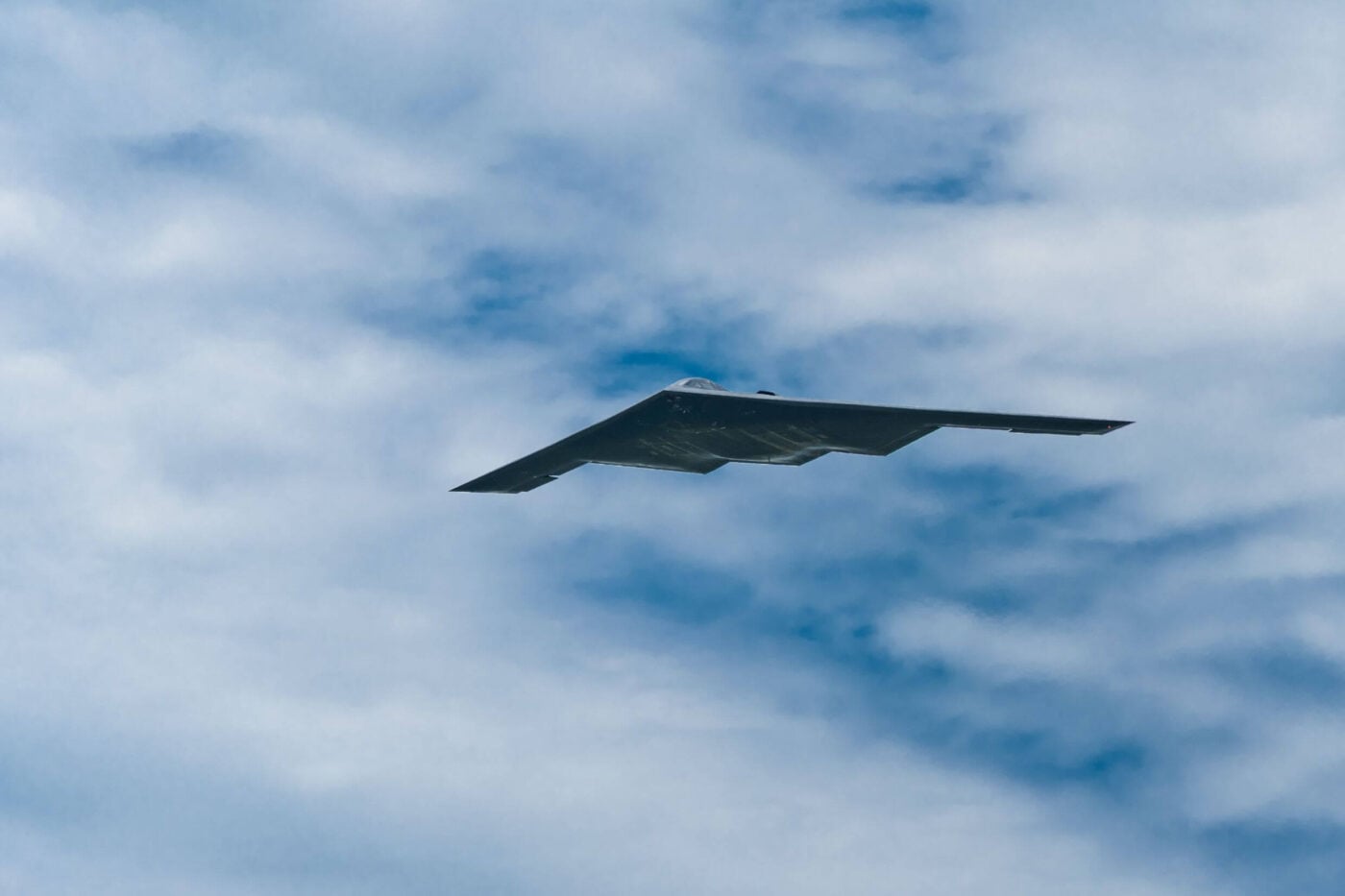
Northrop Grumman Corporation, NOC
The disclosure triggered a positive market response, with the S&P 500 climbing approximately 1.4% and the Dow Jones posting similar gains. Brent crude oil futures plummeted 6.7% to settle at $99.27 per barrel.
Defense contractors, however, failed to capitalize on the broader market rally. Northrop Grumman (NOC) alongside Lockheed Martin (LMT) both retreated less than 1% during Monday morning sessions. Meanwhile, General Dynamics (GD) and L3Harris Technologies registered marginal gains under 1%.

The defense industry has quietly lagged throughout this geopolitical episode. By Monday’s market open, the iShares Aerospace & Defense ETF had surrendered roughly 9% of its value since Iranian conflict escalation began — trailing the S&P 500 by approximately 4 percentage points during the identical timeframe.
Federal Budget Uncertainties Compound Sector Weakness
Byron Callan, an analyst with Capital Alpha Partners, highlighted fiscal constraints in a Sunday research note. “Discussion surrounding a $200 billion supplemental package and a $1.5 trillion DoD budget has negatively impacted U.S. defense sector sentiment,” he observed.
Callan additionally referenced the ongoing impasse regarding Department of Homeland Security appropriations as a barometer for investor skepticism about Congress’s capacity to authorize substantial defense expenditure increases.
The enriched uranium issue remains unaddressed. A primary U.S. strategic objective in the Iranian confrontation centers on Tehran’s accumulation of highly enriched uranium materials.
Uranium classification as “highly enriched” requires concentration exceeding 20% of the U-235 isotope. Intelligence assessments indicate Iran possesses material enriched to 60% U-235 — falling short of the 90% weapons-grade threshold, yet significantly surpassing levels appropriate for peaceful civilian applications.
Diplomatic Engagement Extends Into Monday
Trump verified Monday that negotiating sessions would persist throughout the day. He indicated an agreement could emerge “very soon” provided current momentum continues.
The five-day operational suspension creates a diplomatic opportunity for both nations. The outcome of ongoing discussions — especially concerning Iran’s enriched uranium reserves — will likely determine investor sentiment toward the defense sector in coming weeks.
Northrop Grumman shares traded down approximately 1.3% in early Monday activity, while Lockheed Martin declined 0.5%. General Dynamics advanced 0.93%.
Get 3 Free Stock Ebooks
Discover top-performing stocks in AI, Crypto, and Technology with expert analysis.
- Top 10 AI Stocks - Leading AI companies
- Top 10 Crypto Stocks - Blockchain leaders
- Top 10 Tech Stocks - Tech giants



