


TLDR
- Bitcoin plummeted from approximately $90,000 to close to $60,000 in early 2026, while equities remained resilient — until recently.
- Treasury yields have surged since the Iran conflict erupted on Feb. 28, pushing Nasdaq and S&P 500 futures down to their lowest levels since September.
- The 10-year Treasury yield reached 4.41%, marking its peak since August 1, representing a 48 basis point increase since hostilities began.
- Both cryptocurrency and equity market fear gauges have plunged into “extreme fear” zones during the last week of March.
- Retail investor pessimism has reached 52% for the next six-month outlook — the most negative sentiment since May 2025.
During early 2026, Bitcoin experienced a dramatic selloff, tumbling from approximately $90,000 to nearly $60,000 over just five weeks. During this period, U.S. equity markets remained remarkably stable, hovering near all-time highs.
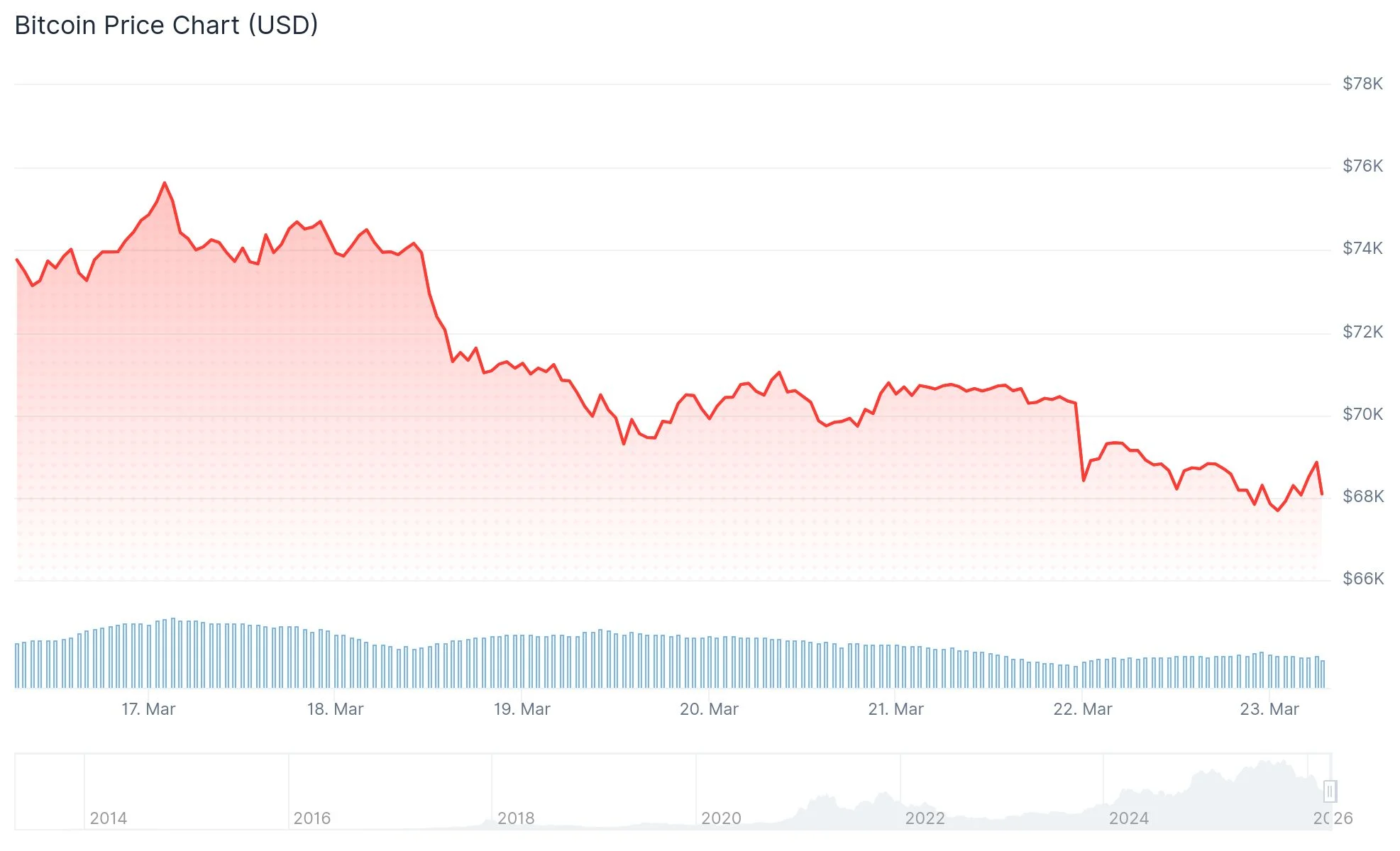
This divergence is now disappearing — unfortunately through downward convergence.
Following the outbreak of the Iran war on February 28, mounting inflation concerns and diminishing prospects for Federal Reserve rate reductions have driven U.S. Treasury yields higher. This yield surge has started weighing on equities, which are finally mirroring the weakness Bitcoin demonstrated weeks ago.
The 10-year U.S. Treasury note yield climbed to 4.41% during early Monday trading, marking its highest point since August 1. This represents a 48 basis point rise since the Iran conflict commenced. Meanwhile, the two-year Treasury yield has surged 57 basis points to reach 3.94%.
Elevating yields carry significant implications as they increase borrowing costs throughout the economy — affecting everything from home mortgages to business financing. This typically dampens investor enthusiasm for riskier assets like stocks.

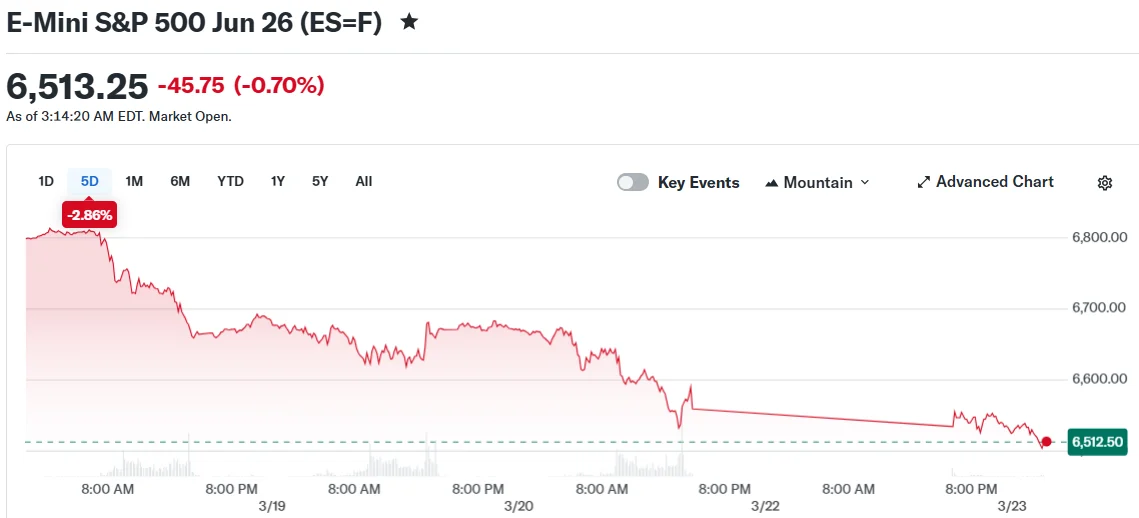
Nasdaq futures declined to 23,890 points early Monday, their weakest level since September 11. S&P 500 e-mini futures fell to 6,505 points, likewise marking their lowest reading since September.
Bitcoin Serving as a Risk Appetite Barometer
Market observers have frequently monitored bitcoin as a forward-looking indicator for overall risk sentiment. Its early 2026 downturn appears to have foreshadowed the current stock market struggles.
In a recent analysis, Bloomberg Senior Commodity Strategist Mike McGlone highlighted that bitcoin represents “the top of the risk-assets iceberg,” suggesting its declining value could signal the initial phase of a broader market correction — especially if commodity market turbulence spreads to equities.
[[LINK_START_4]]Bitcoin[[LINK_END_4]] has demonstrated relative price stability lately, fluctuating within a $65,000 to $75,000 range. Monday morning saw it trading around $68,790. However, derivatives market indicators reveal significant anxiety, with an unprecedented bias toward put options — instruments traders employ to protect against additional downside.
Panic Gripping Cryptocurrency and Stock Markets
Sentiment indicators reveal that fear has become pervasive across both asset classes. The Crypto Fear & Greed Index has retreated to “extreme fear” levels. A comparable stock market index has similarly plummeted.
Blockchain analytics firm Alphractal characterizes this simultaneous fear across both markets as an uncommon occurrence, advising investors to exercise caution.
According to an American Association of Individual Investors survey, 52% of retail investors maintain a pessimistic view for the upcoming six months. This represents the most bearish sentiment recorded since May 2025.
President Donald Trump’s 48-hour deadline concerning the Strait of Hormuz continues ticking down, intensifying market anxiety.
Market analyst Tony Severino highlights a recurring historical trend where bitcoin’s correlation with the S&P 500 falls to -0.5 before sharply reversing upward — a formation he suggests frequently precedes significant equity market declines. This correlation has recently shifted back to positive territory.
“Typically there’s an initial bounce to maximize the pain,” Severino noted.
Current market pricing reflects a marginal possibility that the Federal Reserve might increase interest rates instead of implementing cuts.
Get 3 Free Stock Ebooks
Discover top-performing stocks in AI, Crypto, and Technology with expert analysis.
- Top 10 AI Stocks - Leading AI companies
- Top 10 Crypto Stocks - Blockchain leaders
- Top 10 Tech Stocks - Tech giants



