


TLDR
- President Trump labeled NATO members “cowards” for declining to assist in reopening the Strait of Hormuz
- Military operations involving the U.S. and Israel against Iran commenced on February 28, now entering week three
- The S&P 500 has declined approximately 5% since hostilities began
- Gasoline costs have surged 31% to reach $3.91 per gallon amid supply chain disruptions
- Multiple NATO members committed to supporting safe navigation through the Strait, contingent on cessation of hostilities
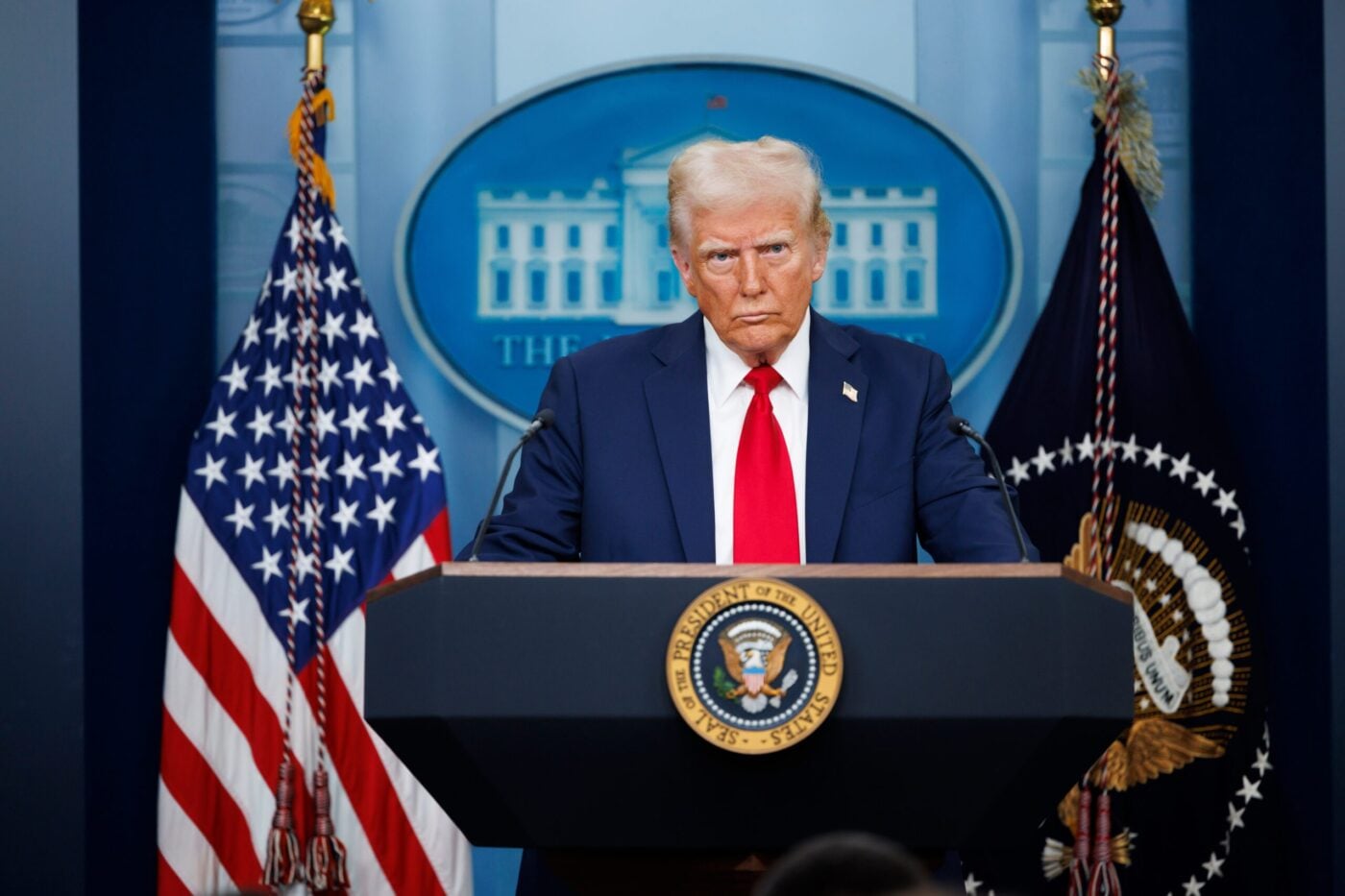
President Trump unleashed harsh criticism against NATO members on Friday, branding them “cowards” for their unwillingness to assist in restoring access to the Strait of Hormuz while the U.S.-Israel military campaign against Iran continues.
“Without the U.S.A., NATO IS A PAPER TIGER!” the President posted on Truth Social.
Military hostilities commenced February 28, marking the beginning of U.S.-Israel strikes targeting Iran. The conflict has resulted in thousands of casualties and displaced millions of civilians.
The President has issued repeated appeals to major allied nations to participate in securing maritime commerce through the Strait of Hormuz, a vital shipping channel under Iranian control. Vessel movement through this waterway has essentially halted.
Notably, allied governments received no prior consultation or notification before military operations commenced.
Trump contended that restoring Strait access would present minimal complexity and danger for NATO member states.
“Now that fight is Militarily WON, with very little danger for them, they complain about the high oil prices they are forced to pay, but don’t want to help open the Strait of Hormuz,” his statement read.
His message concluded with an explicit caution: “COWARDS, and we will REMEMBER!”
Economic Impact of the Conflict
The S&P 500 has posted losses approaching 5% since February 28 when the military engagement started. Gasoline prices have climbed 31% to $3.91 per gallon as supply disruptions from the blocked Strait take their toll.

Oil prices maintain their upward trajectory as the confrontation extends into week three without indicators of de-escalation from Washington or Tehran.
Trump identified the Strait blockage as the sole driver of elevated oil costs, characterizing its reopening as “a simple military maneuver.”
Allied Nations React
Germany, Britain, France, Italy, the Netherlands, Japan, and Canada issued a collective statement Thursday committing to participate in “appropriate efforts to ensure safe passage through the Strait.”
Nevertheless, German Chancellor Friedrich Merz explicitly stated that any German participation would be contingent on the conclusion of active combat.
French President Emmanuel Macron, addressing reporters following an EU summit in Brussels, emphasized that promoting de-escalation and upholding international law represented “the best we can do.”
He continued: “I have not heard anyone here express a willingness to enter this conflict — quite the opposite.”
The divide between Trump’s expectations and NATO’s stance remains substantial as week three of the war unfolds without prospects for a ceasefire.
As of Friday, maritime traffic through the Strait of Hormuz continues at essentially zero, while both Washington and Tehran demonstrate little inclination toward diplomatic compromise.
Get 3 Free Stock Ebooks
Discover top-performing stocks in AI, Crypto, and Technology with expert analysis.
- Top 10 AI Stocks - Leading AI companies
- Top 10 Crypto Stocks - Blockchain leaders
- Top 10 Tech Stocks - Tech giants



