



Key Takeaways
- XRP experienced a 10.5% decline across three trading sessions but maintains bull flag breakout structure near the $1.40–$1.45 critical support area
- Upbit exchange in South Korea seeing unprecedented XRP withdrawal volumes, mirroring historical accumulation behavior patterns
- Large holder flow metrics have flipped positive for the first time since early 2024, indicating potential distribution-to-accumulation transition
- The Federal Reserve maintained its benchmark rate between 3.5%–3.75% on March 18, creating headwinds for speculative assets
- XRP-focused spot exchange-traded funds in the US reported no new capital on Wednesday, while total cumulative flows remain at $1.21 billion
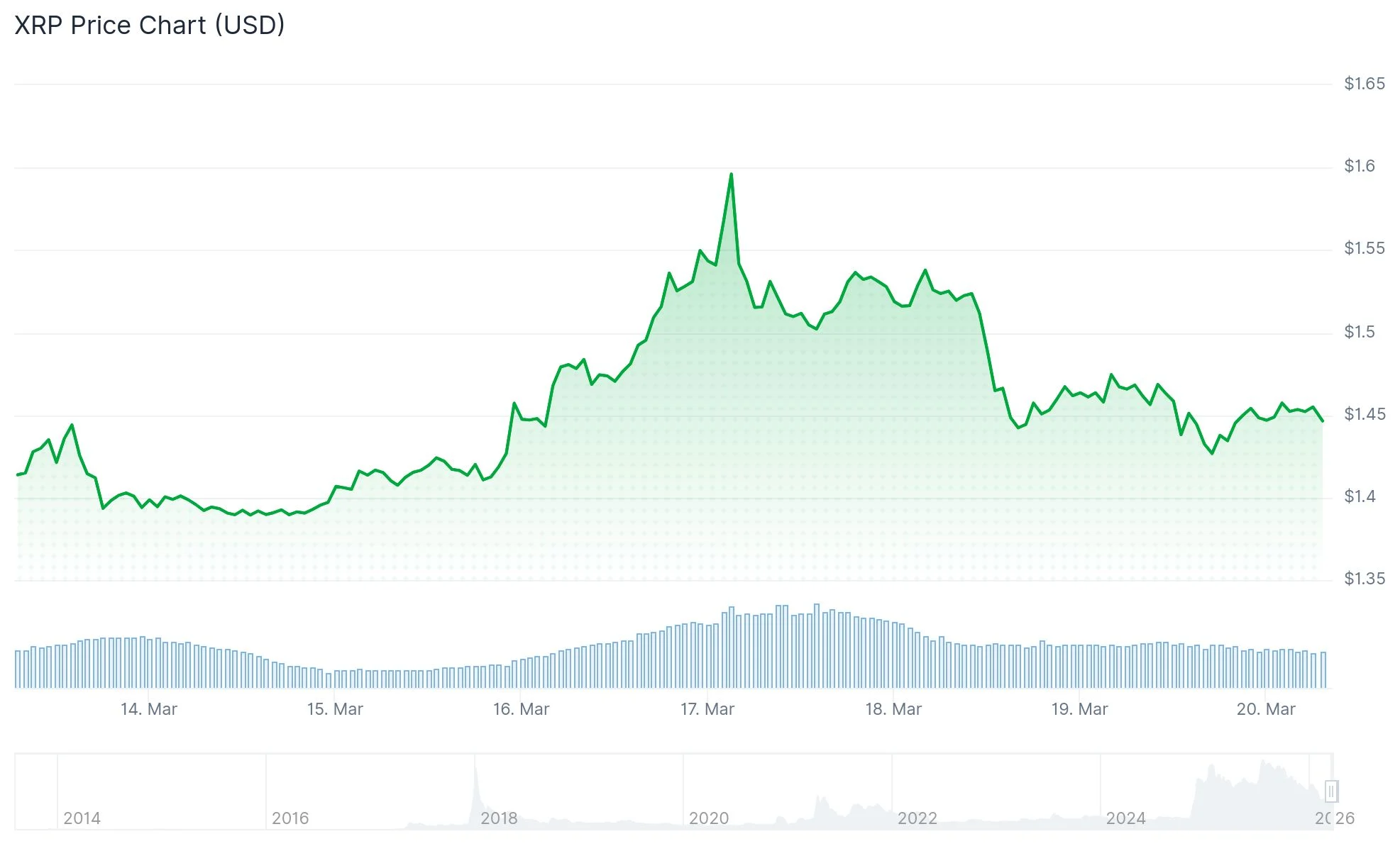
XRP is currently changing hands between $1.42–$1.45 following a pronounced three-day selloff exceeding 10%. This retracement occurred amid widespread digital asset market softness, though multiple blockchain-based metrics suggest a potential reversal formation.
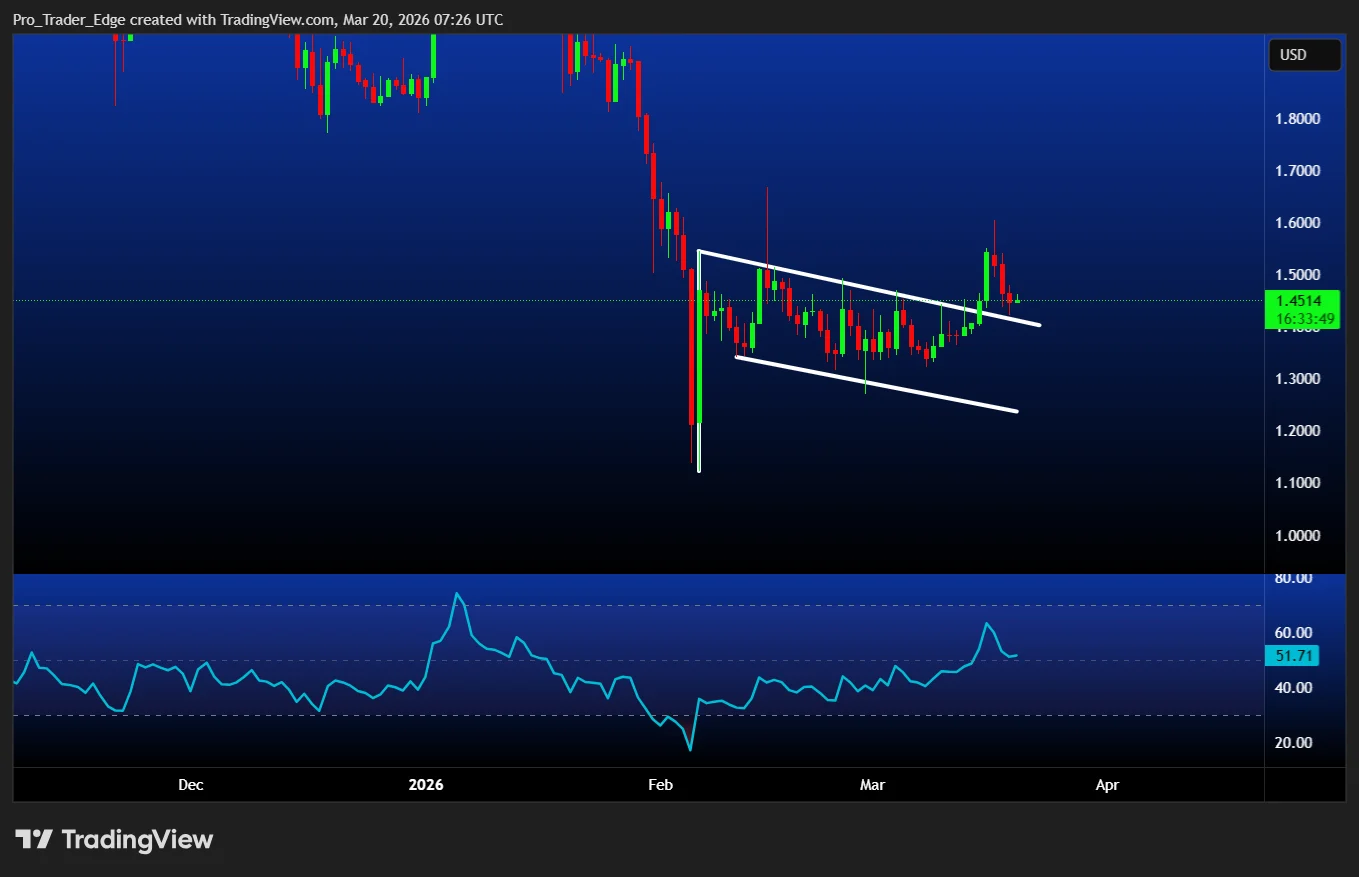
The recent price weakness follows last week’s breakout from a textbook bull flag configuration. According to chart pattern theory, bull flags develop when an asset consolidates within a descending parallel channel after experiencing a strong upward move. Following an upside breakout, assets frequently retest the previous resistance boundary as fresh support — a scenario that seems to be unfolding currently.
The critical support boundary rests in the mid-$1.40 range, which also aligns with the 20-day exponential moving average. Should XRP successfully defend this threshold, the bull flag’s projected objective reaches approximately $1.70–$1.72, representing roughly 20% upside potential from present levels.
South Korean Exchange Withdrawals Reach All-Time Highs
Blockchain analytics from CryptoQuant reveal a dramatic spike in XRP tokens leaving South Korea’s dominant Upbit platform beginning in December 2025. Wallet addresses spanning virtually every size category have been extracting XRP from the exchange at unprecedented velocity. Reduced exchange balances generally indicate diminished immediate selling pressure.
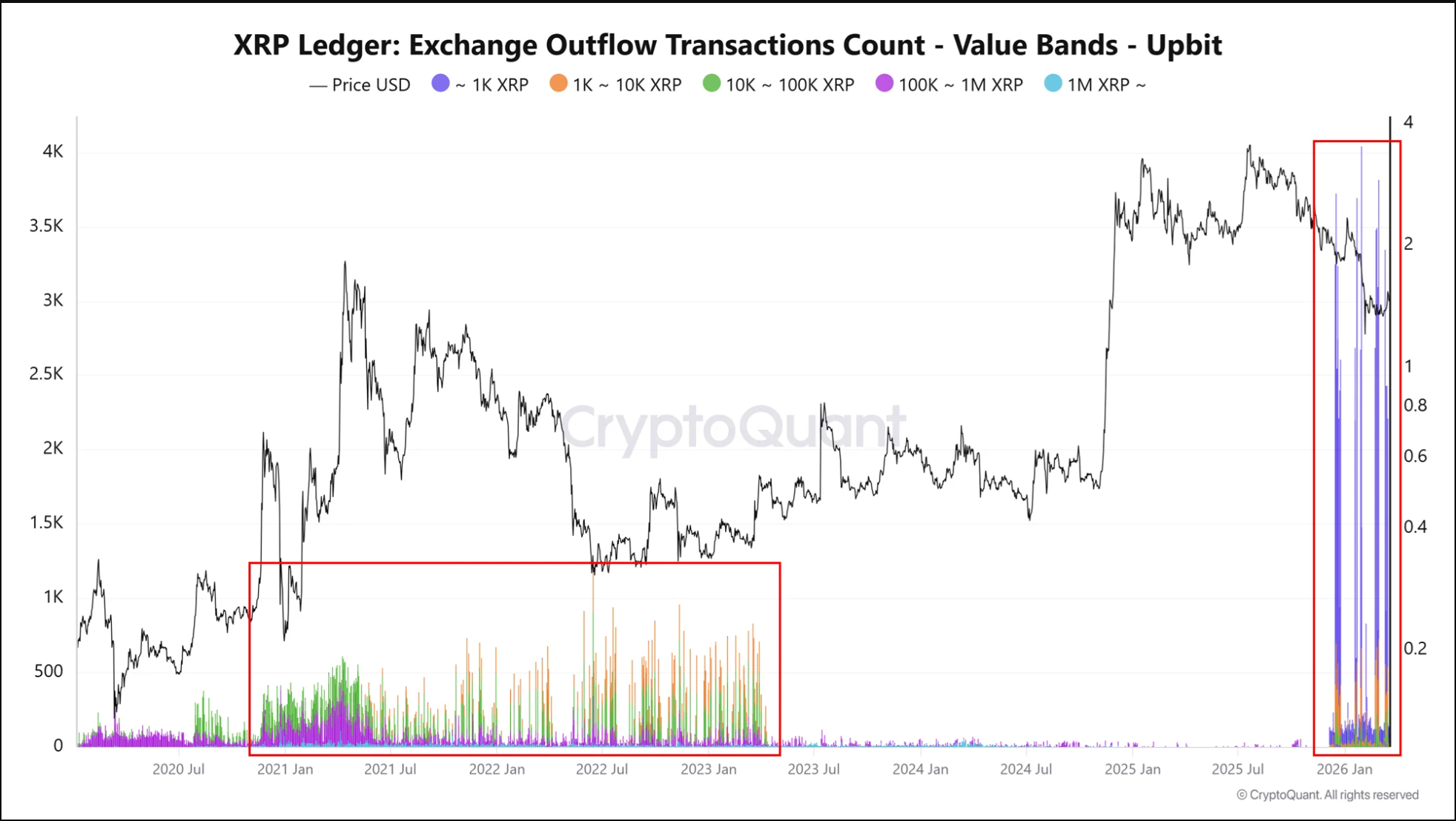
Blockchain researcher CW identified a comparable withdrawal pattern between 2021 and early 2023, when heightened Korean exchange outflows aligned with an accumulation cycle. That timeframe preceded XRP’s explosive rally from sub-$1 levels to beyond $3 — representing approximately 500% gains.

As of Thursday, XRP paired with South Korean Won ranked as the fourth-highest market by 24-hour trading volume according to CoinMarketCap data.
Large Holder Metrics Flip to Accumulation
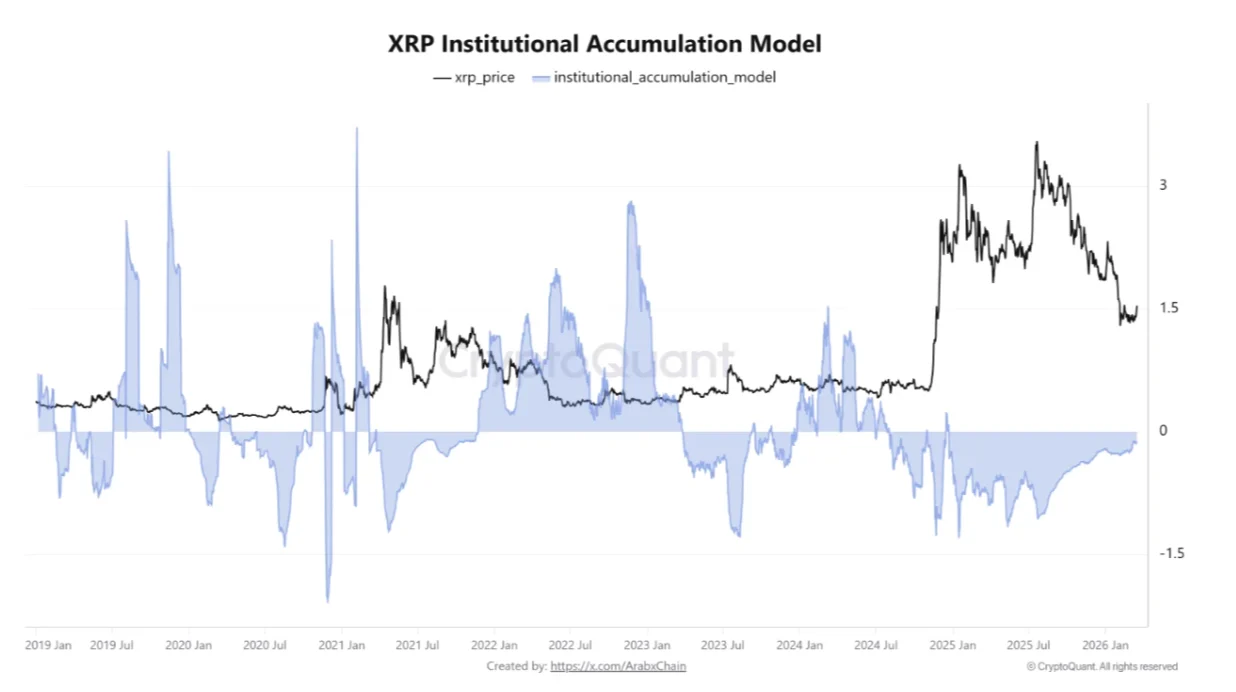
XRP’s 90-day rolling average for whale flow has entered positive territory for the first time following an extended negative period throughout 2024 and into early 2025. Throughout that bearish phase, institutional-sized wallets demonstrated consistent distribution patterns. The current reversal indicates that aggressive selling pressure from major holders may be subsiding.
A comparable metric transition occurred during the April–September 2025 window, when XRP appreciated from approximately $2.20 to $3.55.
From a macroeconomic perspective, the Federal Reserve maintained its policy rate within the 3.5%–3.75% corridor on March 18, referencing persistent inflationary dynamics and geopolitical uncertainty. Financial markets interpreted this stance as restrictive. The CMC Crypto Fear and Greed Index registered 29 at publication time, reflecting heightened market anxiety.
Institutional engagement remains muted. US-domiciled XRP spot exchange-traded funds registered zero net capital inflows on Wednesday. Total assets under management currently stand at approximately $1.02 billion, compared against cumulative inflows totaling $1.21 billion.
Based on CoinGlass liquidation heatmap data, significant liquidity concentration exists around $1.35. A breakdown beneath current support could activate cascading forced liquidations within that zone.
Analyzing the four-hour timeframe, XRP displayed a bearish MACD indicator crossover near the $1.54 resistance threshold. Bullish traders would require a decisive recapture of $1.50 to restore upward momentum, with $1.55 representing the subsequent critical barrier before a potential advance toward $1.60.
Get 3 Free Stock Ebooks
Discover top-performing stocks in AI, Crypto, and Technology with expert analysis.
- Top 10 AI Stocks - Leading AI companies
- Top 10 Crypto Stocks - Blockchain leaders
- Top 10 Tech Stocks - Tech giants



