



Key Highlights
- BTC plunged beneath $69,000, declining more than 4% while oil prices jumped to $119 per barrel
- Brent crude temporarily reached $119 following escalating U.S.-Iran tensions disrupting Middle Eastern energy flows
- Market experts caution oil could climb to $200 if the Strait of Hormuz closure persists
- The Fed maintained current interest rates and indicated potential delays in rate reductions amid inflation pressures
- Blockchain analytics reveal wallets containing 100+ BTC increased by 753 addresses during the last three months
Bitcoin experienced a notable decline this week, slipping beneath the $70,000 threshold as escalating crude oil prices and reserved messaging from the Federal Reserve dampened investor enthusiasm throughout global financial markets.
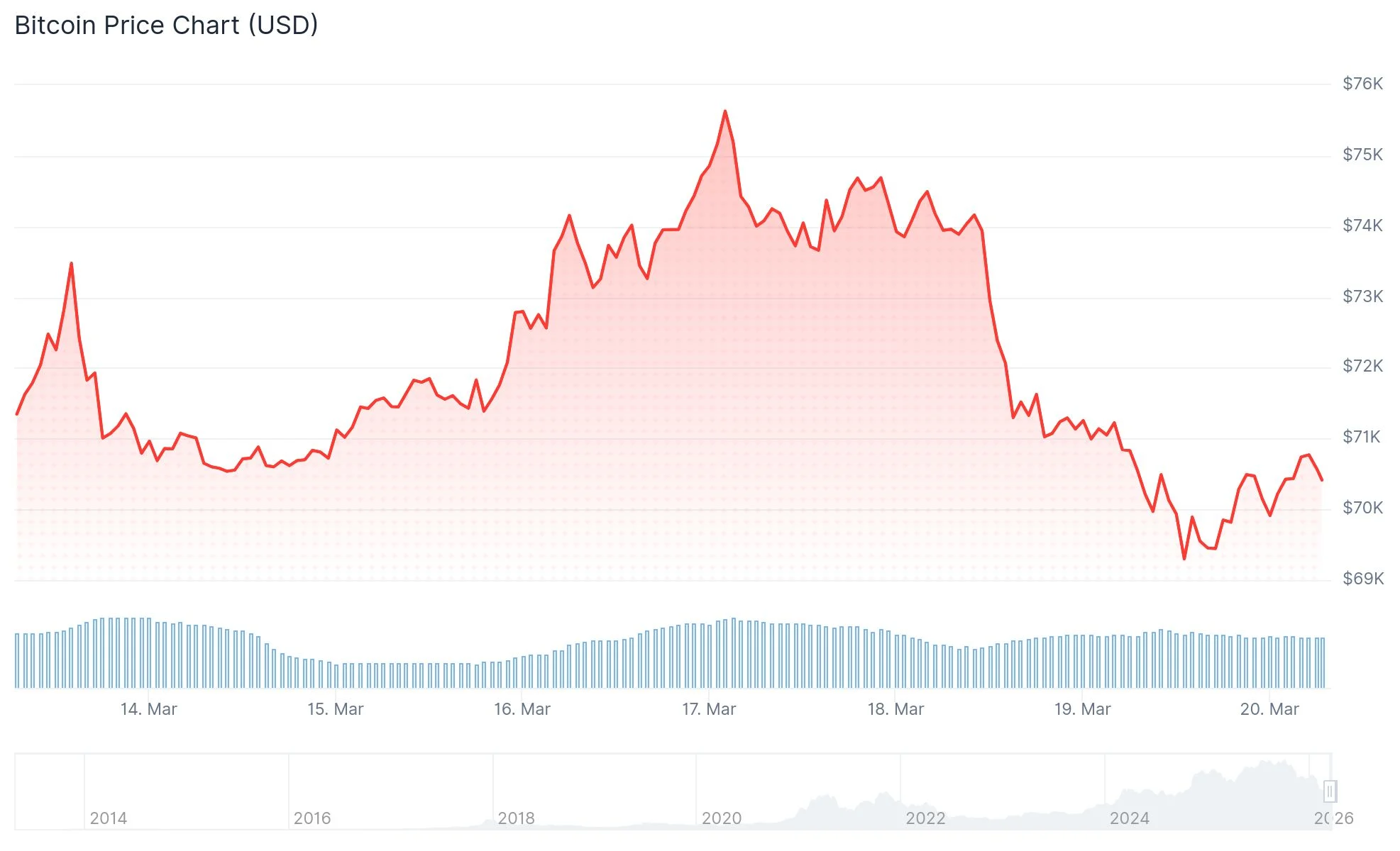
The leading digital asset by market capitalization descended to an intraday bottom of $68,814 on Thursday, representing a decline exceeding 4% from its session peak above $71,000. By Friday’s early trading hours, BTC had recovered slightly to approximately $70,675, though still posting modest losses.
The downturn coincided with Brent crude oil temporarily spiking to $119 per barrel during Thursday’s session. This dramatic increase stemmed from intensifying hostilities between the United States and Iran, with both nations reportedly targeting energy infrastructure.
Regional crude benchmarks including Oman and Dubai were already exchanging hands above $150 per barrel. Vandana Hari, who established oil analysis group Vanda Insights, informed Al Jazeera that a $200 price point for crude was “already within sight.”
“How much further crude climbs from here almost entirely hinges on how much longer the Strait of Hormuz remains closed,” Hari explained.
Adi Imsirovic, an energy specialist at the University of Oxford, similarly told Al Jazeera that $200 oil was “perfectly possible” and characterized it as “a major handbrake to the world economy.”
Energy Market Turbulence Pressures Risky Assets
Market analyst The Kobeissi Letter observed that Bitcoin’s decline formed part of a wider risk-off movement connected to climbing energy costs. “The world is quite literally facing what appears to be the largest energy crisis in history,” they posted on X.
[[EMBED_0]]

Crude prices subsequently retreated following multiple developments. Israeli Prime Minister Benjamin Netanyahu announced Israel would refrain from additional strikes on Iranian energy infrastructure. U.S. Treasury Secretary Scott Bessent indicated Washington might tap the Strategic Petroleum Reserve and potentially permit sanctioned Iranian crude already in transit to enter global markets.
Brent crude dropped back beneath $110 per barrel by Friday, contributing to improved market sentiment.
Federal Reserve Indicates Rate Cut Postponement
The Federal Reserve maintained its current interest rate policy this week. Fed Chairman Jerome Powell cautioned during his press briefing that ascending oil prices might elevate inflation in the coming months, and suggested the central bank would postpone rate reductions until inflation demonstrates meaningful improvement.
PPI inflation figures published Thursday revealed inflation had already climbed to 3.4% during the previous month, preceding the Iran conflict intensification. Market participants are now reducing expectations for the number of rate cuts the Fed might implement throughout 2025.
[[EMBED_1]]
Despite the price contraction, blockchain analytics indicated that Bitcoin whale addresses containing 100 or more BTC expanded by 753 during the preceding three-month period, marking a 3.9% gain, even while the market capitalization declined 20.2% throughout the identical timeframe.
Get 3 Free Stock Ebooks
Discover top-performing stocks in AI, Crypto, and Technology with expert analysis.
- Top 10 AI Stocks - Leading AI companies
- Top 10 Crypto Stocks - Blockchain leaders
- Top 10 Tech Stocks - Tech giants



