



TLDR
- National average fuel cost reached $3.54 per gallon on March 10, marking the steepest rate since mid-2024
- Pump prices have climbed 21% over the past month, adding 50+ cents since hostilities with Iran started Feb. 28
- The Strait of Hormuz, a critical chokepoint for 20% of worldwide petroleum, continues to face severe disruption
- Benchmark crude oil prices whipsawed from approaching $120 down to roughly $84–$85 per barrel in mere days
- Energy experts predict fuel costs won’t retreat to pre-conflict levels given rising seasonal consumption patterns
American motorists are experiencing the highest fuel expenses in more than a year and a half. AAA data confirms the nationwide average climbed to $3.54 per gallon as of March 10 — representing a 21% increase compared to prices just 30 days earlier.
This dramatic escalation stems directly from the military confrontation between the United States and Iran, which erupted on February 28 following coordinated U.S.-Israeli military operations against Iranian targets. The hostilities have severely impacted operations through the Strait of Hormuz, a critical maritime corridor responsible for transporting approximately one-fifth of global petroleum supplies.
According to GasBuddy’s monitoring systems, Americans were paying $2.98 per gallon the day preceding the outbreak of conflict. This translates to motorists now shelling out over 50 additional cents each time they refuel their vehicles.
Bespoke Investment Group’s market analysis indicates that last week’s three-day price acceleration represents the most severe spike witnessed since Hurricane Katrina devastated Gulf Coast infrastructure in 2005.
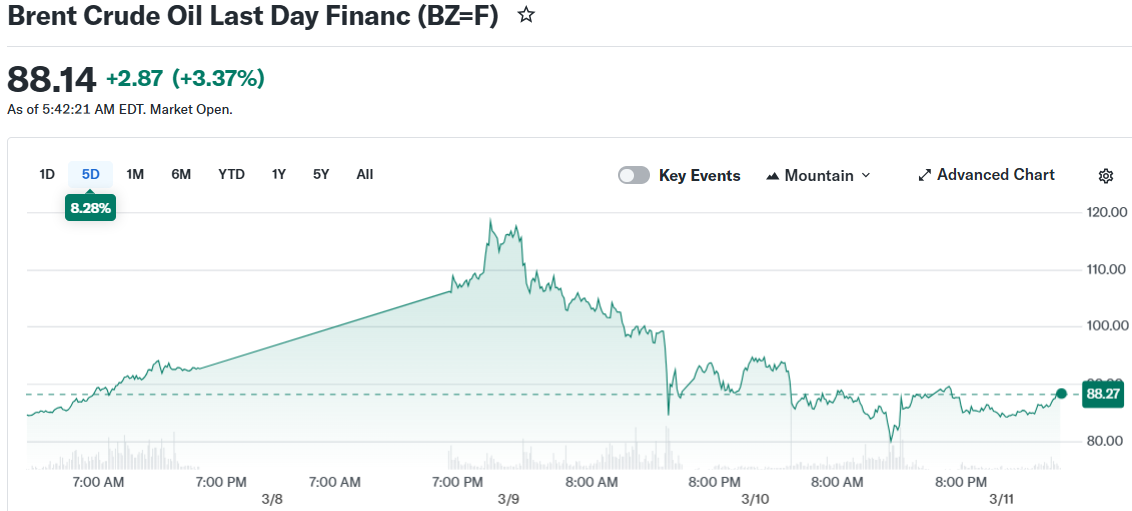
Benchmark oil prices have experienced extraordinary turbulence. Brent crude petroleum skyrocketed to nearly $120 per barrel during Monday’s early trading before retreating to approximately $85 following President Trump’s statement suggesting hostilities might conclude “very soon.” Meanwhile, West Texas Intermediate has appreciated roughly 25% since February ended.

Why Gas Prices Are Staying High
Despite crude petroleum’s decline, retail fuel prices haven’t mirrored that downward trajectory — at minimum, not immediately. Patrick De Haan, a petroleum analyst with GasBuddy, forecasts prices will plateau somewhere between $3.55 and $3.65 per gallon during the coming 24 to 36 hours.
Two primary factors explain this price rigidity. Initially, fuel retailers don’t instantaneously transfer reduced crude acquisition costs to consumers. Additionally, seasonal consumption patterns are intensifying as spring vacation season commences and milder temperatures encourage increased driving activity.
Fuel retailers must also transition to costlier summer-formulation gasoline, mandated for sale between June 1 and September 15. This specialized blend characteristically increases consumer costs by approximately 15 cents per gallon.
De Haan emphasized that elevated pricing will persist so long as the Strait of Hormuz remains compromised. Iranian authorities threatened the previous week to ignite oil tankers, and Bloomberg’s monitoring systems indicated the waterway stayed predominantly closed through Tuesday.
What Comes Next
Aramco CEO Amin Nasser called the disruption the biggest crisis the region’s oil and gas industry has ever faced. “While we have faced disruptions in the past, this one by far is the biggest,” he said.
Raymond James analyst Bobby Griffin indicated that assuming crude petroleum stabilizes, fuel distributors will experience margin compression spanning several weeks before market equilibrium returns.
Iran’s foreign minister declared Tuesday that the nation remained committed to continued resistance and dismissed any prospect of diplomatic negotiations with Washington.
As of Tuesday, Defense Secretary Pete Hegseth called it the “most intense day of strikes” on Iran. President Trump said the U.S. could act to protect shipping in the strait.
The Strait of Hormuz remained functionally blocked as of March 10, with limited exceptions for certain Iran-affiliated maritime traffic.
Get 3 Free Stock Ebooks
Discover top-performing stocks in AI, Crypto, and Technology with expert analysis.
- Top 10 AI Stocks - Leading AI companies
- Top 10 Crypto Stocks - Blockchain leaders
- Top 10 Tech Stocks - Tech giants



