



TLDR
- Jan van Eck, CEO of VanEck, declares Bitcoin is establishing a bottom as the four-year halving cycle approaches its conclusion in 2026.
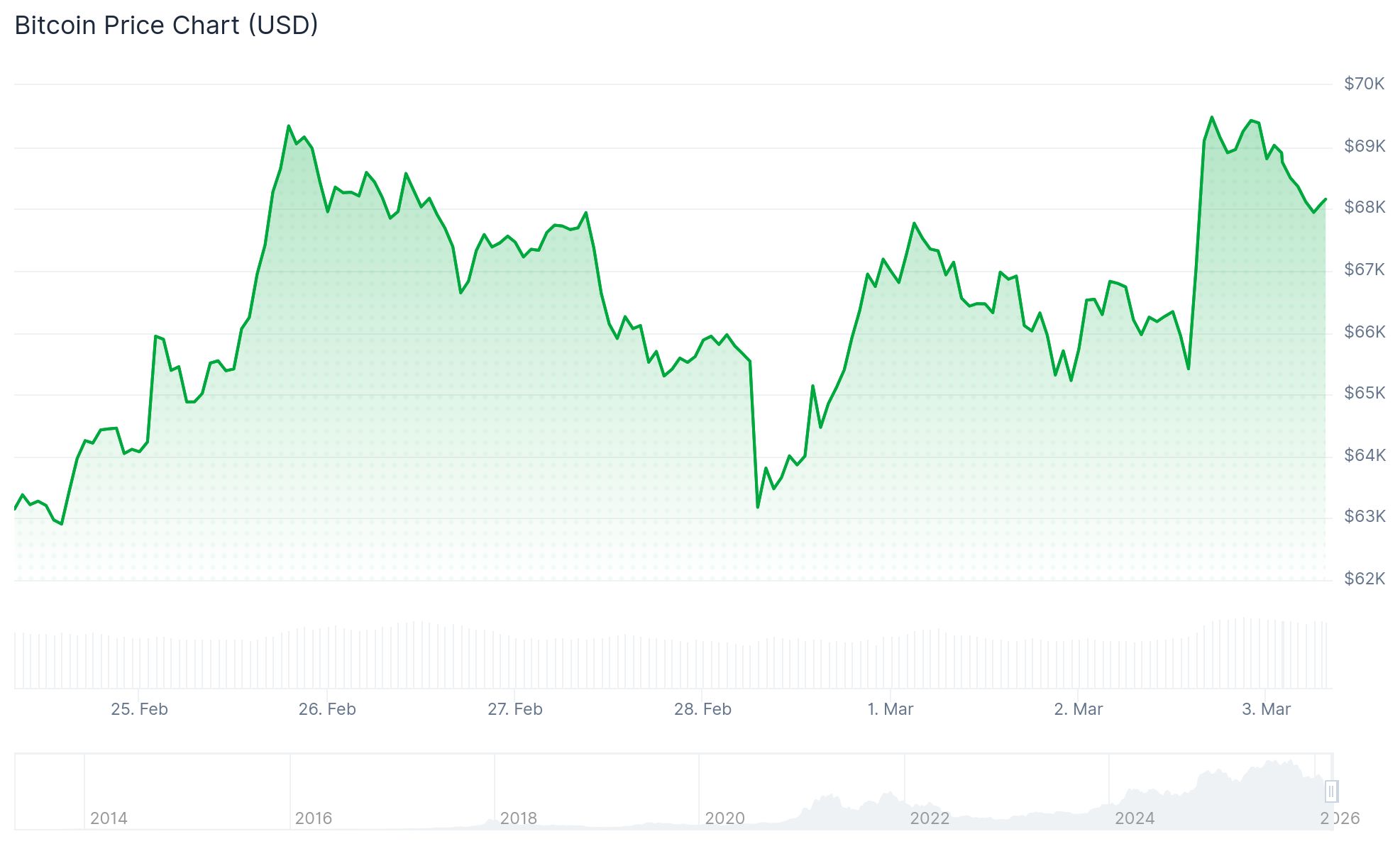
- Bitcoin currently trades around $68,000, showing a 2.6% gain over 24 hours and 7.6% weekly increase.
- Spot Bitcoin ETFs in the United States attracted $458 million in net inflows during a single trading session, marking one of the quarter’s best performances.
- Middle East tensions involving the U.S., Israel, and Iran contribute to market volatility, though institutional capital remains resilient.
- Year-to-date, Bitcoin has fallen 22% and sits more than 40% below its October peak.
As of March 3, 2026, Bitcoin is hovering around the $68,000 mark, reflecting approximately a 2.6% uptick over the previous day.
Despite the recent gains, the leading cryptocurrency remains 22% lower than its year-start value and continues trading more than 40% beneath the all-time high reached in October 2025.
In a Monday interview with CNBC, VanEck’s CEO Jan van Eck expressed his conviction that Bitcoin is currently establishing a market bottom.
Van Eck attributes the ongoing bear market primarily to the four-year halving cycle rather than any deterioration in Bitcoin’s underlying fundamentals.
“Bitcoin experiences three consecutive years of growth, followed by a significant decline in the fourth year. 2026 represents that fourth year,” van Eck explained.
He emphasized that Bitcoin’s fixed supply cap of 21 million coins, combined with the halving of miner rewards every four years, creates a structural mechanism that influences price patterns.

Van Eck also noted that BTC’s recent price strength might be partially connected to escalating geopolitical conflicts following air strikes conducted by the U.S. and Israel on Iran, along with Iran’s retaliatory actions against Israel.
He proposed that cryptocurrency payment systems could function as alternative channels for transferring capital outside conventional banking networks in areas experiencing conflict, pointing to the UAE and Dubai as case studies.
ETF Inflows Maintain Momentum Amid Geopolitical Turmoil
According to SoSoValue data, U.S. spot Bitcoin ETFs registered approximately $458 million in net inflows on Tuesday — representing one of the quarter’s most substantial daily totals.
During three back-to-back trading sessions last week, these investment vehicles accumulated $1.1 billion combined. BlackRock’s IBIT product captured roughly 50% of those capital flows.
Singapore-based QCP Capital reported that around $300 million worth of long positions were liquidated following weekend geopolitical developments, characterizing the impact as “contained.”
One-day implied volatility in options markets temporarily surged to 93% before retreating, which QCP interpreted as evidence of traders protecting against event-driven risk rather than anticipating extended crisis conditions.
BTC Continues Struggling Below $70,000 Threshold
Bitcoin has predominantly ranged between $60,000 and $70,000 throughout February. The asset reached $69,213 on Monday but couldn’t breach the $70,000 resistance level it last held in late January.
At 01:25 ET on Tuesday, Bitcoin was changing hands at $67,884, representing a 2.5% daily advance.
Market observers note that investor risk appetite remains tentative as military operations in the Middle East persist, with government officials in the U.S., Israel, and Iran showing limited willingness to reduce tensions.
According to CoinGecko data at publication time, Bitcoin is trading at $68,153.
Get 3 Free Stock Ebooks
Discover top-performing stocks in AI, Crypto, and Technology with expert analysis.
- Top 10 AI Stocks - Leading AI companies
- Top 10 Crypto Stocks - Blockchain leaders
- Top 10 Tech Stocks - Tech giants



