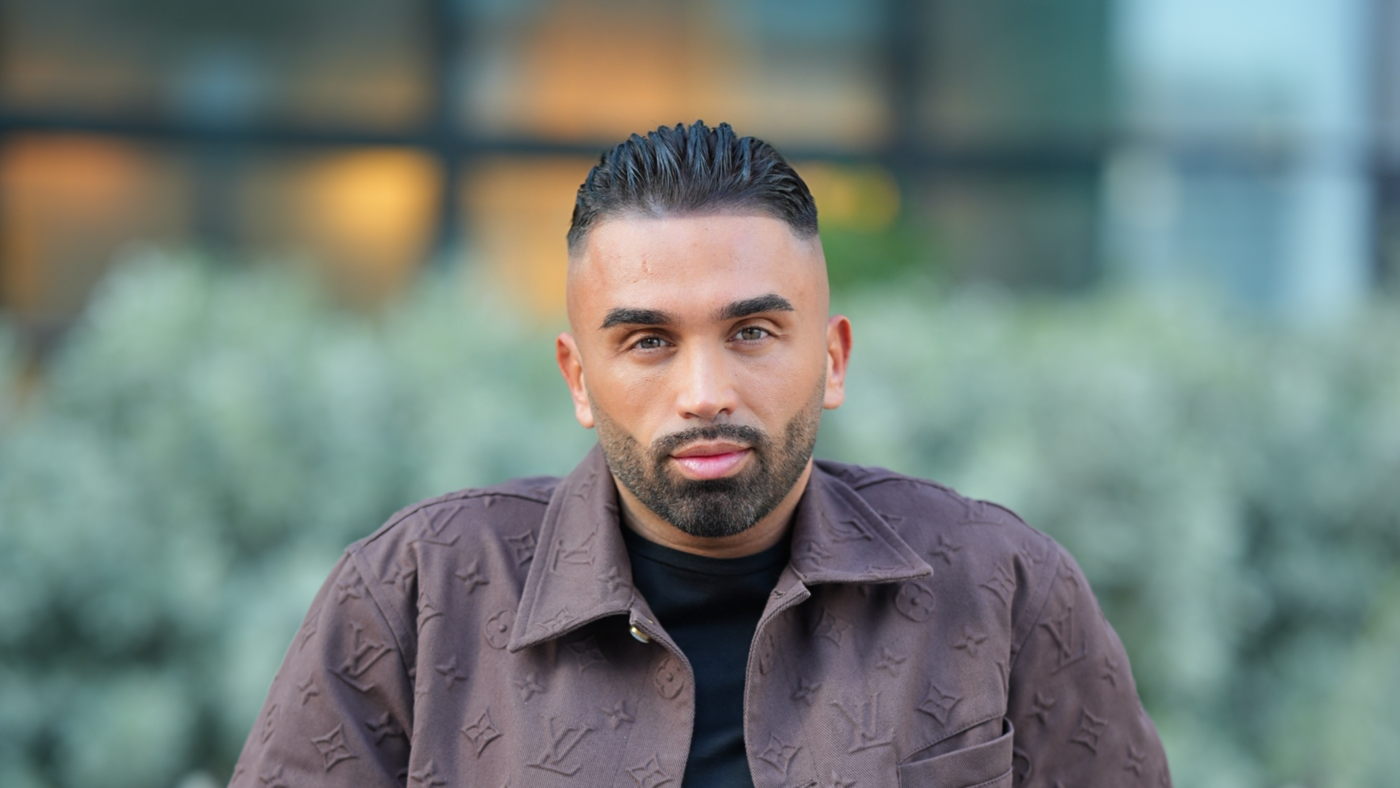
In modern gaming and technology, founders are often celebrated for vision but constrained by structure. Capital arrives early, governance follows quickly, and autonomy erodes long before scale is achieved. Gurhan Kiziloz has taken a different route. Control has not been ceded. Independence has not been diluted. And risk, rather than being distributed across committees and investors, has remained concentrated with the founder himself.
That concentration is not accidental. It is the organising principle behind how Kiziloz builds.
Today, Kiziloz’s personal net worth is estimated at $1.7 billion, largely derived from three assets he built without institutional backing: Nexus International, its flagship casino brand Spartans.com, and his holdings in the Layer-1 blockchain project BlockDAG. The scale of those outcomes places him among a small group of operators who reached billion-dollar outcomes without venture capital, private equity, or public markets acting as accelerants.
Control as Strategy
Kiziloz does not operate through consensus. There is no sprawling board structure dictating pace, no investor syndicate shaping priorities, and no external capital imposing timelines. Decisions are made centrally and executed quickly. That control has been most visible when performance lagged expectations.
At BlockDAG, senior leadership, including the chief executive, was removed abruptly after internal benchmarks were missed. No extended process followed. No public justification was offered. Authority reverted directly to the founder. To critics, the move appeared destabilising. To those familiar with founder-led organisations, it followed a familiar logic: when outcomes drift, structure tightens.
This style echoes a pattern seen in other founder-driven systems. Steve Jobs centralised control at Apple during its recovery years. Elon Musk compressed decision-making at Tesla and later at Twitter, now X. In each case, governance was deliberately subordinated to execution. The wager is straightforward. Speed matters more than harmony. Accountability matters more than optics.

Kiziloz’s approach fits that lineage. Titles do not insulate. Tenure does not protect. Leadership is conditional on output.
Independence Without a Safety Net
What distinguishes Kiziloz from many aggressive founders is not temperament, but funding structure. He operates without the cushioning effect of outside capital. There are no investors to absorb missteps, no dilution to socialise losses, and no exit pressure forcing premature liquidity events.
Nexus International, which encompasses Spartans.com, Megaposta, and Lanistar, closed 2025 at approximately $1.2 billion in revenue. The original target was higher, and profit dipped roughly 7 percent versus expectations. In a public company, that shortfall would likely have triggered defensive cost controls and guidance recalibration. In a venture-backed firm, it might have prompted a bridge round.
Instead, Nexus continued to invest. Capital was redirected toward infrastructure, brand, and scale, including a high-profile one-off hypercar giveaway tied to Spartans.com. The logic was not quarterly optimisation, but long-term positioning. Independence allows that trade-off. It also removes excuses.
If those bets fail, the consequences accrue directly to Kiziloz.
Risk That Cannot Be Outsourced
Concentrated control amplifies both upside and downside. There is no board to slow a bad decision, and no partner to counterbalance founder bias. Critics argue this creates fragility. Single-point failure is a real risk. Internal dissent can be muted. Strategic blind spots can persist longer than they should.
Kiziloz appears aware of this trade-off and willing to accept it. His posture suggests a belief that distributed governance introduces a different, less visible risk: paralysis. Many gaming and blockchain projects do not collapse spectacularly. They stagnate. Decision latency increases. Responsibility diffuses. Execution slows until relevance erodes.
By retaining control, Kiziloz has chosen a different risk profile. Failure, if it comes, will be decisive rather than incremental. Success, if sustained, will be attributable rather than diluted.
This philosophy is consistent across his ventures. Spartans.com operates with a lean structure and centralised capital allocation. Nexus expanded without acquisitions or leverage-driven rollups. BlockDAG’s leadership reset reflects the same intolerance for drift.
The Founder’s Bet
The question is not whether this model is comfortable. It is not. Nor is it broadly replicable. Few founders possess the balance sheet to self-fund at scale, and fewer still are willing to absorb the reputational and operational risk that concentrated authority entails.
The question is whether the model is coherent.
So far, the evidence suggests it is. Nexus reached billion-dollar scale without institutional capital. Spartans.com has become a primary revenue engine. BlockDAG remains contentious, but alive, controlled, and under direct founder stewardship.
Kiziloz governs without insulation and builds without permission. That posture exposes him to sharper criticism and greater downside. It also preserves something increasingly rare at scale: the ability to act.
In markets that punish hesitation more than error, that may be the most consequential asset a founder can retain.
Disclaimer: This is a Press Release provided by a third party who is responsible for the content. Please conduct your own research before taking any action based on the content.
Get 3 Free Stock Ebooks
Discover top-performing stocks in AI, Crypto, and Technology with expert analysis.
- Top 10 AI Stocks - Leading AI companies
- Top 10 Crypto Stocks - Blockchain leaders
- Top 10 Tech Stocks - Tech giants