


Key Takeaways
- Q1 revenue reached $2.65 billion, marking a 30% year-over-year increase, with Americas organic growth surging 44%
- A massive $15 billion order backlog provides visibility through 2028, with customers booking 12–16 months out
- Baird launched coverage with a Buy recommendation and $370 price objective before July 29 Q2 results
- Year-to-date gains of 82% position VRT stock strongly; analyst consensus target sits at $392.38
- Total addressable market projection increased from $62 billion to $75 billion amid rising rack power requirements
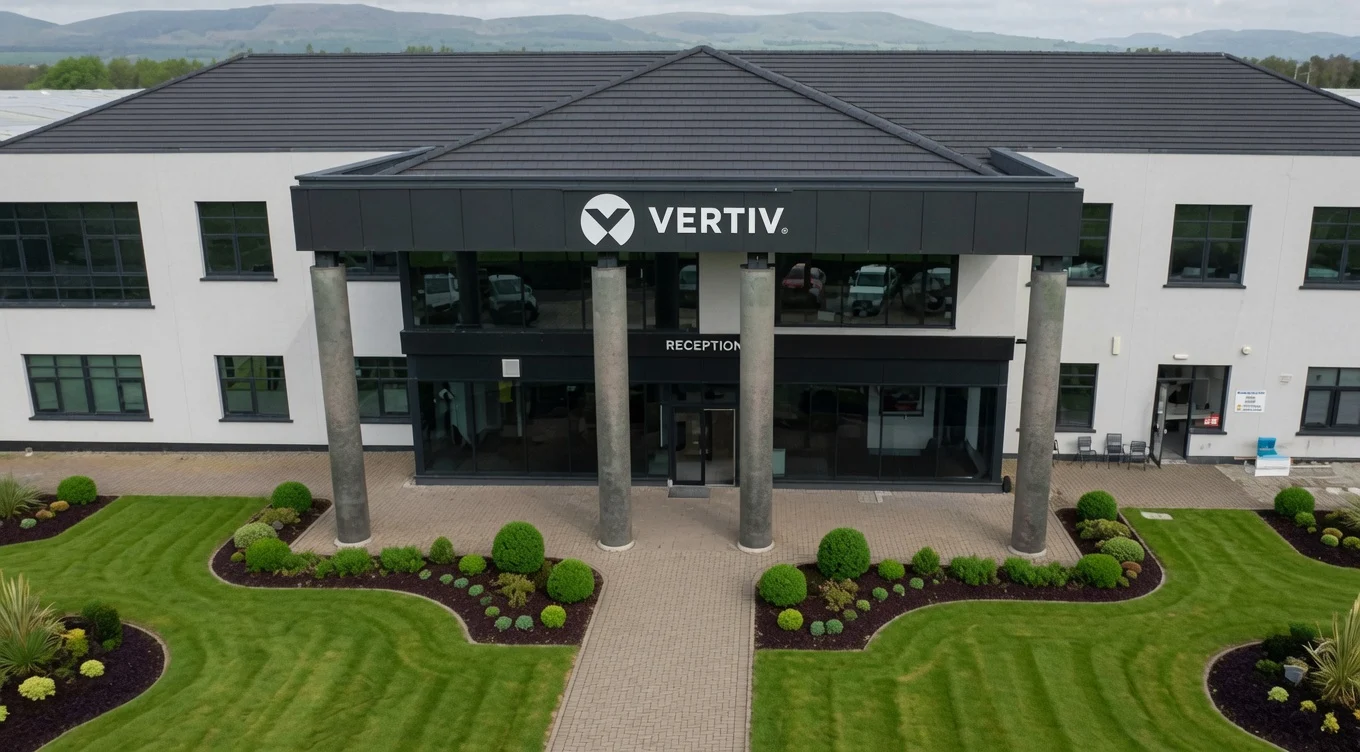
Vertiv Holdings (VRT) is currently hovering near $293.93, reflecting an impressive 82% climb since January, and the investment community is paying close attention. As the company prepares to unveil Q2 results on July 29, Baird has launched coverage with a Buy recommendation and $370 price objective, emphasizing Vertiv’s strategic collaboration with Nvidia as a critical advantage.
Analyst Luke Junk at Baird drew attention to Vertiv’s leadership position in 800V DC power solutions. Nvidia has openly recognized Vertiv’s capabilities in thermal management and power delivery systems, which Junk believes solidifies the company’s standing as the sector transitions to advanced power architectures.
The financial performance validates this thesis. During Q1, Vertiv delivered net revenue of $2.65 billion, representing a 30% year-over-year increase. The Americas division was the standout performer with 44% organic expansion, propelled by explosive AI data center infrastructure demand.
Operating margin improved to 20.8% during the period. Management also elevated its full-year adjusted operating profit forecast to $3.2 billion.

The Backlog That Signals Future Growth
Vertiv’s $15 billion order pipeline represents one of the most compelling indicators of future demand trends. Clients are securing orders up to 16 months before expected delivery, providing the company with revenue predictability extending to 2028.
CEO Gio Albertazzi emphasized that clients are purchasing complete integrated platforms designed around particular silicon architectures, including Nvidia’s upcoming chip generations. This approach minimizes the risk of duplicate ordering, a problem that has affected other supply chain participants.
Power density requirements per rack are accelerating rapidly. Industry averages have already shifted from 140 kilowatts to 300 kilowatts, and Vertiv anticipates this metric will reach 600 kilowatts. This trajectory directly increases demand for the company’s thermal and power management technologies.
Responding to these dynamics, Vertiv has revised its total addressable market projection upward from $62 billion to $75 billion. The firm is simultaneously developing pre-configured modular systems to match the accelerated pace of data center construction.
The Services Division: A Hidden Growth Engine
Baird’s Junk identified Vertiv’s services operation as an overlooked component of the investment thesis. This division represents approximately 20% of total revenue and produces recurring cash flows. As facilities transition to 800V DC architectures, Vertiv anticipates this segment will gain strategic importance.
Junk also noted the company’s approximately $24 billion in available capital for strategic deployment. He anticipates Vertiv will pursue strategic acquisitions to broaden its market footprint and enhance the economic value delivered per megawatt of data center infrastructure.
Wall Street forecasts earnings per share expansion of 57% for the current year and 36% through 2027. This trajectory places VRT at roughly 34 times projected 2027 earnings, a significant compression from its current price-to-earnings multiple of approximately 73 times.
The Street’s consensus recommendation for VRT stands at Strong Buy, supported by 16 Buy calls and three Hold ratings. The mean price objective of $392.38 suggests potential upside of approximately 33.4% from present trading levels.
Vertiv is scheduled to announce Q2 financial results on July 29.
Get 3 Free Stock Ebooks
Discover top-performing stocks in AI, Crypto, and Technology with expert analysis.
- Top 10 AI Stocks - Leading AI companies
- Top 10 Crypto Stocks - Blockchain leaders
- Top 10 Tech Stocks - Tech giants



