



TLDR
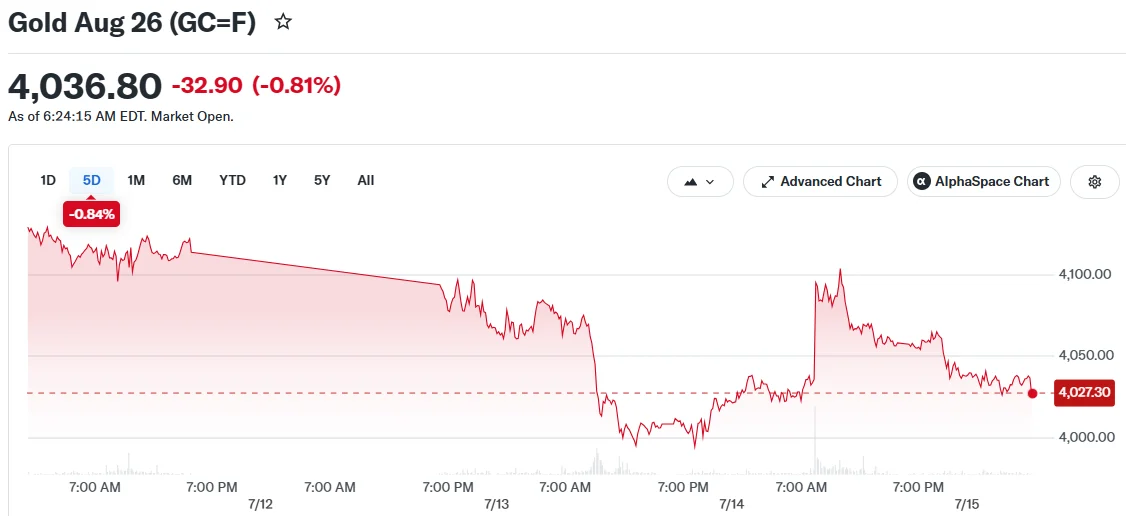
- Gold declined more than 0.6% on Thursday, reversing momentum from a 2% surge earlier in the week
- June’s U.S. inflation data temporarily lifted gold after showing the first monthly decline since 2020
- Crude oil’s upward trajectory is rekindling concerns about inflation and potential Fed policy tightening
- Traders now see approximately 58% odds of a September Fed rate increase, compared to 76% before inflation data
- Federal Reserve Chair Kevin Warsh indicated additional monetary tightening could occur if inflation continues
Precious metal markets experienced a sharp reversal Thursday as escalating crude oil values prompted traders to reassess the Federal Reserve’s interest rate trajectory.
As of 4:41 AM ET, spot gold declined 0.63% to settle at $4,027.31 per ounce. Gold futures contracts posted a steeper decline of 0.89%, reaching $4,033.35.
Silver experienced a parallel downturn, falling 0.70% to $58.30 per ounce. Platinum bucked the trend with a modest 0.34% increase to $1,638.20.
Short-Lived Gains Evaporate
Gold had surged over 2% earlier this week following the release of June’s Consumer Price Index, which revealed the first monthly price decrease in four years.
The encouraging inflation figures initially prompted market participants to scale back expectations for imminent Federal Reserve rate adjustments. Both Treasury yields and the dollar index retreated following the announcement.

However, the positive sentiment proved fleeting. Within days, market focus pivoted back toward energy markets and their potential impact on inflation trajectories.
Oil prices extended gains for a third consecutive trading day amid President Donald Trump’s maintenance of a naval blockade targeting Iranian ports, accompanied by warnings of potential military action.
The escalating U.S.-Iran standoff has intensified concerns regarding global energy availability. MUFG analysts observed that “renewed U.S.-Iran tensions and higher oil prices continue to pose upside risks to inflation.”
Central Bank Remains Vigilant
Fed Chair Kevin Warsh emphasized that additional policy tightening remains a viable option should inflationary pressures persist.
While Federal Reserve policymakers acknowledged the recent moderation in inflation metrics, they stressed the need for sustained evidence before concluding that inflation is moving toward their 2% objective.
Elevated interest rates typically weigh on gold valuations. Since the precious metal generates no income, rising bond yields make alternative investments more appealing to portfolio managers.
ANZ analysts suggested gold may remain confined to a trading range in the immediate term, as expectations for potential rate increases this year limit upside potential.
They noted that buying momentum could resurface during more significant price corrections, citing favorable long-term fundamentals supporting the yellow metal.
What Lies Ahead
Market pricing currently reflects approximately 58% probability for a September rate hike, based on CME FedWatch data. This represents a significant decline from the 76% probability observed before Tuesday’s CPI report.
Traders are closely monitoring U.S. producer price figures scheduled for release later Thursday for additional insights into inflation trends.
Decreasing gasoline costs contributed to June’s favorable CPI reading, though any resurgence in energy expenses could rapidly alter that dynamic.
Currently, gold finds itself squeezed between conflicting forces — moderating inflation statistics on one hand and oil-fueled inflation anxiety on the other.
Get 3 Free Stock Ebooks
Discover top-performing stocks in AI, Crypto, and Technology with expert analysis.
- Top 10 AI Stocks - Leading AI companies
- Top 10 Crypto Stocks - Blockchain leaders
- Top 10 Tech Stocks - Tech giants



