



Key Highlights
- Bitcoin advanced 3.6% to approach $64,800 following a softer-than-anticipated June CPI reading of 3.5%
- Probability of a Federal Reserve rate increase plummeted from 43% to 13% after inflation data release
- Ether outpaced crypto markets with a 5.3% daily surge, reaching approximately $1,880
- Banking sector stocks soared as JPMorgan delivered record-breaking quarterly earnings alongside strong results from competitors
- Crude oil extended gains amid escalating U.S.-Iran tensions and concerns over Strait of Hormuz access
Financial markets experienced a decisive shift after June’s inflation figures came in below forecasts, triggering a broad rally across cryptocurrencies and equities while drastically reducing expectations for additional Federal Reserve tightening.
The Consumer Price Index registered a 3.5% year-over-year increase through June, marking a significant decline from May’s 4.2% reading. Core inflation, which excludes volatile food and energy components, decreased to 2.6% from the previous month’s 2.9%. This moderation in underlying price pressures effectively eliminated the primary argument for further monetary policy tightening.
Traders rapidly repriced rate hike expectations, with July increase probability collapsing from 43% to merely 13% following the release. Two-year Treasury yields declined six basis points in response.
Bitcoin posted a 3.6% gain over the 24-hour period, approaching $64,800 in what marked its strongest performance in several weeks. Trading volume during the rally exceeded $31 billion.
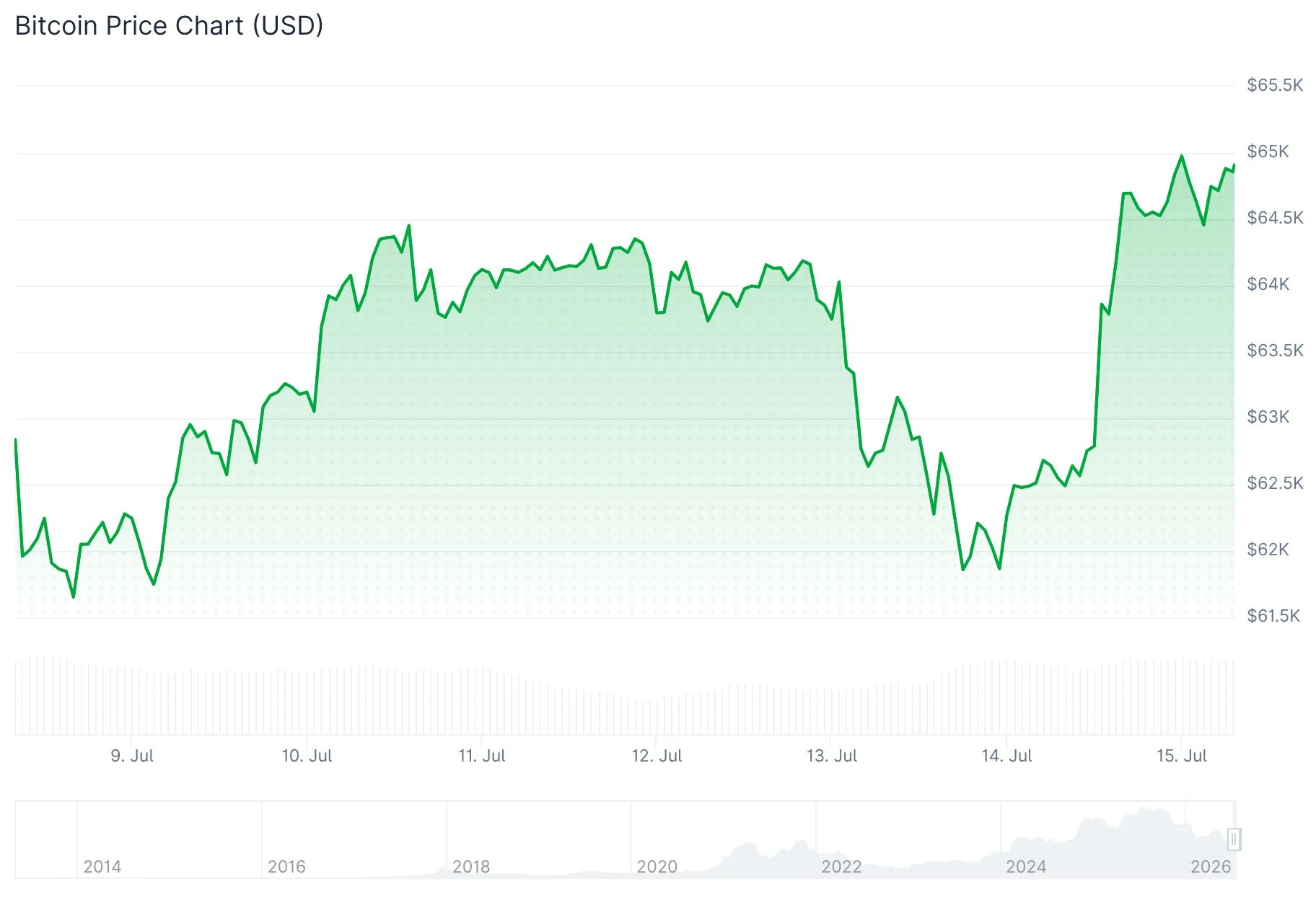
Ether emerged as the top performer among major cryptocurrencies, surging 5.3% during the session to trade near $1,880, representing a 7.1% weekly advance. Broader crypto markets followed suit with widespread gains. Hyperliquid’s HYPE token increased 6.4% to reach $67, XRP climbed 3.7% to $1.10, Solana advanced 3.6% to $78, dogecoin posted a 2.9% rise, and BNB added 1.9% to settle at $579.

The Connection Between Inflation Readings and Bitcoin Performance
Rate hikes by the Federal Reserve make traditional yield-bearing instruments like bonds and savings accounts more attractive. This dynamic typically diverts capital away from non-yielding assets such as Bitcoin. Conversely, when rate increase expectations diminish, the comparative disadvantage of holding crypto assets lessens, often resulting in renewed capital inflows.
Jeff Ko, chief analyst at CoinEx, characterized the CPI report as removing “immediate downside pressure without building a durable breakout.” He emphasized that with core inflation still at 2.6%—above the Fed’s 2% objective—the central bank maintains flexibility to pause rate increases but lacks sufficient justification for cuts.
Ko identified the September FOMC meeting as the next critical catalyst for cryptocurrency markets, along with ETF capital flows and dollar strength trends.
Banking Sector Strength and Equity Market Performance
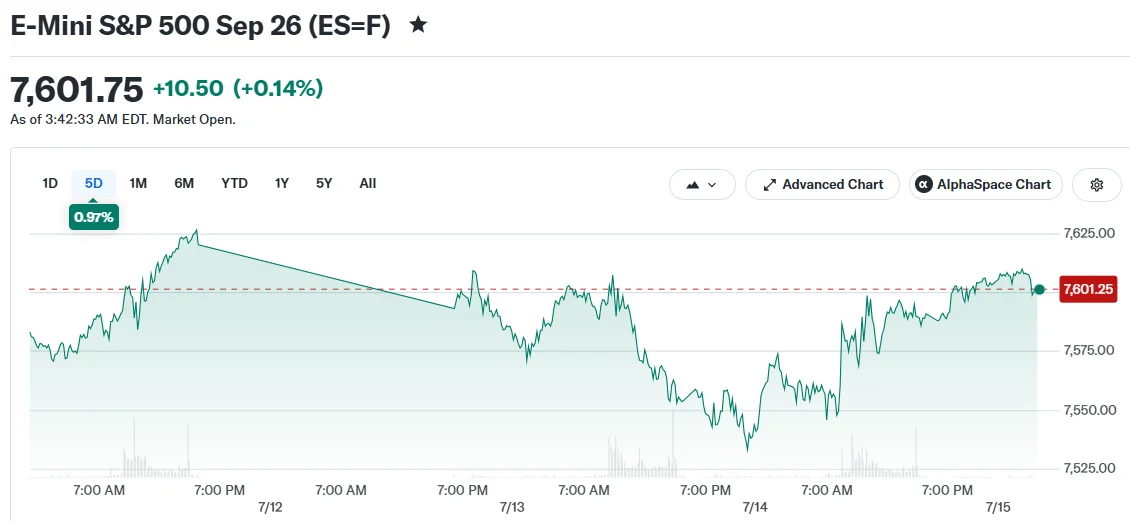
Equity indices also advanced following the inflation release. The S&P 500 climbed 0.38% to close at 7,543.59, the Nasdaq Composite jumped 0.90% to 26,107.01, while the Dow Jones Industrial Average edged higher by 0.02% to finish at 52,508.27.
Financial sector earnings provided additional momentum. JPMorgan Chase announced record quarterly profits, propelling its stock to unprecedented levels. Goldman Sachs, Bank of America, and Citigroup each exceeded analyst projections. Robust trading desk performance and increased corporate transaction activity powered the impressive results.
However, not all companies benefited from the positive sentiment. IBM shares plummeted 25% after management cautioned about substantial earnings headwinds, acknowledging the company had failed to adapt quickly enough to corporate technology spending patterns shifting from traditional software toward data-center infrastructure investments.
Asia-Pacific equity markets demonstrated similarly strong responses. South Korea’s Kospi index surged 8.2%, while SK Hynix shares climbed 13% in Seoul trading after its U.S. depositary receipts jumped 27% stateside.
Energy markets maintained their upward trajectory as Brent crude settled at $84.73 per barrel, gaining 1.7% on the session. Ongoing military exchanges between the U.S. and Iran, combined with the ongoing standoff concerning Strait of Hormuz navigation, sustained supply disruption concerns. Crude prices have appreciated approximately 11% across the past two trading sessions.
Get 3 Free Stock Ebooks
Discover top-performing stocks in AI, Crypto, and Technology with expert analysis.
- Top 10 AI Stocks - Leading AI companies
- Top 10 Crypto Stocks - Blockchain leaders
- Top 10 Tech Stocks - Tech giants



