


Key Highlights
- General Fusion (GFUZ) launched on Nasdaq Monday following the closure of its SPAC transaction with Spring Valley Acquisition Corp. III
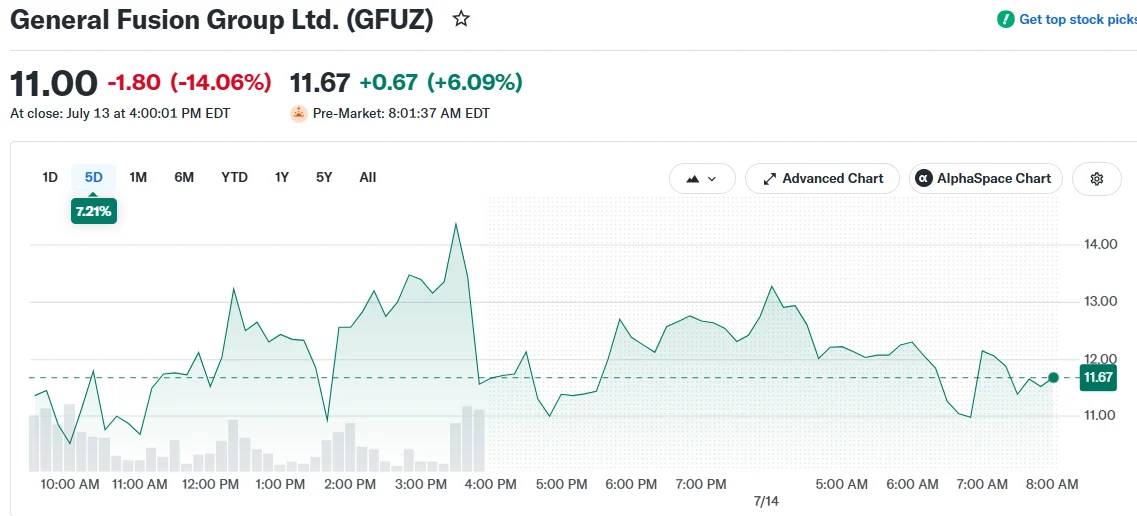
- Shares finished the inaugural trading session up 21% at $11, after touching nearly 30% gains during the day
- The transaction generated $150 million in proceeds, sufficient to finance the company’s operations until 2028
- The firm’s roadmap includes launching its first commercial fusion power plant by 2035
- Amazon founder Jeff Bezos joined as an investor back in 2011; TIME magazine placed the company atop its 2026 GreenTech Companies ranking
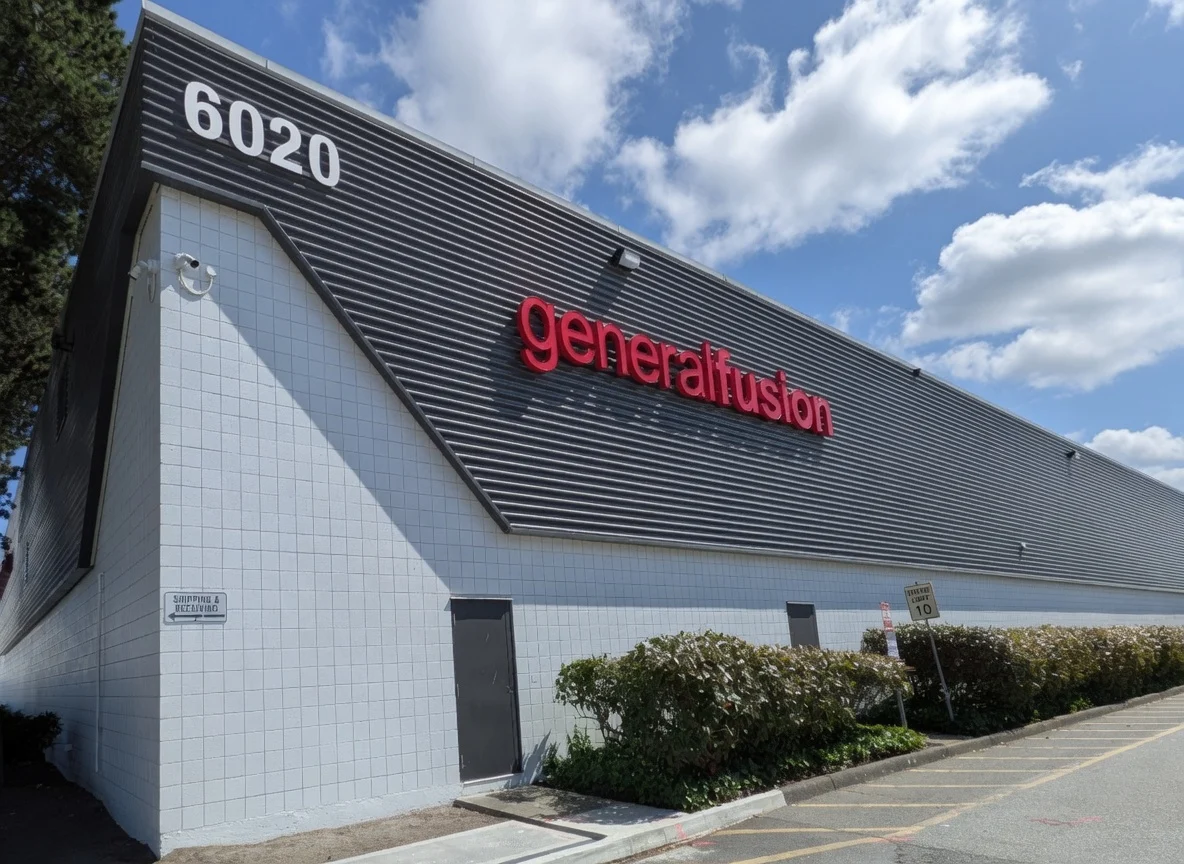
General Fusion Group (GFUZ) launched its public trading journey Monday with a strong performance, finishing 21% higher at $11 per share after reaching intraday peaks of almost 30%. The Vancouver-based fusion energy developer finalized its business combination with Spring Valley Acquisition Corp. III, emerging as among the earliest publicly-traded pure-play fusion energy ventures.
The public offering delivered roughly $150 million in combined proceeds from the transaction and trust account funds. Company Chief Executive Greg Twinney indicated these resources will support operations through 2028, a timeline by which General Fusion anticipates achieving sufficient scientific breakthroughs to facilitate subsequent capital raises.
Established in 2002, General Fusion stands as one of the industry’s pioneer fusion ventures. Amazon founder Jeff Bezos initially invested in the enterprise in 2011 and has maintained his backing throughout the years.
The journey to Monday’s market entrance faced challenges. The company implemented workforce reductions affecting 25% of personnel last year and sought emergency funding from existing investors before finalizing the SPAC arrangement.
General Fusion’s Unique Technology Approach
General Fusion employs Magnetized Target Fusion (MTF) methodology, utilizing steam-powered piston systems instead of the superconducting magnetic systems and laser arrays favored by competing firms. According to Twinney, this strategy delivers greater economic efficiency by eliminating dependence on rare and expensive materials.

The organization constructed its initial fusion device at its Vancouver headquarters. Latest experimental data from the LM26 machine demonstrated plasma temperatures reaching approximately 8.4 million degrees Celsius. However, the system must ultimately achieve temperatures exceeding 100 million degrees Celsius during validation testing.
The company’s Lawson initiative aims to accomplish critical engineering benchmarks by 2028. General Fusion also secured the top position on TIME’s World’s Top GreenTech Companies list for 2026 and entered into a preliminary agreement to investigate fusion energy deployment opportunities in Italy.
Understanding the Investment Opportunity
Purchasing GFUZ shares represents a highly speculative venture. Commercial nuclear fusion remains unproven globally. Every operational nuclear facility today relies on fission technology rather than fusion.
In 2022, a federal research facility in California achieved net energy gain from a fusion experiment, producing more power than the laser energy input required to initiate the reaction. While representing a scientific breakthrough, this achievement hasn’t yet provided a clear commercial pathway.
General Fusion’s projection of operational commercial reactor capacity by 2035 represents an optimistic timeline, Twinney acknowledges. Shareholders face an extended holding period.
The fusion energy sector continues attracting substantial investment capital. Sam Altman has provided funding to Helion, while Google has invested in TAE Technologies, which revealed plans last year for an all-stock business combination with Trump Media and Technology Group valued above $6 billion.
Following the debut, GFUZ lacks analyst coverage, leaving investors without professional guidance for evaluation. SPAC-originated public companies typically experience heightened price fluctuations in their initial trading weeks.
General Fusion’s current plasma heating performance from the LM26 system registers at 8.4 million degrees Celsius, considerably below the thresholds required for viable fusion energy generation.
Get 3 Free Stock Ebooks
Discover top-performing stocks in AI, Crypto, and Technology with expert analysis.
- Top 10 AI Stocks - Leading AI companies
- Top 10 Crypto Stocks - Blockchain leaders
- Top 10 Tech Stocks - Tech giants



