


Key Highlights
- Hapag-Lloyd shares climbed approximately 6% Tuesday following an upgraded full-year EBITDA projection to $2.7B–$3.7B from the prior $1.1B–$3.1B range
- Robust container freight demand and strengthening freight rates fueled the revised outlook
- Analysts at Barclays noted the adjustment was “widely expected” after competitor Maersk upgraded guidance earlier in the month
- Both Hapag-Lloyd and Maersk have begun reintroducing select Red Sea/Suez Canal routes following extended disruptions
- Significant uncertainty remains in the forecast due to fluctuating freight rates and geopolitical instability
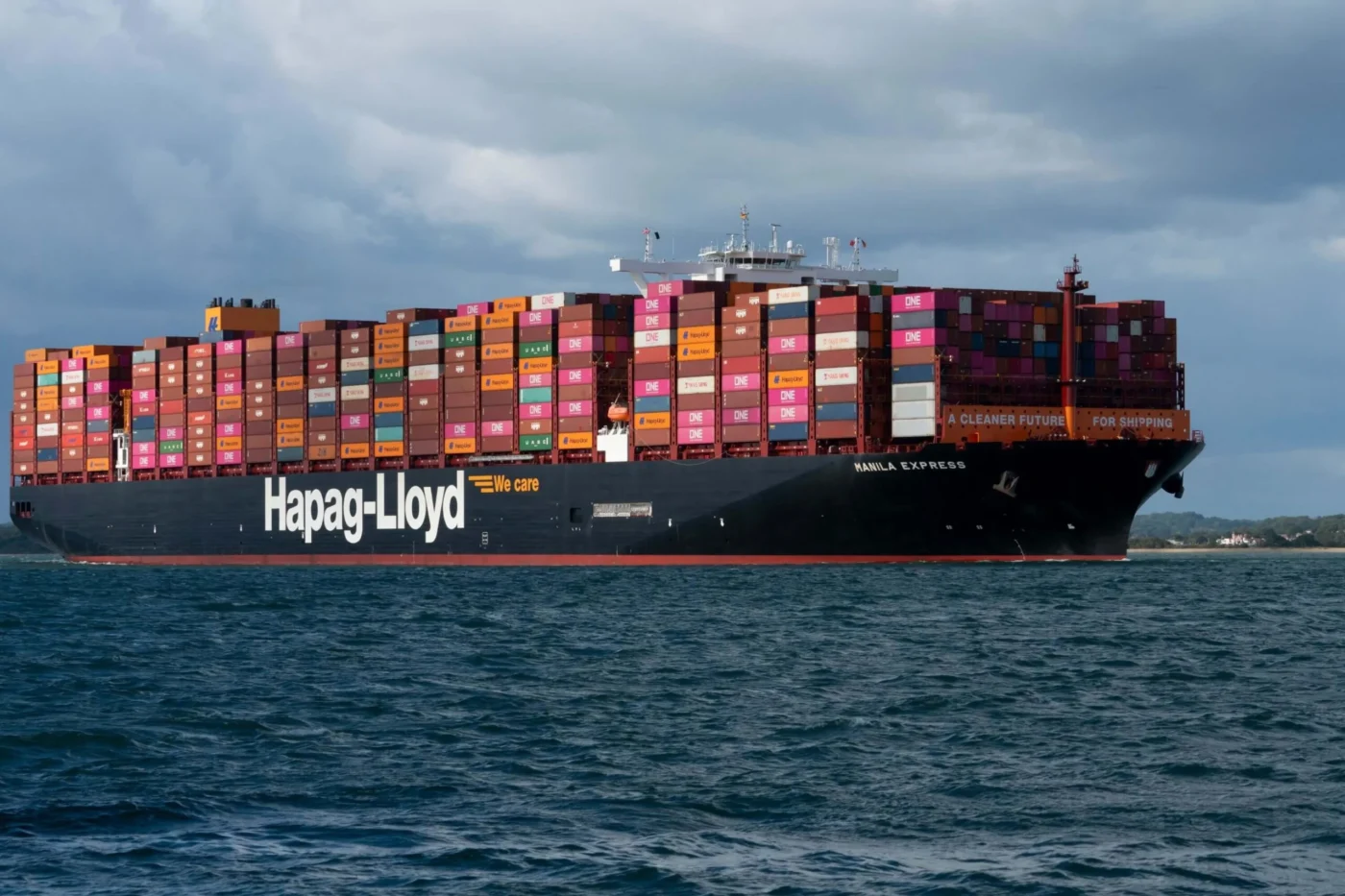
Shares of Hapag-Lloyd rallied approximately 6% during Tuesday’s session after the German container shipping giant announced an upgraded full-year earnings projection, crediting robust market conditions and improving freight rate dynamics.
The Hamburg-based shipping company, ranked as the world’s fifth-largest container carrier, revised its full-year EBITDA expectations to a range of $2.7 billion to $3.7 billion. This represents a substantial increase from the previously issued forecast range of $1.1 billion to $3.1 billion. Simultaneously, the company adjusted its EBIT guidance upward to between $100 million and $1.1 billion.
The positive stock reaction followed an announcement that market observers had largely anticipated.
“We think this was widely expected following Maersk two weeks ago,” analysts at Barclays commented. Maersk had previously elevated its earnings projections last month, pointing to robust demand in the container shipping sector.
Barclays analysts suggested the revised guidance indicates improved second-quarter performance relative to Q1, though they anticipate the most substantial profitability gains will materialize in the third quarter. The broad guidance range, according to the investment bank, underscores limited forward visibility into fourth-quarter results.

This development unfolds against the backdrop of a shipping industry navigating significant operational challenges.
Middle East Conflict Pushes Freight Costs Higher
Escalating hostilities between Israel and Iran, which intensified in late February, compelled major carriers including Hapag-Lloyd and Maersk to halt operations through the Strait of Hormuz and Gulf of Oman. This forced vessels onto significantly longer alternative routes.
The majority of global shipping companies had already been circumventing the Suez Canal corridor after Houthi forces in Yemen launched attacks on commercial vessels transiting the Red Sea. This strategic shift redirected container ships around Africa’s Cape of Good Hope, substantially inflating operational expenses.
These extended voyage distances translated to increased fuel consumption, prolonged transit times, and elevated freight charges — creating financial strain for shippers while generating revenue opportunities for ocean carriers.
Gradual Red Sea Route Restoration
Earlier this month, Hapag-Lloyd and Maersk confirmed the reactivation of the AE15 service through Red Sea waters. This Gemini-alliance route is being operated by Maersk, which has assumed the operational risk associated with navigating the contested region.
Maersk has subsequently introduced two additional Suez Canal services operating independently of the Gemini network. By contrast, Hapag-Lloyd has adopted a more conservative strategy regarding the resumption of its proprietary routes through this volatile corridor.
The German shipping company emphasized that its updated outlook encompasses considerable uncertainty, reflecting persistent freight rate volatility and substantial geopolitical risks that continue to obscure future market conditions.
Maersk shares also advanced on the news, appreciating roughly 2.8% during Tuesday trading.
Hapag-Lloyd’s updated EBITDA projection range of $2.7 billion to $3.7 billion represents a significant elevation from the previous guidance midpoint of $2.1 billion — an upward revision that resonated positively with investors.
Get 3 Free Stock Ebooks
Discover top-performing stocks in AI, Crypto, and Technology with expert analysis.
- Top 10 AI Stocks - Leading AI companies
- Top 10 Crypto Stocks - Blockchain leaders
- Top 10 Tech Stocks - Tech giants



