


Key Highlights
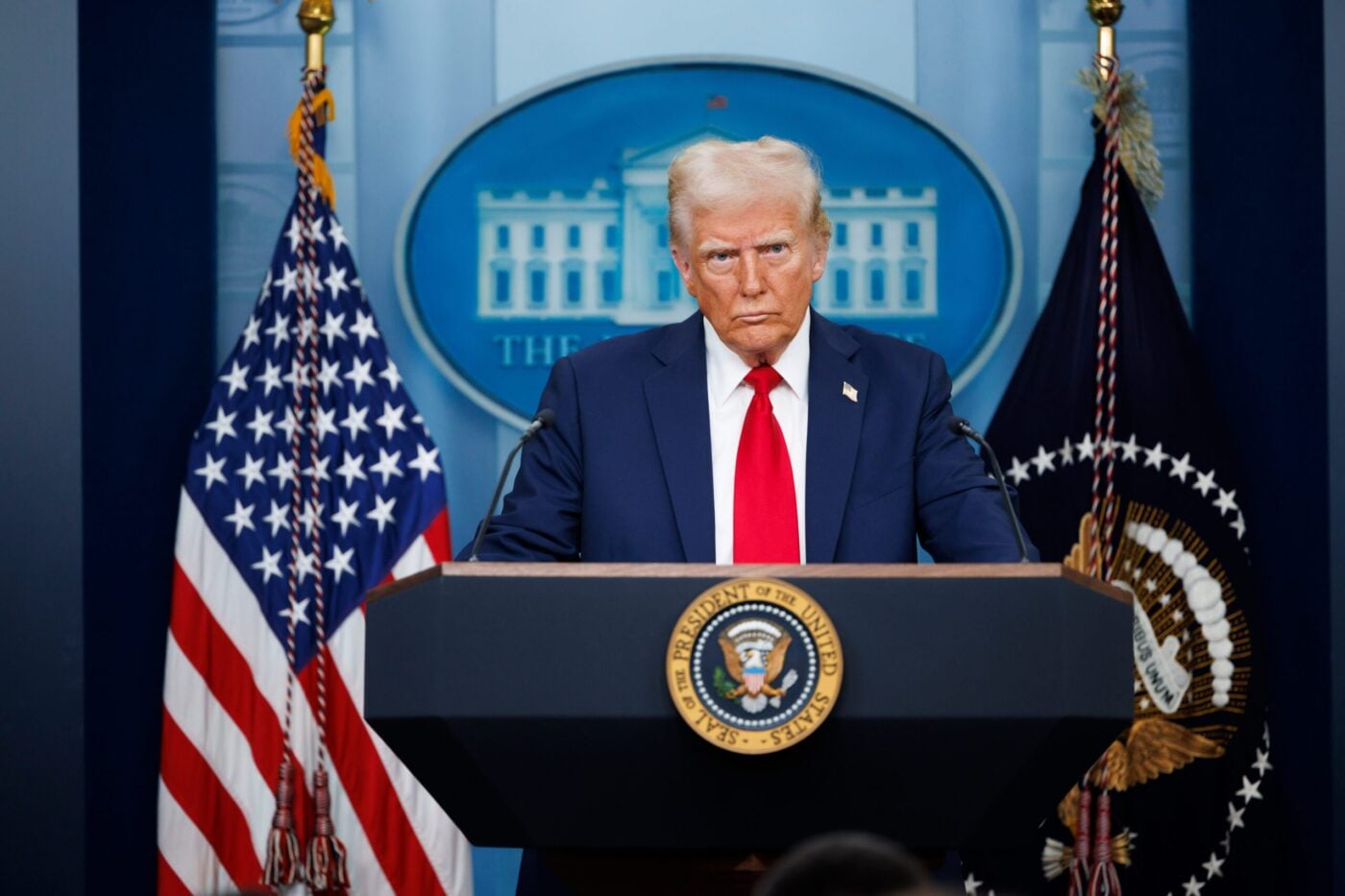
- President Trump announced the termination of the US-Iran ceasefire during a NATO summit in Ankara
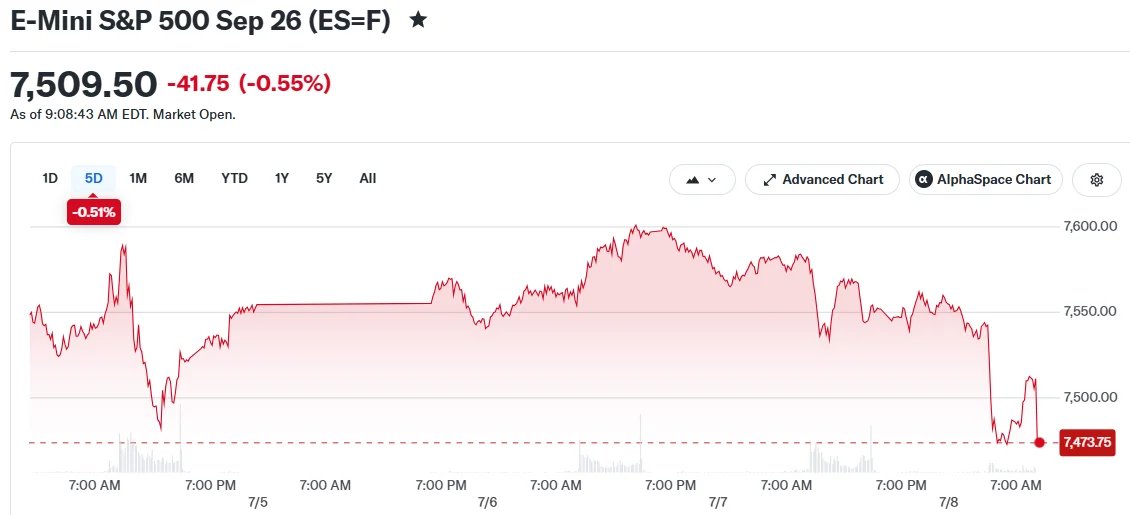
- Futures contracts plummeted: Dow down 500+ points, S&P 500 and Nasdaq 100 posting significant losses
- Crude oil jumped over 5% following Washington’s revocation of Iran’s crude export license
- South Korea’s KOSPI plunged 5.4% as Asian markets absorbed the shock
- Market participants await Fed meeting minutes from June for rate policy insights under Chair Kevin Warsh
Wall Street faced steep pre-market declines Wednesday following President Donald Trump’s declaration that the ceasefire arrangement with Iran has reached its conclusion.
Futures for the Dow Jones Industrial Average tumbled more than 500 points, representing approximately a 1% decline. The S&P 500 futures contract shed 0.7%, while Nasdaq 100 futures decreased 1.1%.
The President delivered these remarks during a NATO gathering in Ankara, Turkey. When questioned about the ceasefire’s current status, Trump stated: “To me, I think it’s over. I don’t want to deal with them anymore.”
His comments followed American military operations targeting locations along Iran’s coastline. These strikes served as retaliation for Iranian attacks on three merchant vessels operating near the Strait of Hormuz.
Prior to this announcement, the Treasury Department had canceled Iran’s authorization to participate in international oil markets. This action had already propelled crude prices upward during Tuesday’s trading session.

By Wednesday’s opening hours, West Texas Intermediate crude had climbed above $74 per barrel, marking a gain exceeding 5%. Brent crude approached the $78 per barrel threshold.
Energy sector equities benefited from climbing oil valuations, though most other sectors experienced downward pressure.
The trio of primary American indices had already concluded Tuesday’s session with losses. Semiconductor manufacturers and artificial intelligence-related companies drove much of the decline.
Asian Trading Sessions Hit Hard
Markets throughout Asia responded swiftly to the escalating tensions. South Korea’s KOSPI benchmark dropped 5.4%, dragged down by memory chip producers such as SK Hynix and Samsung.
Asian economies rely heavily on energy imports, creating heightened vulnerability to petroleum price increases compared to other global regions.
Deutsche Bank’s Jim Reid commented that recent developments have “reignited concerns about energy supplies and geopolitical risk.”
Reid further observed that this latest escalation represents “the most serious test yet for the ceasefire,” while acknowledging that risk sentiment appeared “weak but not as much as you may have imagined.”
Bitcoin values also retreated following the President’s statements, extending earlier session declines.
Federal Reserve Minutes Under Scrutiny
Market observers are preparing for the publication of Federal Reserve meeting minutes from June, scheduled for Wednesday afternoon.
The central bank maintained its benchmark rate unchanged during that session—the inaugural meeting led by newly appointed Chair Kevin Warsh.
Traders and analysts will scrutinize the document for indications regarding future monetary policy direction.
Currently, Middle Eastern geopolitical developments are exerting greater influence on market behavior than domestic economic indicators.
The scenario continues to evolve, with diplomatic engagement between Washington and Tehran showing no immediate signs of resumption.
Get 3 Free Stock Ebooks
Discover top-performing stocks in AI, Crypto, and Technology with expert analysis.
- Top 10 AI Stocks - Leading AI companies
- Top 10 Crypto Stocks - Blockchain leaders
- Top 10 Tech Stocks - Tech giants



