


TLDR
- The KOSPI index plummeted 4.9%, activating circuit breakers for the sixth instance in 2025
- Samsung projected Q2 operating profit to surge 19 times year-over-year, yet shares declined nearly 7%
- Market watchers suggest AI-related profit expectations have become unsustainably elevated
- Individual investors stepped in during the downturn, acquiring 3.2 trillion won worth of equities
- SK Hynix initiated a $28 billion American depositary receipt offering, attracting significant attention
Tuesday proved to be a challenging session for South Korean equities. The KOSPI benchmark concluded trading down 4.9%, settling at 7,656.31. Earlier in the session, the index had plunged more than 8%.
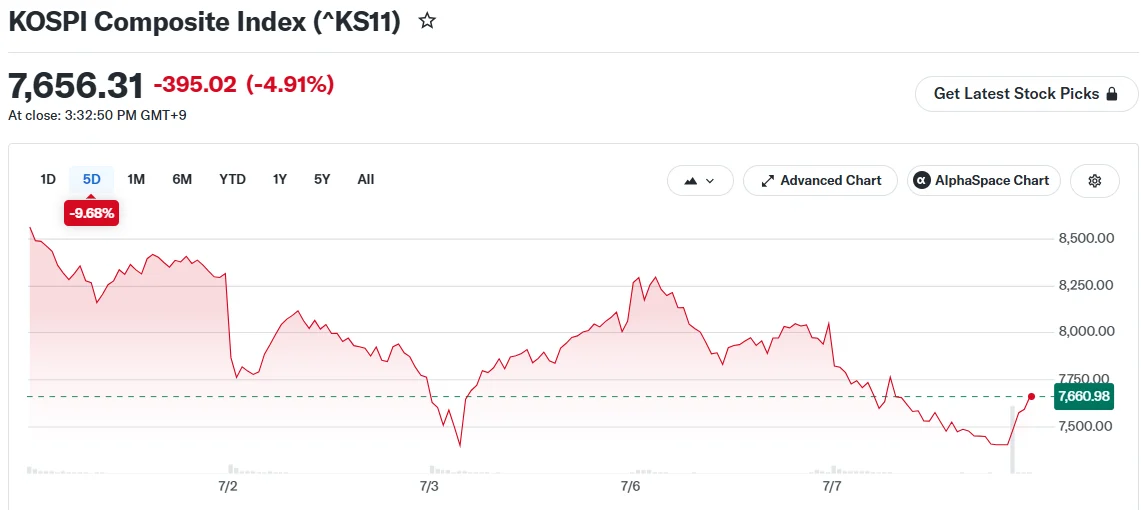
Trading halts were activated as circuit breakers kicked in amid the volatility. This marked the sixth such occurrence in 2025 during periods of dramatic fluctuations in semiconductor stocks.
Record Samsung Projections Failed to Impress Markets
Samsung Electronics found itself at the epicenter of Tuesday’s selloff. The tech giant projected second-quarter operating profit would reach 89.4 trillion won, approximately $58 billion. This represents a remarkable 19-fold increase compared to the prior year period and marks the company’s third consecutive quarterly record.
Yet these impressive figures failed to support the stock price. Samsung shares tumbled nearly 7% during the session, with intraday losses exceeding 10% at one stage.
Market observers noted that these stellar projections had already been priced into current valuations. “Expectations in the market have reached levels that are difficult to surpass,” commented Seo Sang-young from Mirae Asset Securities.
Competitor SK Hynix experienced a 6.1% decline. Meanwhile, Japanese memory chipmaker Kioxia suffered losses exceeding 10%.
The KOSPI had more than doubled throughout the year, achieving an all-time high in late June. Since reaching that peak, the index has retreated approximately 20%.
The AI Investment Narrative Evolves
The market’s response indicates a fundamental transformation in investor sentiment toward AI-focused equities. For several months, semiconductor manufacturers enjoyed consistent gains simply by exceeding earnings forecasts. That pattern now appears to be shifting.

“Impressive earnings alone no longer suffice,” noted Charu Chanana from Saxo Markets. She emphasized that investors now demand strong earnings, robust forward guidance, and evidence of sustainable pricing advantages.
Albert Yong from Petra Capital Management suggested the dramatic decline reflects investor focus on the longer-term trajectory of the memory chip cycle rather than immediate quarterly results.
International investors offloaded 2.9 trillion won in Korean equities during Tuesday’s session. Domestic retail traders countered by purchasing 3.2 trillion won, providing support that helped the index pare some of its steepest declines.
AI Investment Activity Continues
Despite the market turmoil, AI-related transactions continued. SK Hynix unveiled plans for an American depositary receipt offering targeting approximately $28 billion, which generated substantial interest from institutional investors.
Broadcom announced an extension of its chip supply agreement with Apple through 2031, alleviating market concerns about Apple potentially bringing more production capabilities in-house.
U.S. markets posted gains in overnight trading. The Dow increased 0.29%, the S&P 500 advanced 0.72%, and the Nasdaq rose 1.12%, supported by optimism surrounding the upcoming AI-focused earnings season.
Additional Market Developments
LG Energy Solution declined 6.4% following projections of a 77% collapse in operating profit attributed to softening electric vehicle demand.
Hanwha Ocean experienced a steep 22.7% drop after Canada selected German-manufactured submarines instead of South Korean alternatives.
Crude oil prices advanced following reports of a tanker incident near the Strait of Hormuz. U.S. crude climbed to $68.92 while Brent reached $72.34.
Market participants are also anticipating the publication of Federal Reserve meeting minutes, which will be the first released during Kevin Warsh’s tenure as Fed Chair.
Get 3 Free Stock Ebooks
Discover top-performing stocks in AI, Crypto, and Technology with expert analysis.
- Top 10 AI Stocks - Leading AI companies
- Top 10 Crypto Stocks - Blockchain leaders
- Top 10 Tech Stocks - Tech giants



