


Key Takeaways
- Senator Lummis describes the CLARITY Act as essential groundwork for modern financial systems
- Despite clearing the House and Senate Banking Committee, the legislation awaits a complete Senate floor vote
- Without passage by August 7, the legislation faces potential postponement until 2027 due to congressional recess
- Democratic lawmakers insist on ethical safeguards preventing presidential and congressional officials from profiting through crypto ventures
- President Trump’s 2025 disclosure revealed approximately $1.4 billion in cryptocurrency-related income, intensifying ethical concerns
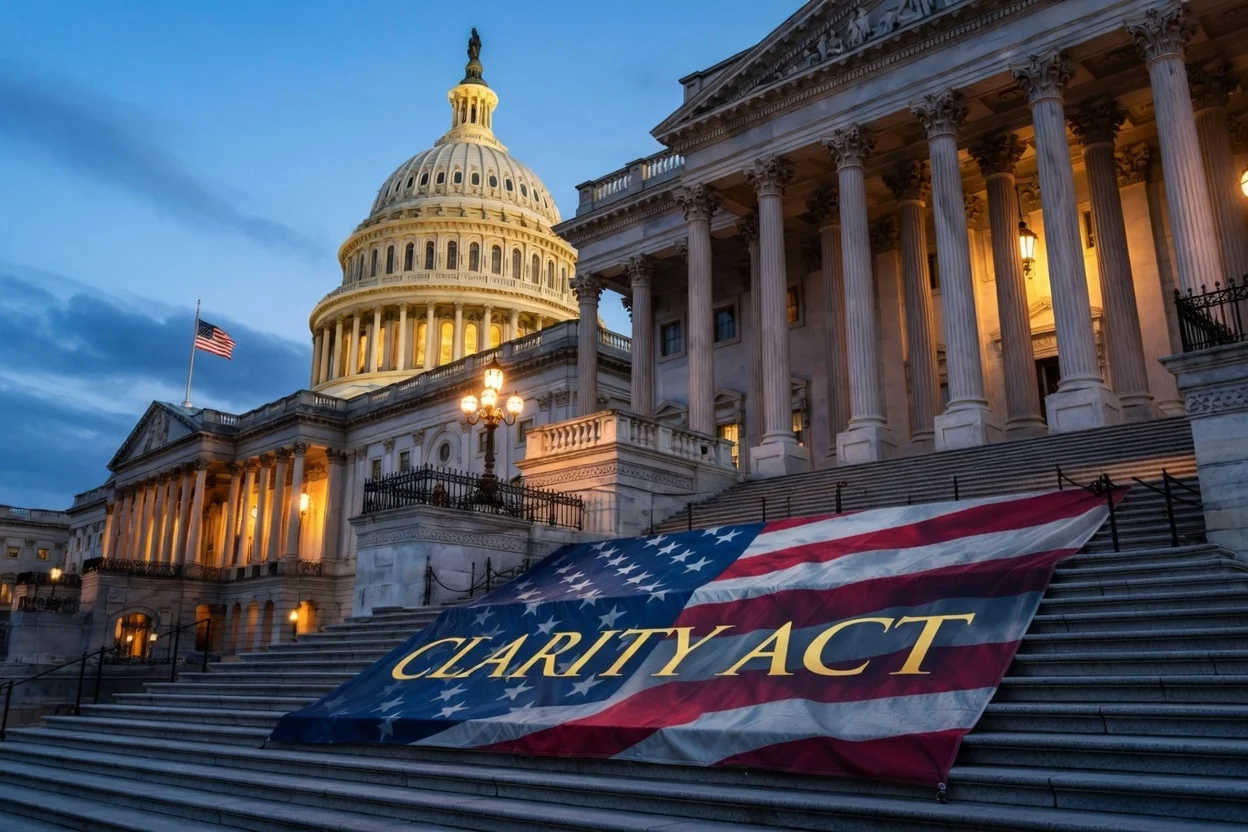
Senator Cynthia Lummis continues pressing colleagues for swift action on the CLARITY Act, legislation designed to establish comprehensive regulatory standards for digital currencies across America. Describing it as a defining moment for financial modernization, she emphasized the urgency for Congress to complete this legislative effort.
The legislation successfully navigated both the House of Representatives and the Senate Banking Committee. Now it requires approval from the full Senate chamber—a vote that remains unscheduled.
Time constraints are mounting. August 7 marks the final session day before Congress breaks for summer recess. Without a successful vote before this cutoff, the legislation’s advancement gets pushed back to 2027 at minimum.
Core Provisions of the Legislation
The CLARITY Act proposes dividing cryptocurrency regulatory authority between two federal agencies. The Securities and Exchange Commission would maintain jurisdiction over investment contract digital assets. Meanwhile, the Commodity Futures Trading Commission would expand its authority over spot markets for digital commodities.
Additionally, the legislation mandates that cryptocurrency platforms and brokerage services maintain strict separation between client assets and corporate operational funds. This provision directly addresses vulnerabilities exposed during previous exchange failures.
The bill allocates $150 million specifically for investigating cryptocurrency-related fraud while bringing certain digital asset businesses under Bank Secrecy Act compliance requirements. Advocates argue this approach replaces regulatory ambiguity with concrete legal frameworks. Opponents contend the language provides insufficient consumer protections and inadequately addresses decentralized finance concerns.

Ethical Safeguards Create Legislative Roadblock
The primary obstacle facing passage isn’t procedural—it’s ideological. Democratic senators demand incorporating ethical restrictions preventing the president, vice president, senior administration officials, and congressional members from receiving financial benefits from cryptocurrency industry activities.
This demand gained momentum following President Trump‘s 2025 financial disclosure filing. Documents revealed approximately $1.4 billion in cryptocurrency earnings throughout the previous year. These proceeds stemmed from memecoin company royalties, World Liberty Financial token transactions, and sales agreements with Abu Dhabi-based purchasers.
Senator Elizabeth Warren advocated strongly for robust ethical provisions, asserting the legislation “must prevent the president” and other officials from benefiting financially from crypto interests. Senator Ruben Gallego, despite supporting the bill during committee proceedings, stated his commitment to “crack down on corrupt crypto dealings” while withholding confirmation of his floor vote support.
Negotiators must reach consensus on ethical language specifics, with any agreement requiring presidential approval.
Upcoming Legislative Actions
Currently, Senate staff members representing the Agriculture and Banking committees continue reconciling divergent bill versions through closed-door sessions. Individuals familiar with negotiations express measured optimism while acknowledging severe time limitations.
Following text finalization, Senate floor proceedings could advance rapidly—potentially achieving the required 60-vote supermajority within days.
The House of Representatives may also influence final outcomes. Recent reporting from Politico and Punchbowl News highlighted significant House operational challenges that could obstruct final passage even following Senate approval.
August 7 represents the critical milestone determining this legislation’s immediate future.
Get 3 Free Stock Ebooks
Discover top-performing stocks in AI, Crypto, and Technology with expert analysis.
- Top 10 AI Stocks - Leading AI companies
- Top 10 Crypto Stocks - Blockchain leaders
- Top 10 Tech Stocks - Tech giants



