


Key Points
- Brent crude declined to approximately $74 while WTI dropped to around $70.77, both heading toward 7% weekly declines
- Shipping activity through the Strait of Hormuz reached its peak since the Iranian crisis started
- The majority of increased traffic consists of departing vessels previously stuck in the waterway, not fresh incoming tankers
- An Iranian attack on a commercial ship near Hormuz led the IMO to halt its evacuation operation
- Seismic activity in Venezuela threatens oil production through electrical infrastructure damage, providing minor upward price pressure
Crude oil markets experienced a nearly 2% decline on Friday, marking the conclusion of a third consecutive week of losses. Brent crude and West Texas Intermediate both registered approximately 7% declines over the weekly period.
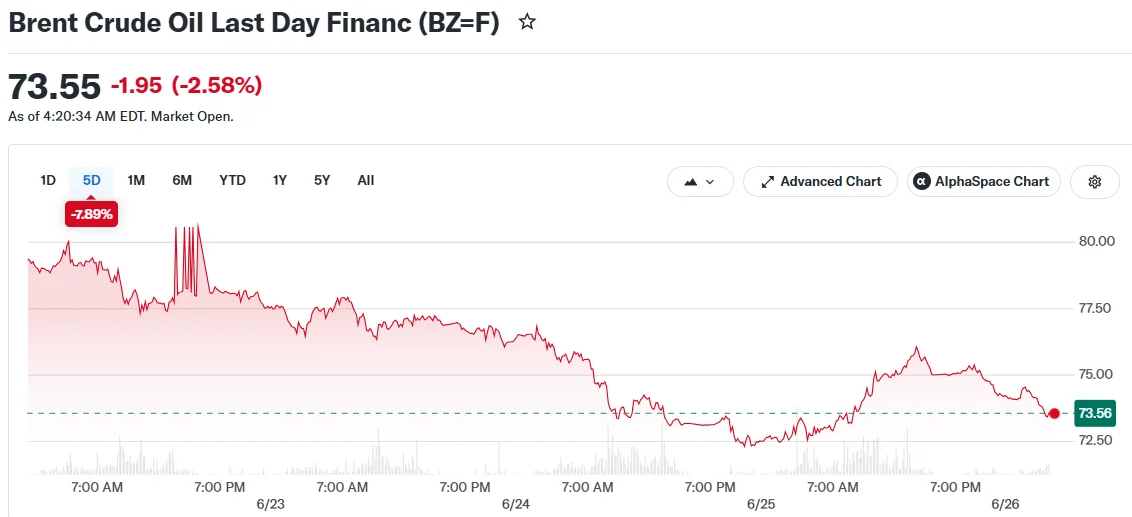
During the trading session, Brent was hovering around $74 per barrel. WTI was trading in the vicinity of $70.77. The benchmark crude grades have now surrendered the majority of their gains accumulated during the Iranian conflict, after previously spiking beyond $120 per barrel during the crisis’s most intense period.
Strait of Hormuz Shipping Increases, But Questions Remain
The primary factor behind the price decline has been enhanced tanker movement through the Strait of Hormuz. Petroleum shipments navigating the strategic waterway rose to their strongest levels since the beginning of this year’s conflict.
Nevertheless, energy analysts at ING cautioned that the situation requires closer examination. Their research revealed that virtually all of the increased activity involves outbound traffic — specifically vessels that had been trapped in the strait since March and are now departing.
Incoming tanker traffic heading into the Persian Gulf for new crude oil loading operations remains significantly depressed. ING analysts suggested that once the backlog of stranded vessels clears, flow rates could experience sharp declines.

Reuters reported that total shipping activity through the passage remains substantially below pre-conflict volumes. Prior to the crisis, approximately 125 vessels transited the waterway daily on average.
Iranian Maritime Attack Clouds Peace Agreement Outlook
A commercial vessel came under fire near Oman during the early part of the week. United States authorities verified that Iranian forces targeted the ship. The incident temporarily drove prices upward by over 2% before markets resumed their downward trajectory.
The International Maritime Organization suspended its initiative to facilitate the evacuation of stranded vessels and maritime personnel in response to the attack. This development introduced renewed uncertainty regarding the stability and longevity of the tentative US-Iran peace framework.
The diplomatic agreement, concluded last week, had facilitated the reopening of the strait and served as the primary catalyst for oil prices declining from their peaks above $90 per barrel earlier in the month.
Venezuelan Seismic Events Create Production Concerns
Severe earthquakes struck Venezuela during the earlier part of the week. Although the nation’s oil infrastructure was not situated directly within the impacted region, electrical grid failures resulting from the seismic activity are anticipated to hamper production operations.
Market analysts identified this development as a potential supply constraint, although it has proven insufficient to counter the prevailing bearish price momentum.
Market participants continue to focus primarily on developments surrounding the Hormuz situation and the advancement of diplomatic negotiations between the United States and Iran. Until clarity emerges on these critical issues, traders seem hesitant to establish bullish positions that would drive prices higher.
Get 3 Free Stock Ebooks
Discover top-performing stocks in AI, Crypto, and Technology with expert analysis.
- Top 10 AI Stocks - Leading AI companies
- Top 10 Crypto Stocks - Blockchain leaders
- Top 10 Tech Stocks - Tech giants



