


Key Takeaways
- Gold declined beneath $4,000 per ounce, marking the first breach of this threshold since November 2025
- The precious metal has tumbled approximately 30% from its January peak of $5,595.46
- The greenback reached a 13-month peak, elevating gold costs for international purchasers
- Market participants assign a 66% probability to a Federal Reserve rate increase by September
- Diminishing geopolitical risks have curtailed safe-haven appetite for the yellow metal
The precious metal market is experiencing significant turbulence as gold trades near its lowest point in seven months, pressured by an ascending U.S. dollar and mounting expectations that the Federal Reserve will tighten monetary policy.
Spot gold declined 0.2% to settle at $3,984.83 per ounce during Thursday’s session. U.S. Gold Futures remained relatively stable, hovering around the $4,008 mark.
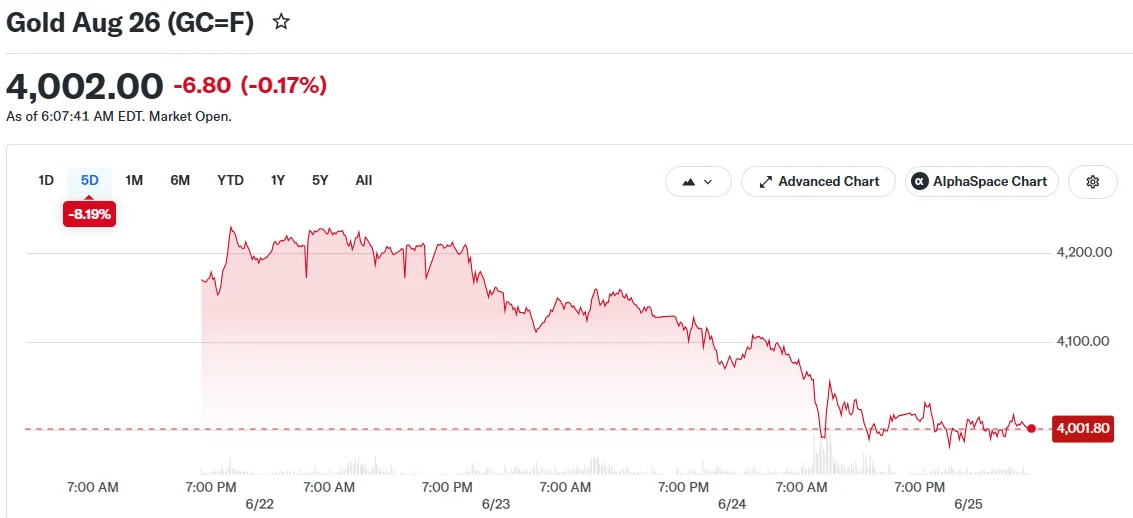
The yellow metal breached the psychologically significant $4,000 threshold on Wednesday, representing its first drop below this level since November 2025. Market participants had closely monitored this price point as critical technical support.
From its all-time peak of $5,595.46 established in January 2026, gold has now surrendered nearly 30% of its value. This represents a dramatic correction compressed into a relatively brief timeframe.
The ascendant U.S. dollar has emerged as a primary catalyst behind the precious metal’s decline. The greenback has climbed to a 13-month pinnacle following six consecutive sessions of appreciation.

When the dollar strengthens, gold becomes costlier for purchasers utilizing alternative currencies. This dynamic typically suppresses demand for the metal across international markets.
Monetary Tightening Expectations Pressure Bullion
Current market pricing indicates approximately a one-third likelihood of a rate increase in July. For a move by September, probability estimates climb to 66%, based on CME FedWatch tool data.
Elevated interest rates create headwinds for gold since the asset generates no income. As rates advance, investors can secure superior returns from fixed-income securities and cash equivalents, diminishing gold’s relative appeal.
ANZ analysts noted that apprehensions regarding stubbornly elevated inflation have prompted a “re-rating of monetary policy expectations.” They further observed that the Fed’s hawkish posture seems to have “derailed the debasement trade” that previously supported gold’s performance.
ING analysts suggested the metal’s weakness reflects how market sentiment has pivoted from safe-haven considerations toward concerns about ascending rates and more restrictive financial conditions.
Declining Geopolitical Tensions Add Pressure
Receding tensions across Middle Eastern regions have contributed to gold’s descent. Advancement in U.S.-Iran diplomatic negotiations has diminished some of the risk premium that had underpinned gold valuations earlier in the year.
Falling oil prices have reinforced this shift in market dynamics. Investors perceive reduced necessity for gold as a protective hedge when geopolitical uncertainties appear to be subsiding.
Market participants are directing attention toward Friday’s U.S. Personal Consumption Expenditures release. As the Federal Reserve’s preferred inflation gauge, the PCE data could substantially influence expectations regarding future policy adjustments.
Silver registered a modest 0.1% gain to reach $57.50 per ounce on Thursday, recovering partially from the previous session’s 6%-plus decline. ING observed that several of silver’s most robust demand catalysts are showing diminishing support.
Platinum retreated 0.3% to $1,581.60 per ounce. Copper futures advanced approximately 1.7% on the London Metal Exchange to $13,255.95 per ton.
Gold continues facing downward pressure with limited obvious catalysts to reverse the prevailing trend ahead of the PCE data release.
Get 3 Free Stock Ebooks
Discover top-performing stocks in AI, Crypto, and Technology with expert analysis.
- Top 10 AI Stocks - Leading AI companies
- Top 10 Crypto Stocks - Blockchain leaders
- Top 10 Tech Stocks - Tech giants



