



Quick Overview
- Brent crude declined to $72.42 while WTI settled at $69.27, marking the lowest prices recorded since U.S.-Iran hostilities began
- Crude markets have experienced four consecutive sessions of decline, eliminating nearly all the war-related risk premium
- Approximately 20 million barrels per day are now transiting the Strait of Hormuz under armed naval escort
- Goldman Sachs analysts indicate markets are anticipating supply surpluses as Gulf exports recover to 63% of pre-conflict capacity
- Domestic crude stockpiles decreased by 6.1 million barrels, reaching the lowest point since January 2025
Crude oil benchmarks have retreated to pre-conflict pricing levels as maritime shipping through the crucial Strait of Hormuz corridor resumes operations and supply disruption concerns diminish.
Brent crude declined 1.8% to settle at $72.42 per barrel during Thursday trading. West Texas Intermediate decreased 1.5% to close at $69.27. Both benchmark contracts reached their lowest valuations since February 27, one day prior to the outbreak of U.S.-Iran military hostilities.
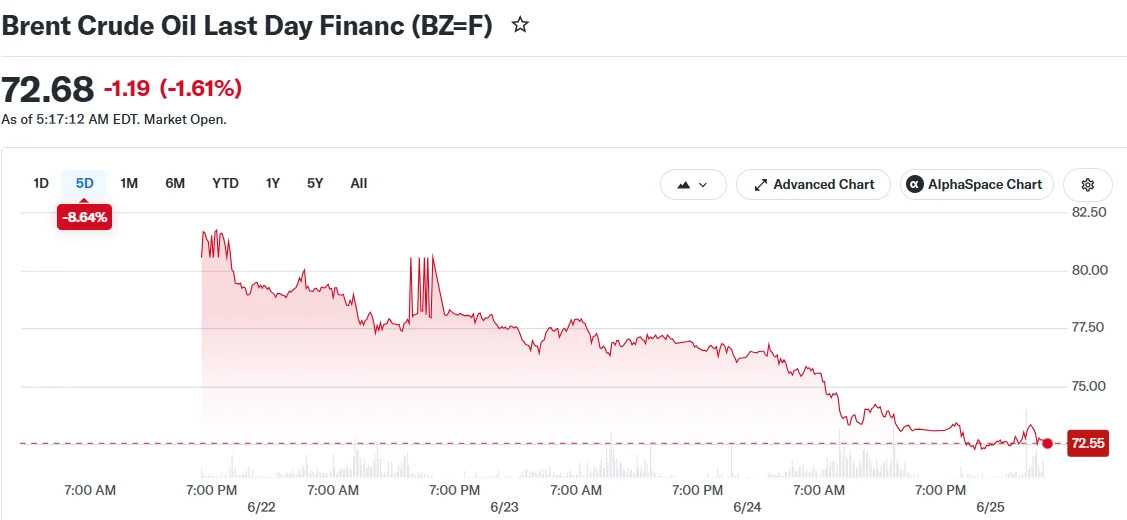
Pricing declined almost 4% in the immediately preceding trading session. The geopolitical risk premium that accumulated throughout the conflict period has essentially disappeared.
Strait Traffic Approaches Pre-Conflict Volumes
The Strait of Hormuz represents one of the planet’s most critical petroleum transit corridors. Approximately 20% of worldwide oil demand flows through this narrow waterway daily.
U.S. Energy Secretary Chris Wright reported that transit volumes through the strait have approached normal operational levels. Roughly 20 million barrels successfully passed through the chokepoint within the preceding 24-hour period, with vessels protected by military convoys.

Maritime tracking systems confirmed increasing numbers of tankers resuming passage through the strategic waterway. Multiple vessels previously anchored in Gulf waters have recommenced their scheduled voyages.
Shifting expectations regarding Iranian petroleum exports contributed additional downward pressure on valuations. Temporary modifications to U.S. sanctions policy combined with reduced regional hostilities have generated optimism that Iranian crude could reenter global markets ahead of previous forecasts.
This represents a dramatic turnaround from conditions earlier this calendar year. During the peak crisis period, Brent crude surged beyond $120 per barrel as disruptions at Hormuz sparked concerns about extended supply shortages.
Goldman Sachs market analysts noted the petroleum sector is “extrapolating the swift recovery of Mideast supply and already pricing expected future surpluses.” The investment bank reported aggregate Gulf region oil shipments have rebounded to 63% of standard operating volumes.
Goldman additionally indicated markets are abandoning the concept that longer-dated oil futures contracts require a permanent security risk premium.
Domestic Stockpile Report Presents Complex Picture
U.S. petroleum inventory figures published Wednesday introduced additional complexity to market analysis.
Commercial crude reserves declined by 6.1 million barrels during the week concluded June 19, reducing aggregate inventories to 412.1 million barrels. This represents the lowest stockpile level since January 2025 and exceeded analyst expectations for the drawdown magnitude.
Reserves at Cushing, Oklahoma—the designated WTI delivery location—also contracted by 1.1 million barrels, falling to their lowest level documented since 2014.
Conversely, gasoline stockpiles expanded by 2.1 million barrels. Distillate inventories, encompassing diesel fuel and heating oil products, increased by 3.1 million barrels.
Market observers emphasized the situation remains vulnerable. Any resurgence of U.S.-Iran tensions could rapidly reintroduce supply anxiety.
Based on current trading activity, petroleum markets appear to reflect widespread belief that the most severe supply disruptions have concluded.
Get 3 Free Stock Ebooks
Discover top-performing stocks in AI, Crypto, and Technology with expert analysis.
- Top 10 AI Stocks - Leading AI companies
- Top 10 Crypto Stocks - Blockchain leaders
- Top 10 Tech Stocks - Tech giants



