


Key Highlights
- The greenback index surged past 101.00 to reach a 12-month peak, fueled by Federal Reserve indications of possible rate increases in 2026.
- Financial markets are now anticipating as many as two Fed rate hikes before year-end, strengthening dollar momentum.
- Japan’s currency tumbled to 161.82 per dollar, marking a four-decade low and heightening speculation about official intervention.
- A ceasefire agreement in the Middle East and aborted U.S.-Iran diplomatic meetings in Switzerland added volatility to currency movements.
- Japanese core inflation registered 1.4% growth in May, remaining beneath the Bank of Japan’s 2% objective for a consecutive fourth month.
The greenback surged to its most robust position in twelve months this week, propelled by increasing market expectations that the Federal Reserve will implement interest rate hikes in 2026. The dollar index, measuring the currency’s performance against a weighted basket of global counterparts, momentarily breached the 101.00 threshold during overnight trading before easing to approximately 100.78 on Friday amid reduced market activity due to the Juneteenth federal holiday.
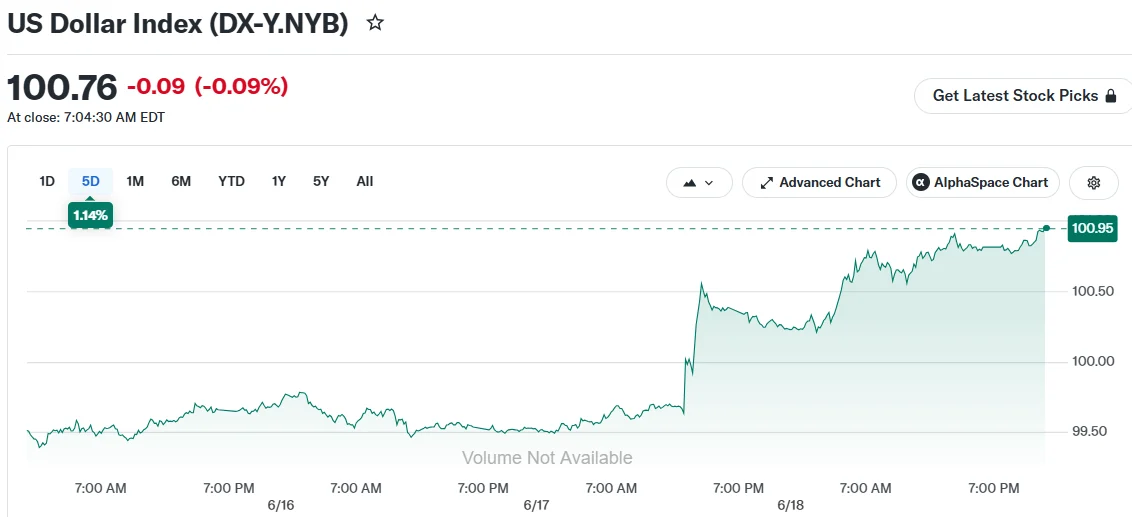
The weekly performance positions the dollar for its strongest showing since 2024.
The catalyst emerged from updated interest rate forecasts published by Federal Reserve policymakers on Wednesday. Multiple officials now project rate increases within the current year. Currency strategists at ING suggested that markets could fully incorporate two rate hikes by December following the next robust economic data publication.
ING’s analysis indicated that despite viewing the probability of actual rate increases as “overstated,” the greenback might “continue riding post-Fed momentum for some time.”
Regional Ceasefire Creates Dollar Headwinds
A ceasefire agreement finalized this week between Middle Eastern parties eliminated a significant driver behind dollar accumulation. The United States had enjoyed safe-haven currency flows throughout the regional tensions, partially because American energy production made it comparatively insulated from oil supply vulnerabilities associated with the Strait of Hormuz.

Nevertheless, questions persist regarding the agreement’s longevity. Scheduled diplomatic discussions between Washington and Tehran in Switzerland were postponed on Friday following Vice President JD Vance’s decision to cancel his Geneva visit. Swiss diplomatic officials acknowledged the delay while expressing continued willingness to facilitate the negotiations focused on Iran’s nuclear capabilities.
Derek Halpenny, currency strategist at MUFG Bank, observed that the cancellation delivered marginal safe-haven backing for the dollar, though the impact on risk sentiment appears limited and unlikely to undermine the peace initiative.
Yen Reaches Historic Weakness
The most dramatic narrative in foreign exchange markets this week centers on Japan’s currency. It plummeted to 161.82 against the dollar, representing the weakest valuation in approximately forty years. The yen stabilized near 161.26 on Friday, though downward pressure persists.
Market participants are scrutinizing signals that Japanese officials might execute currency market intervention. The American market closure on Friday generated minimal trading volumes, which ING strategists identified as conditions Japan has historically exploited for intervention operations.
“USD/JPY has pushed well into intervention zone territory following yesterday’s breach above 2024 peak levels,” ING analysts observed. They cautioned that absent official action, speculative trading could drive the exchange rate toward 162-163.
Japan’s Finance Ministry has previously intervened when the rate approached 160.
The Bank of Japan elevated interest rates to a 31-year peak this week, yet the adjustment has provided minimal yen support. BOJ Deputy Governor Ryozo Himino highlighted uncertainties surrounding additional rate increases due to inflation dynamics connected to Middle Eastern developments.
Official statistics released Friday revealed Japan’s core consumer price index advanced 1.4% annually in May, falling short of the BOJ’s 2% inflation objective for four consecutive months. Capital Economics analysts suggested the central bank might postpone its next rate adjustment beyond their current October projection.
The British pound appreciated 0.3% versus the dollar to $1.3238, boosted by domestic political developments in the United Kingdom following Greater Manchester Mayor Andy Burnham’s by-election victory, positioning him as a potential rival to Prime Minister Keir Starmer.
Get 3 Free Stock Ebooks
Discover top-performing stocks in AI, Crypto, and Technology with expert analysis.
- Top 10 AI Stocks - Leading AI companies
- Top 10 Crypto Stocks - Blockchain leaders
- Top 10 Tech Stocks - Tech giants



