



Key Takeaways
- BTC declined to approximately $63,964 following the Federal Reserve’s decision to maintain current rates while hinting at potential tightening in late 2026.
- Trader expectations shifted toward at least one 25-basis-point rate increase before year-end.
- Despite a framework peace agreement between the U.S. and Iran boosting general risk appetite, cryptocurrency assets underperformed compared to artificial intelligence and semiconductor stocks.
- BTC currently hovers marginally above its 200-week simple moving average positioned around $62,358.
- According to Kraken’s Chief Economist Thomas Perfumo, historical patterns show that purchasing opportunities below this long-term moving average have typically generated substantial gains in previous market cycles.
Bitcoin (BTC) experienced a downturn on Thursday, erasing a significant portion of its recent recovery. The decline followed Federal Reserve commentary suggesting a more restrictive monetary policy trajectory through the remainder of 2026.
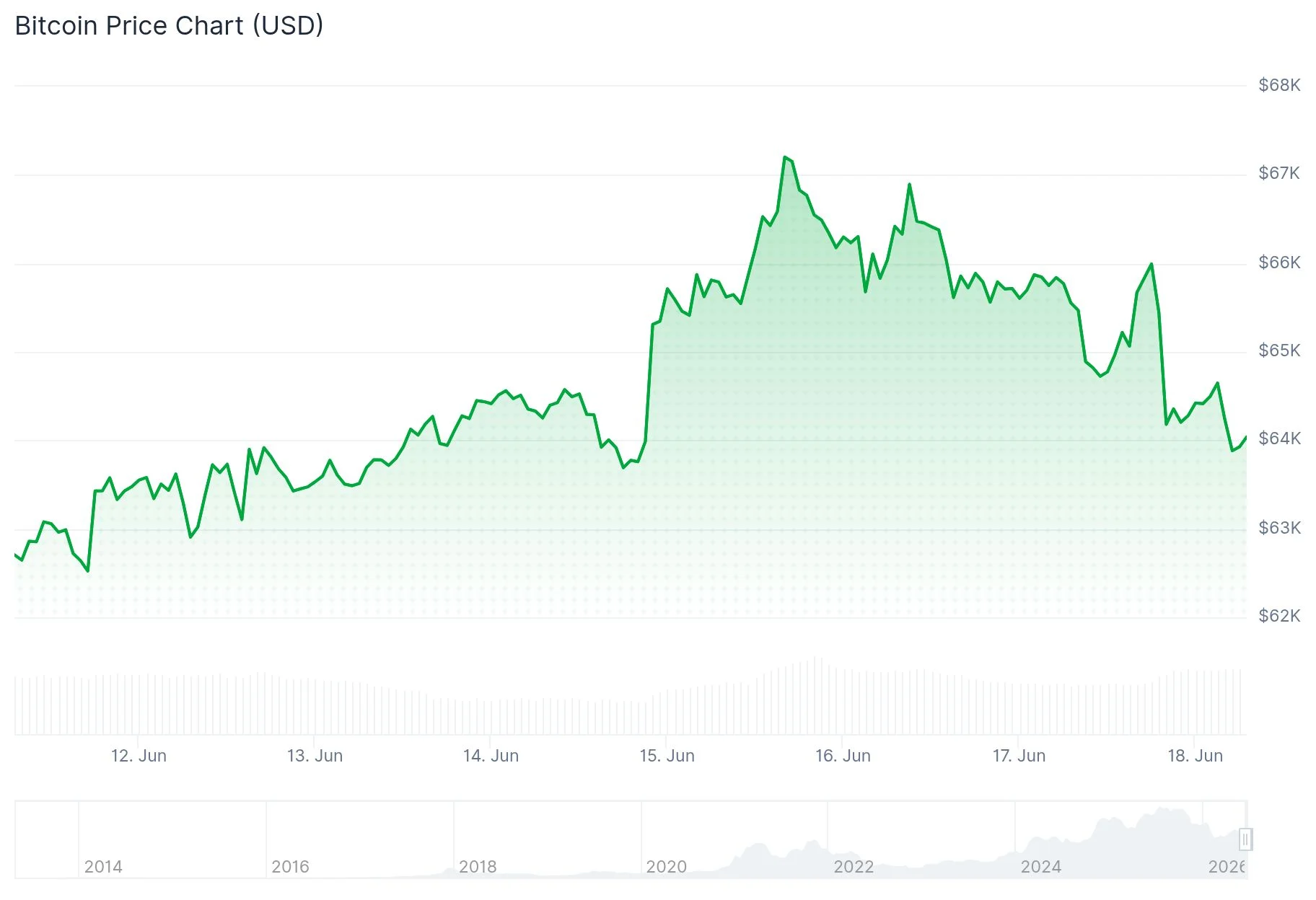
The leading cryptocurrency retreated 2.8% to approximately $63,964 during early market hours. This downturn occurred despite the Fed maintaining interest rates at current levels, matching widespread market forecasts.
Market participants, however, zeroed in on the central bank’s shifting rhetoric. A growing number of Federal Reserve officials now appear receptive to implementing a rate increase before year-end, citing persistent inflationary pressures.
Federal Reserve Chairman Kevin Warsh additionally highlighted potential modifications to the central bank’s forward guidance framework. This introduced further unpredictability into market dynamics.
Federal Reserve Position Pressures BTC
Interest rate projections climbed following the policy announcement. According to CME FedWatch Tool analytics, market participants began factoring in a minimum of one 25-basis-point increase by December 2026.

Elevated interest rates typically dampen enthusiasm for assets perceived as higher risk. This dynamic created headwinds for bitcoin while other market segments experienced positive momentum.
A preliminary peace framework between the United States and Iran received remote signatures on Wednesday night. The accord aims to restore access to strategic maritime corridors and establish groundwork for continued diplomatic engagement.
This geopolitical breakthrough sparked risk-appetite across financial markets. Investment flows, however, predominantly targeted artificial intelligence and semiconductor equities rather than digital assets, leaving crypto behind.
Critical Long-Term Technical Level Under Watch
Bitcoin currently trades marginally above its 200-week simple moving average, positioned near $62,358. The cryptocurrency momentarily dipped beneath this threshold on two occasions over the past fortnight before rebounding by each weekly session’s conclusion.
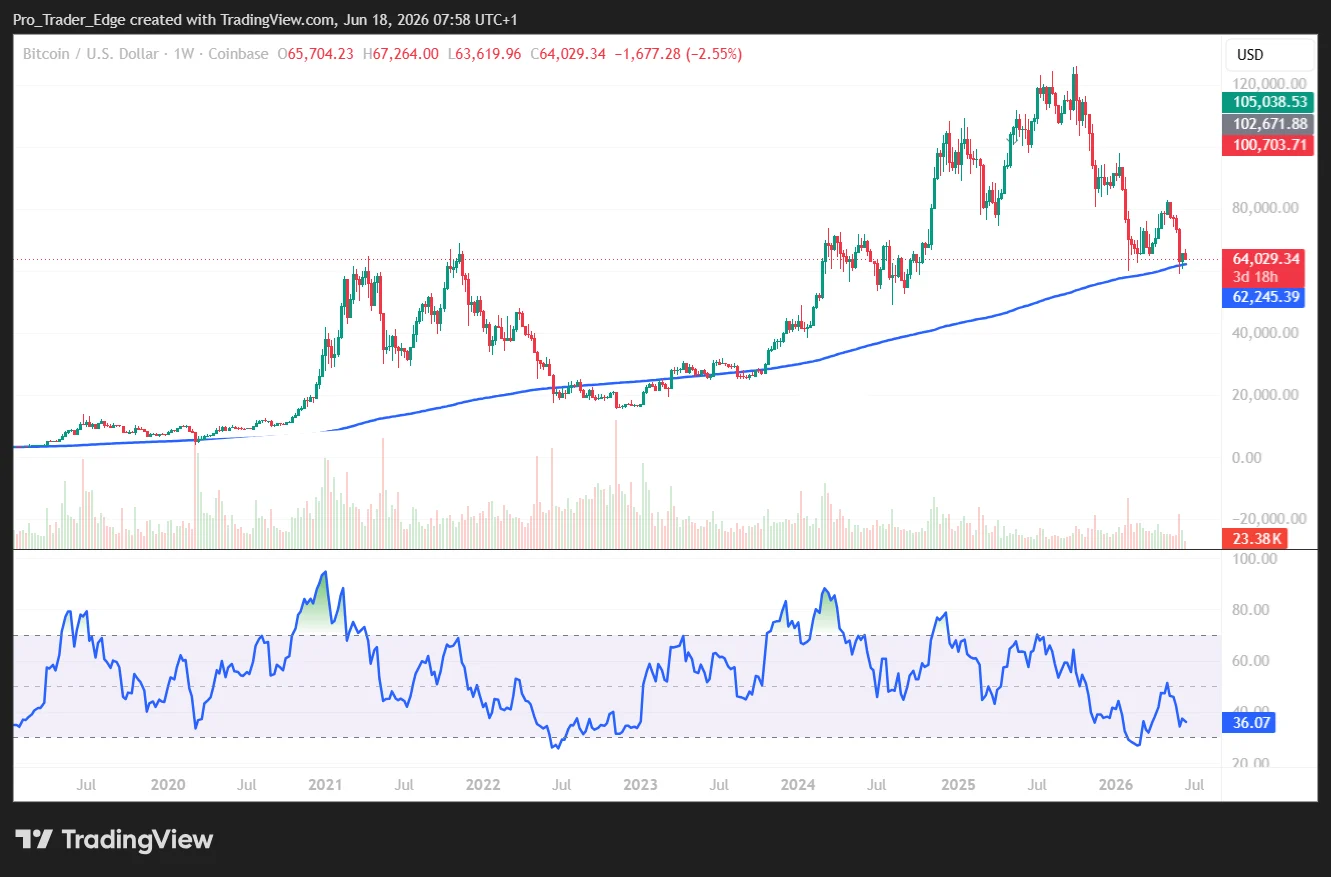
Thomas Perfumo, Chief Economist at Kraken, noted that weekly closes beneath the 200-week moving average have occurred infrequently since mid-2017. His analysis indicates that investors who accumulated positions at this technical level have historically achieved median gains of 113% within one year and 313% over a two-year horizon.
Perfumo further observed that the median recovery period for positions initiated below this technical indicator was merely two days. Additionally, he highlighted that the median peak drawdown experienced over the subsequent 12 months averaged 9%.
Analyst Ted Pillows, referenced in the original source material, suggested bitcoin might establish another lower peak during the latter half of 2026 preceding a comprehensive capitulation phase, presenting a pessimistic perspective for upcoming months.
This projection stands in contrast to the supportive historical data surrounding the 200-week moving average. Presently, bitcoin remains positioned marginally above this technical benchmark after declining toward the $63,000 threshold in response to the Federal Reserve’s policy meeting.
Get 3 Free Stock Ebooks
Discover top-performing stocks in AI, Crypto, and Technology with expert analysis.
- Top 10 AI Stocks - Leading AI companies
- Top 10 Crypto Stocks - Blockchain leaders
- Top 10 Tech Stocks - Tech giants



