


Key Takeaways
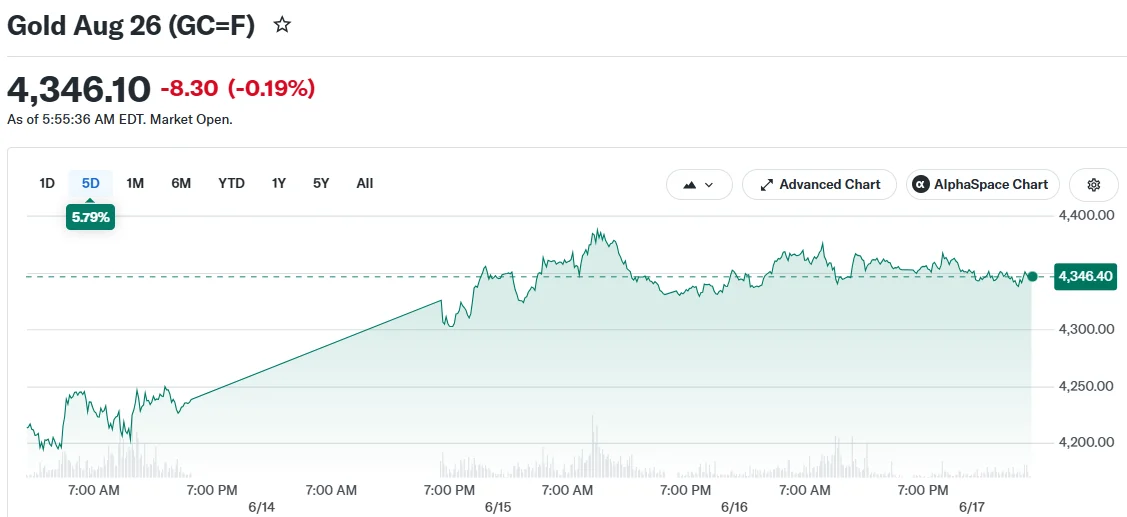
- The precious metal is consolidating around $4,327–$4,344 per ounce on Wednesday following four consecutive days of price increases.
- An interim peace deal between the U.S. and Iran, allowing Iranian oil exports to restart, has driven crude prices down and alleviated concerns about rising inflation.
- Declining energy costs have diminished expectations for aggressive monetary tightening, which typically benefits non-interest-bearing assets such as gold.
- The greenback has slipped to its weakest level in ten days, providing further tailwinds for precious metals.
- Market participants are closely monitoring the Federal Reserve’s policy announcement, where newly appointed Chair Kevin Warsh is anticipated to maintain current rates while potentially offering clues about future policy shifts.
The yellow metal is maintaining its position near recent peaks on Wednesday as market participants evaluate a significant diplomatic breakthrough while awaiting the Federal Reserve’s inaugural policy announcement under its new leadership.
Spot gold dipped 0.1% to reach $4,327.56 per ounce during early Wednesday trading. Futures contracts for U.S. gold declined 0.2%, hovering between $4,344 and $4,347. The precious metal had climbed through four consecutive trading sessions following a rebound from multi-month lows around the $4,000 threshold.
U.S.-Iran Agreement Alleviates Energy and Inflation Pressures
The primary catalyst influencing gold’s recent trajectory is an interim peace accord between the United States and Iran. The agreement permits Iran to recommence oil shipments to international markets while extending a ceasefire period as longer-term diplomatic negotiations proceed.
This breakthrough has triggered a significant decline in oil prices. As energy costs retreat, market participants have begun scaling back their projections for more restrictive monetary policy measures.
This dynamic provides support for gold. Because the metal generates no yield, it typically performs more favorably in environments where interest rates are projected to remain subdued or decline.

The weakening dollar has provided additional support. The U.S. Dollar Index has retreated to its lowest point in ten trading days, and a declining dollar generally enhances gold’s appeal to international buyers using alternative currencies.
Nevertheless, the Iran agreement hasn’t eliminated all market uncertainties. Persistent geopolitical risks and cautious investor positioning continue to underpin demand for the precious metal, notes MUFG analyst Soojin Kim.
Federal Reserve Announcement Represents Critical Market Event
The Federal Reserve concludes its current policy deliberations on Wednesday. Consensus expectations point toward unchanged interest rates.
However, traders are primarily focused on the central bank’s revised economic forecasts and the interest rate “dot plot,” which illustrates policymakers’ projections for the trajectory of borrowing costs over the coming quarters and years.
Should the Fed indicate that rate reductions remain on the table for later in 2025, this would probably provide additional support for gold. Conversely, a more restrictive policy stance could boost Treasury yields and strengthen the dollar, potentially undermining the metal’s recent rally.
This marks Kevin Warsh’s first policy meeting as Fed Chair following his succession of Jerome Powell. Investors will scrutinize his messaging and communication style carefully.
Fundamental demand for gold continues to demonstrate strength. Recent research from the World Gold Council indicates that 45% of central bank reserve managers intend to expand their gold allocations over the next twelve months.
Broader Precious and Base Metals Activity
Silver advanced 0.5% to reach $70.34 per ounce. Platinum retreated 1.1% to settle at $1,788.72 per ounce.
Copper also registered movement. London Metal Exchange copper futures climbed 0.3% to $13,833.33 per ton, while U.S. copper futures gained 1% to reach $6.54 per pound.
Get 3 Free Stock Ebooks
Discover top-performing stocks in AI, Crypto, and Technology with expert analysis.
- Top 10 AI Stocks - Leading AI companies
- Top 10 Crypto Stocks - Blockchain leaders
- Top 10 Tech Stocks - Tech giants



