


TLDR
- The greenback maintained its position close to a 10-day trough as market participants awaited Federal Reserve Chair Kevin Warsh’s inaugural policy announcement.
- Interest rates are anticipated to remain unchanged, though traders are monitoring for potential changes in the Fed’s dovish stance.
- An interim peace agreement between the United States and Iran boosted risk sentiment, reducing safe-haven dollar demand.
- The yen traded at 160.27 against the dollar, approaching levels that typically trigger intervention from Japanese officials.
- Japan’s central bank increased borrowing costs to their highest point in over three decades, though provided minimal forward guidance on future policy moves.
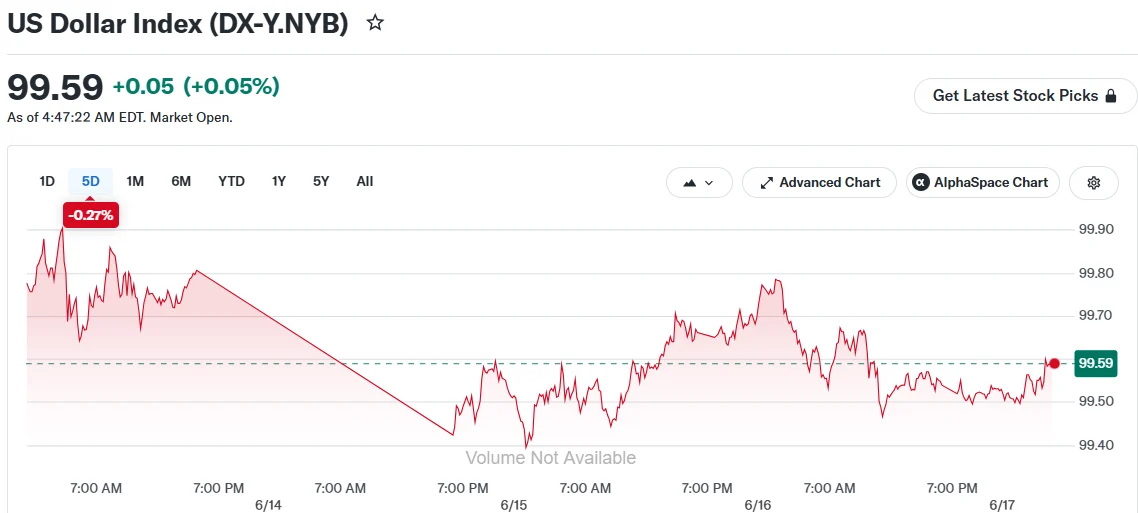
The American currency maintained its position near a 10-day trough on Wednesday as market participants adopted a cautious stance ahead of the Federal Reserve’s monetary policy announcement scheduled for later in the session.
The U.S. Dollar Index hovered between 99.50 and 99.55, showing minimal movement following four straight sessions of declines.
Traders are broadly expecting the central bank to keep rates unchanged at this gathering. Kevin Warsh, who assumed the Fed Chair position in recent weeks, faces his inaugural policy meeting, with market watchers keen to understand his strategic direction for monetary policy.
Currency strategists at ING noted that dollar valuations are increasingly dependent on expectations surrounding Fed policy tightening. They cautioned that any departure from market consensus during Warsh’s communication could trigger significant selling pressure on the greenback.
Overall market sentiment appeared more subdued than typical. The announcement of a preliminary peace accord between Washington and Tehran earlier this week diminished appetite for traditional safe-haven assets, including the dollar.

The agreement includes provisions for Iran to restart petroleum exports and halt nuclear enrichment activities for a 60-day period during ongoing diplomatic discussions. Additionally, the deal may facilitate the reopening of the Strait of Hormuz to commercial maritime traffic.
Brent crude dropped beneath the $80 per barrel threshold on the announcement, further dampening safe-haven currency demand.
Yen Approaches Critical Level While BOJ Offers Limited Policy Clarity
Japan’s currency remained under pressure at 160.27 versus the dollar, nearing the threshold where market participants anticipate possible intervention from Tokyo authorities to stabilize the exchange rate.
The Bank of Japan implemented a rate increase to 1% during Tuesday’s session—marking the highest borrowing cost in 31 years—as policymakers work to contain inflationary pressures stemming from energy market disruptions linked to Middle Eastern tensions.
Despite the monetary tightening move, the yen failed to gain ground. Market analysts attribute this to the BOJ’s vague messaging regarding the timing of subsequent rate adjustments, which dampened the currency’s response.
Jane Foley, who serves as senior foreign exchange strategist at Rabobank, observed that the BOJ’s action remained in the shadow of the pending Fed decision. Currency traders are holding off on major positions until receiving more definitive policy signals.
Australia’s central bank maintained its benchmark rate at 4.35% while indicating readiness to implement further tightening if price pressures persist. The Aussie dollar changed hands around $0.7063.
The common European currency stood at $1.1613 while sterling showed minimal change at $1.3431.
Erik Weisman from MFS Investment Management suggested that Warsh may be working to establish internal Fed consensus before articulating any significant policy shifts.
The substance and tone of Warsh’s inaugural press conference will likely establish the dollar’s trajectory in coming weeks.
Get 3 Free Stock Ebooks
Discover top-performing stocks in AI, Crypto, and Technology with expert analysis.
- Top 10 AI Stocks - Leading AI companies
- Top 10 Crypto Stocks - Blockchain leaders
- Top 10 Tech Stocks - Tech giants



