


Key Highlights
- Five companies—Rocket Lab, Astera Labs, CoreWeave, Nebius, and Teradyne—will enter the Nasdaq 100 index on June 22
- Rocket Lab shares surged more than 7% during premarket hours following the index announcement
- SpaceX completed a historic $75 billion IPO, shattering all previous records, and may qualify for Nasdaq 100 inclusion within 15 trading sessions
- Charter Communications, Cognizant, Insmed, Verisk Analytics, and Zscaler will exit the index to accommodate new entrants
- The Nasdaq 100 is tracked by over 200 investment vehicles managing more than $800 billion in total assets
Five technology-focused companies are preparing to enter the prestigious Nasdaq 100 index on June 22, following the quarterly index reconstitution announced by Nasdaq Global Indexes after Thursday’s trading session.
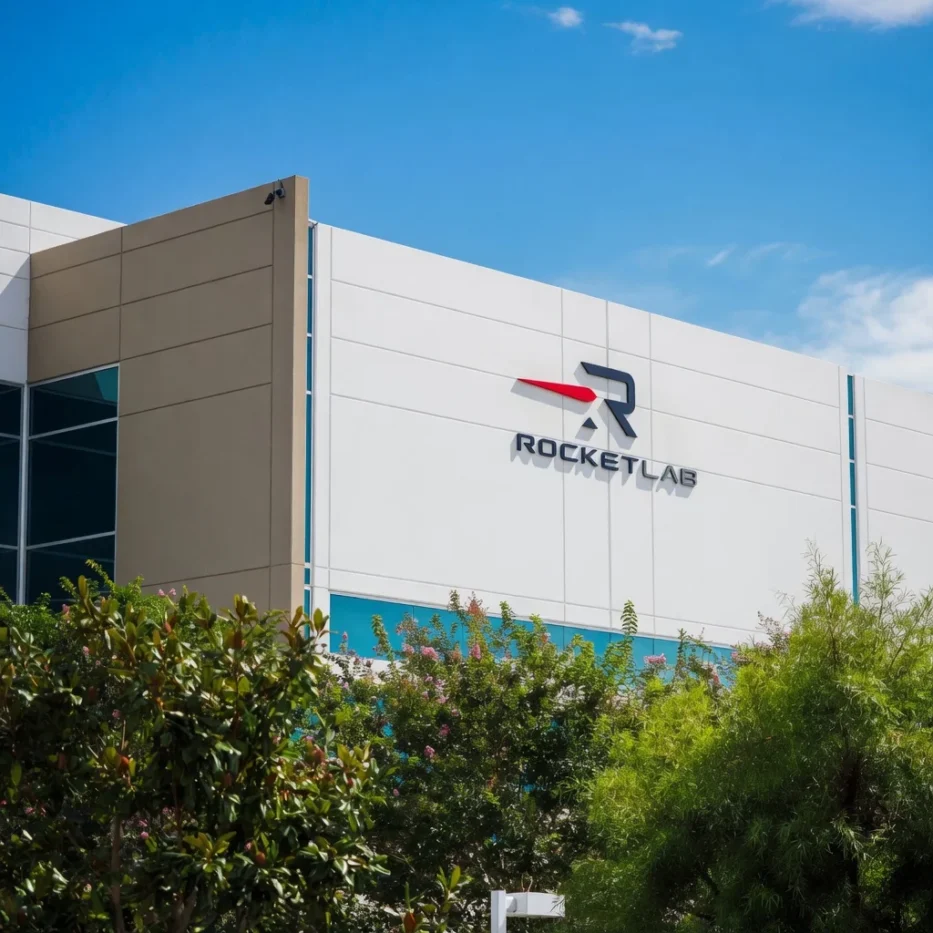
The incoming group includes aerospace manufacturer Rocket Lab, semiconductor innovator Astera Labs, cloud infrastructure providers CoreWeave and Nebius, and semiconductor testing equipment specialist Teradyne.
In Friday’s premarket session, Rocket Lab shares soared 7.6% to reach $123.55. Astera Labs advanced 4.3%, CoreWeave increased 4.4%, Nebius jumped 5.3%, and Teradyne edged up 1.2%.
Rocket Lab’s stock has surged an impressive 352% throughout the past twelve months. Market participants have been accumulating aerospace equities in anticipation of SpaceX’s public market debut.

SpaceX’s Historic Market Entry Energizes Space Sector
SpaceX commenced public trading on the Nasdaq Friday morning after finalizing its IPO pricing Thursday evening. The aerospace giant secured $75 billion in capital, establishing a new benchmark as the most substantial initial public offering ever recorded. This achievement eclipses Saudi Aramco’s previous record of $29.4 billion set in 2019.
SpaceX’s public offering assigns the enterprise a market capitalization approaching $1.8 trillion, representing approximately 35 times annual revenue. By comparison, Rocket Lab currently commands a valuation near 60 times sales, trading at a significant premium relative to SpaceX.
This valuation discrepancy carries important implications. As SpaceX establishes itself as an industry reference point for the commercial space sector, Rocket Lab’s elevated valuation multiple may face downward pressure.
Nasdaq implemented rule modifications in late March specifically designed to accelerate SpaceX’s potential inclusion in the Nasdaq 100. Traditional requirements mandate several months of seasoning following an initial listing. However, the revised framework enables SpaceX to qualify for index consideration in potentially just 15 trading days.
S&P 500 Maintains Traditional Standards
While Nasdaq adopted an expedited pathway, the S&P 500 took a contrasting approach. S&P Dow Jones Indices announced last week it would maintain existing protocols, declining to modify eligibility criteria that would permit SpaceX or similar large-cap technology enterprises to bypass conventional financial prerequisites or accelerate index entry.
The Nasdaq 100 comprises the largest 100 non-financial corporations listed on the Nasdaq exchange. This influential benchmark supports over 200 investment instruments representing combined assets exceeding $800 billion.
Accommodating the five incoming companies requires removing an equal number from the index. Charter Communications, Cognizant Technology Solutions, Insmed, Verisk Analytics, and Zscaler will be deleted from the roster.
These compositional changes become effective at the opening bell on June 22.
SpaceX’s potential Nasdaq 100 membership could follow rapidly thereafter, contingent upon satisfying the eligibility timeline established under the newly implemented fast-track provisions.
Get 3 Free Stock Ebooks
Discover top-performing stocks in AI, Crypto, and Technology with expert analysis.
- Top 10 AI Stocks - Leading AI companies
- Top 10 Crypto Stocks - Blockchain leaders
- Top 10 Tech Stocks - Tech giants



