


Key Takeaways
- Dutch TTF natural gas futures plummeted over 5% Friday, reaching their lowest point in two weeks.
- President Trump announced that a potential U.S.-Iran peace agreement could be finalized this weekend.
- Planned U.S. military operations against Iran were cancelled by Trump, reducing conflict escalation concerns.
- Approximately 20% of the world’s LNG supply passes through the Strait of Hormuz, making it a critical supply route.
- Iranian officials have yet to verify a finalized agreement, maintaining some market uncertainty despite price declines.
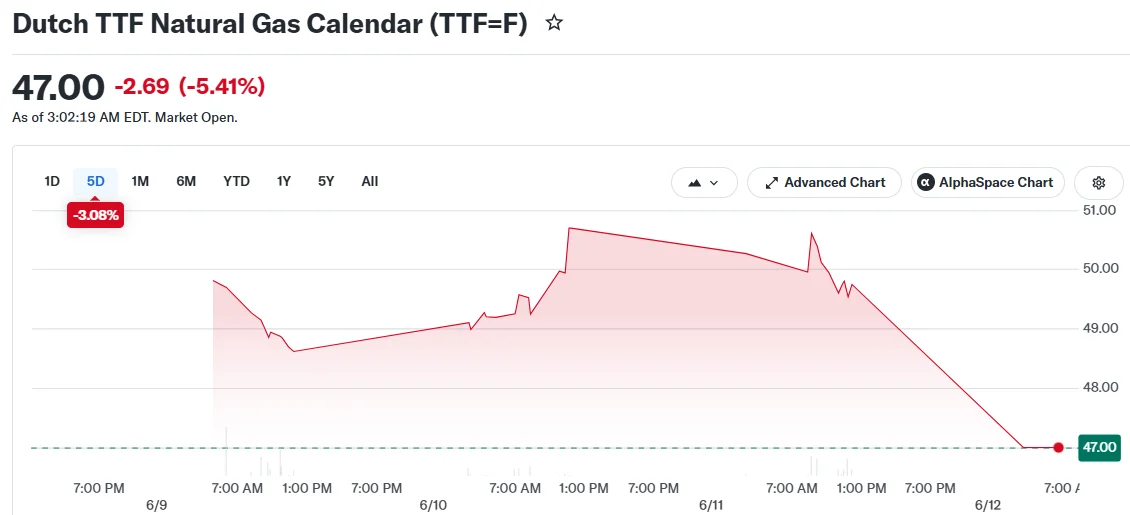
Natural gas markets across Europe experienced significant downward pressure Friday following statements from President Donald Trump suggesting major progress in diplomatic negotiations with Iran. The Dutch TTF benchmark contract for natural gas declined by more than 5%, settling near €47 per megawatt-hour—marking its weakest performance in 14 days.
According to Trump, a comprehensive peace agreement with Iran could receive signatures in Europe within the coming weekend. Additionally, the President revealed he had suspended planned military strikes against Iranian targets. These announcements prompted energy traders to rapidly unwind positions betting on imminent supply chain disruptions.
The Critical Role of the Strait of Hormuz
Recent weeks have seen heightened market anxiety focused on the Strait of Hormuz. This strategic maritime passage facilitates the transit of approximately 20% of worldwide liquefied natural gas volumes. Any military confrontation or blockade scenario in this region would significantly constrain supplies reaching European markets and other international buyers.
During the earlier part of this week, Trump had issued warnings about potentially capturing Iran’s Kharg Island and assuming control over Iranian energy exports. These aggressive statements had driven gas valuations toward multi-week peaks and maintained elevated trader anxiety approaching the summer months.
European markets face particular vulnerability since current underground storage inventories are tracking below year-ago levels. Additional constraints on worldwide LNG availability could have accelerated price increases during the crucial summer storage replenishment period.

Qatar represents a leading LNG producer utilizing Strait of Hormuz shipping routes. Although Europe sources substantial natural gas through pipeline infrastructure and Atlantic basin suppliers, it remains active in competing for spot cargoes within the global marketplace.
Trader Skepticism Persists Despite Price Relief
Notwithstanding Friday’s substantial price correction, market participants remain hesitant to declare diplomatic success. Iranian representatives have not publicly verified the existence of a completed agreement framework, despite indicating that primary negotiation points have been resolved.
British natural gas futures similarly declined approximately 2% Friday, briefly touching one-month lows during opening trading before recovering modestly by settlement.
Crude oil markets also retreated to two-month lows following the same diplomatic announcements. Market analysts characterized Trump’s peace deal commentary as representing the most substantive indication of diplomatic progress to date.
The ICE Dutch TTF futures contract, serving as Europe’s primary gas pricing benchmark, dropped beneath €47, briefly touching €46.19 during intraday trading. This represents a notable retreat from levels exceeding €50 observed earlier during the week.
The geopolitical risk premium accumulated throughout weeks of escalating U.S.-Iran tensions experienced rapid deflation across energy markets. However, absent formal signatures on a binding agreement, traders are expected to maintain vigilant monitoring.
Any resumption of hostile actions or breakdown in diplomatic discussions could rapidly reverse Friday’s price movements and propel European natural gas valuations back toward recent elevated levels.
Get 3 Free Stock Ebooks
Discover top-performing stocks in AI, Crypto, and Technology with expert analysis.
- Top 10 AI Stocks - Leading AI companies
- Top 10 Crypto Stocks - Blockchain leaders
- Top 10 Tech Stocks - Tech giants



