


TLDR
- Senator Cynthia Lummis called for immediate Senate floor action on the CLARITY Act following committee success.
- The Banking Committee passed the digital asset bill with bipartisan support by a 15-9 margin.
- The legislation establishes distinct regulatory boundaries between the CFTC and SEC.
- Stablecoin incentive provisions remain under active discussion ahead of the floor debate.
- The measure must clear the full Senate and reconcile with House provisions before presidential signature.
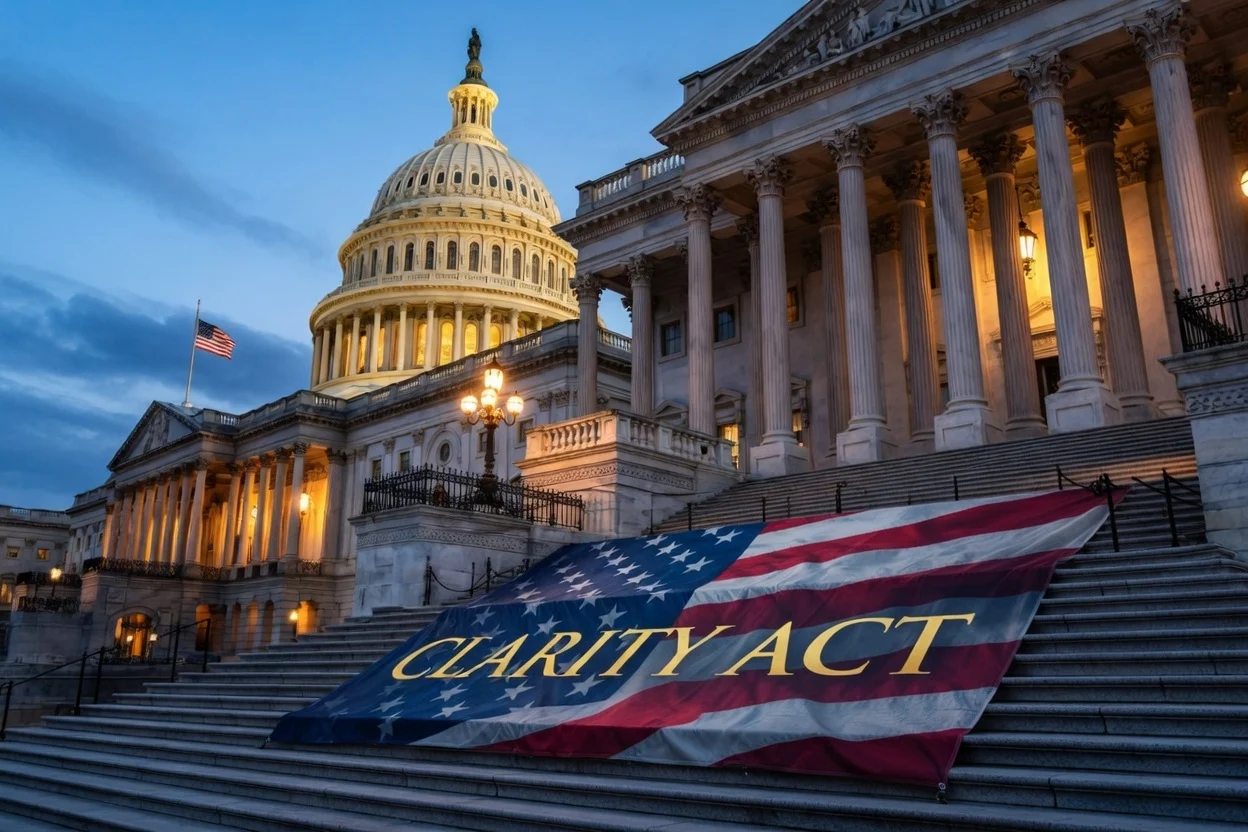
Senator Cynthia Lummis called on colleagues to accelerate the digital asset legislation following a pivotal committee decision. The Senate Banking Committee moved the CLARITY Act forward and positioned it for consideration by the full chamber. Lawmakers now face crucial debates as bill champions work to secure sufficient support for final passage.
CLARITY Act Moves Beyond Committee Stage
Lummis characterized the situation as a decisive moment requiring immediate action. She posted on June 8, stating: “The Clarity Act passed committee.
The floor is next.” Her message continued, “We did not come this far to quit at the 5-yard line,” emphasizing the critical nature of the current phase.
The Senate Banking Committee delivered a 15-9 decision to move H.R. 3633, the Digital Asset Market Clarity Act of 2025, forward. The legislation now awaits placement on the Senate calendar for comprehensive floor deliberation. Sponsors must preserve cross-party support and obtain dedicated time for chamber-wide consideration.
Committee Republicans voted unanimously for the bill, gaining additional backing from Democratic Senators Ruben Gallego and Angela Alsobrooks. Their participation created a bipartisan committee result. The full Senate debate may demand a wider alliance to meet the 60-vote cloture requirement.
Stablecoin Incentive Provisions and Legislative Timeline
The CLARITY Act creates a comprehensive federal structure for digital asset market operations. The legislation designates the CFTC as the primary regulator for digital commodity transactions. The SEC retains jurisdiction over securities aspects of digital asset activities.
The measure establishes operational requirements for exchanges, brokers, dealers, and custodial service providers managing client holdings. It requires transaction surveillance, comprehensive record maintenance, and adherence to compliance protocols for digital commodity venues. Proponents emphasize the framework provides regulatory certainty and defined compliance procedures.

The House approved H.R. 3633 in July 2025 with a 294-134 tally. The Senate committee advancement represents the bill’s most significant progress in the upper chamber. The legislation awaits full Senate endorsement, alignment with House language, and executive branch signature.
Stablecoin reward programs linked to token holdings remain under active legislative discussion. Banking institutions advocate for stricter constraints on incentive structures resembling deposit interest payments. Cryptocurrency companies pursue flexibility for engagement-based rewards connected to platform participation.
Senator Thom Tillis backed a middle-ground approach addressing these competing interests. The compromise language limits passive holding yields while permitting rewards based on active user engagement. This framework contributed to committee passage and will likely influence floor negotiations.
Prediction platforms responded to the committee decision by increasing passage probability estimates. Kalshi participants assigned a 71% likelihood of enactment during 2026 following the vote. Market expectations may shift as the Senate schedules floor proceedings.
Previous market structure legislation faced delays during technical negotiation phases. Contentious topics included stablecoin yield provisions, anti-money-laundering frameworks, and decentralized finance oversight. Additional debates centered on developer liability shields, market-maker obligations, ethical conduct standards, and regulatory boundary definitions.
Trading platforms, custody providers, token issuers, and brokerage firms have requested concrete federal guidance. Institutional market participants have advocated for explicit SEC and CFTC jurisdictional delineation. The Senate advances toward the subsequent procedural phase after the 15-9 committee approval.
Get 3 Free Stock Ebooks
Discover top-performing stocks in AI, Crypto, and Technology with expert analysis.
- Top 10 AI Stocks - Leading AI companies
- Top 10 Crypto Stocks - Blockchain leaders
- Top 10 Tech Stocks - Tech giants



