


Key Takeaways
- Shares of Tesla declined 3.57% on Monday following OpenAI CEO Sam Altman’s weekend announcement of OpenAI Robotics, a new humanoid robot division.
- The new division targets skilled labor and infrastructure applications, directly challenging Tesla’s Optimus initiative.
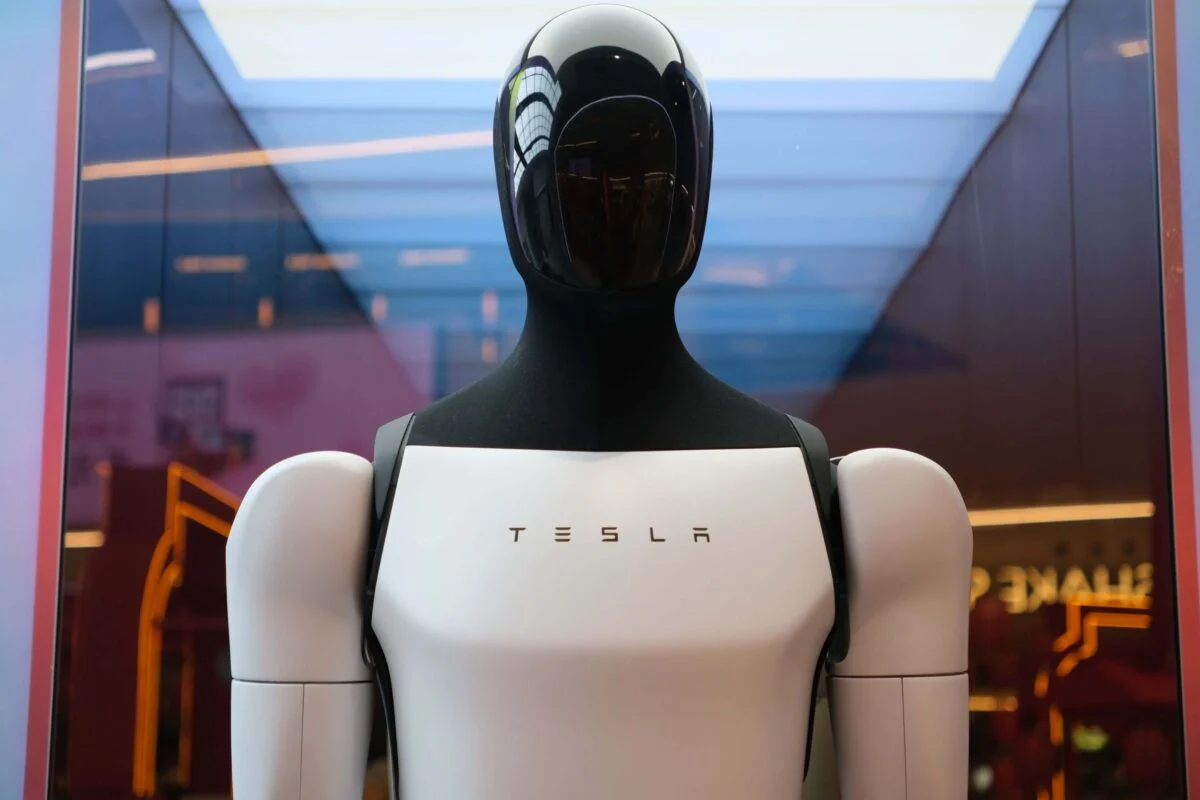
- Tesla has halted Model S and Model X production to repurpose the factory line for Optimus manufacturing, with annual production capacity planned for approximately 1 million units.
- The third-generation Optimus unveiling is anticipated between late July and early August, coinciding with the completion of the Fremont facility conversion.
- Tesla’s Q1 regulatory filing revealed a $2 billion equity position in SpaceX, as both entities collaborate on shared infrastructure projects, including a Texas-based chip manufacturing facility.
Shares of Tesla (TSLA) fell 3.57% during Monday’s trading session after OpenAI CEO Sam Altman revealed plans over the weekend to establish a dedicated robotics division within his company. Tesla stock was trading at $420.23 by midday Monday.
Altman announced via X that OpenAI is actively recruiting talent to develop OpenAI Robotics, concentrating on hardware engineering, control systems, system architecture, and machine learning applications for humanoid robots. His stated objective involves creating robots to assist skilled laborers on infrastructure initiatives initially, with a long-term goal of producing personal robots accessible to everyone.
This announcement places OpenAI in direct competition with Tesla’s existing efforts.
Tesla has been systematically reorganizing its Fremont manufacturing operations to prioritize Optimus production. The company ceased Model S and Model X production in early May 2026 to reallocate that assembly line for humanoid robots. Factory conversion activities are projected to conclude between late July and August, with the Fremont location aiming for approximately 1 million units in annual production capacity.

Elon Musk has repeatedly characterized Optimus as the vehicle for Tesla to achieve a multitrillion-dollar market capitalization. Now, before full-scale production has commenced, a formidable competitor with substantial financial backing has emerged.
This confrontation isn’t unprecedented between Musk and Altman. Musk previously initiated legal action against Altman concerning OpenAI’s structural transformation from nonprofit to for-profit status. A jury ruled in Altman’s favor last month.
Production Schedule Faces Competition
Tesla currently operates several Optimus Gen 3 prototypes within its facilities — specifically at Gigafactory Texas and Fremont — performing repetitive operations such as battery component assembly. However, volume production remains in development.
The Gen 3 public demonstration is scheduled for late July through early August, aligning with the timeframe Musk referenced during Tesla’s Q1 earnings presentation. The installation of Optimus production equipment at Fremont was announced for Q2, with full-scale manufacturing operations beginning later this calendar year.
OpenAI’s market entry at this juncture creates a perception challenge for Tesla: Optimus no longer stands as the sole credible AI-driven robotics investment opportunity under investor scrutiny.
SpaceX Public Offering Complicates Musk’s Portfolio
Musk is managing multiple significant initiatives simultaneously. SpaceX plans to go public on the Nasdaq under ticker symbol SPCX in mid-June, pursuing a valuation between $1.75 trillion and $2 trillion while raising as much as $75 billion — potentially establishing it as the largest initial public offering ever recorded. Musk maintains approximately 42% equity ownership and 85% voting control.
Tesla revealed a $2 billion equity investment in SpaceX within its Q1 regulatory submission. The companies are collaborating on multiple projects, including a semiconductor fabrication facility in Texas named Terafab, and developing orbital data center infrastructure.
Wedbush analyst Dan Ives has assigned an 80% probability to a Tesla-SpaceX merger occurring in 2027.
Tesla’s Q1 disclosure documented the $2 billion SpaceX investment. The Fremont facility’s Optimus production line transformation is scheduled for completion in late July or August.
Get 3 Free Stock Ebooks
Discover top-performing stocks in AI, Crypto, and Technology with expert analysis.
- Top 10 AI Stocks - Leading AI companies
- Top 10 Crypto Stocks - Blockchain leaders
- Top 10 Tech Stocks - Tech giants



