


TLDR
- Mike Novogratz of Galaxy Digital declares June the critical month for cryptocurrency legislation, describing it as a final opportunity
- Senator Cynthia Lummis cautions that failure now could delay crypto regulation until 2030
- Jamie Dimon of JPMorgan pledges banking industry opposition citing deposit interest provisions and anti-money laundering concerns
- Following Treasury Secretary Scott Bessent’s congressional appeal, prediction markets shifted to 60% approval probability
- Limited Senate floor time creates competition between the crypto bill, reconciliation negotiations, FISA matters, and housing legislation
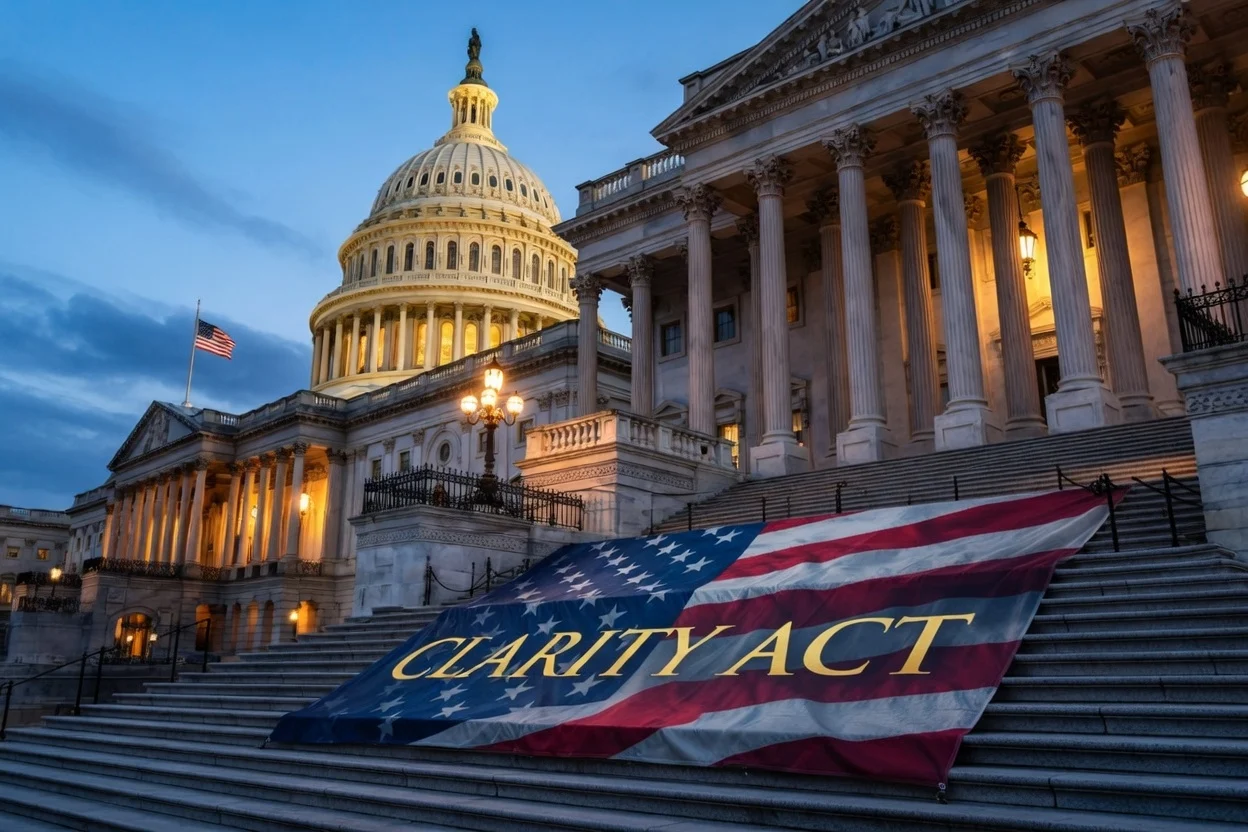
America’s proposed cryptocurrency regulation framework stands at a critical juncture as legislators, business executives, and administration officials rally for a Senate vote ahead of the summer recess.
A Shrinking Timeline Creates Urgency
Mike Novogratz, who leads Galaxy Digital, declared on social media: “June is ‘Clarity’ month. It’s literally now or never.”
Legislators have merely four working weeks available in June, followed by three weeks in July prior to the August break. This compressed timeframe presents substantial obstacles for legislation requiring complete Senate consideration, subsequent House approval, and presidential signature.
Majority Leader John Thune recently informed Republican members that reconciliation efforts would extend beyond this month. Consequently, the CLARITY Act must now vie for limited floor time alongside budget reconciliation, intelligence surveillance authorization, and residential housing proposals.
Industry reporter Eleanor Terrett observed the legislation’s trajectory “just got more challenging.”
Senator Sounds Alarm on International Competition and Decade-Long Delay
Senator Cynthia Lummis continues serving as the legislation’s primary advocate. She contends that American inaction will cede regulatory authority to foreign governments during a transformative period for global finance.
“China is not waiting,” she posted on social media.
According to Lummis, missing this legislative cycle would postpone meaningful action until the decade’s end. She emphasizes that prolonged regulatory uncertainty leaves blockchain innovators vulnerable while hampering enforcement efforts against illicit activities.
The Senate Banking Committee approved the measure in May through a 15-9 bipartisan margin. While significant, this represents merely an initial hurdle in the legislative journey.

Traditional Finance Sector Mounts Opposition
The legislation faces resistance beyond mere calendar constraints. JPMorgan chief Jamie Dimon announced the banking sector’s intention to contest the bill’s current provisions.
His primary concerns focus on two areas. The legislation permits digital asset platforms to compensate users on deposited funds. Additionally, he argues cryptocurrency businesses face less stringent anti-money laundering requirements and capital adequacy standards compared to traditional financial institutions.
“The banks will not accept it that way,” Dimon stated. Addressing Coinbase CEO Brian Armstrong’s advocacy efforts directly, he remarked: “No one is going to bow down to this guy or that company.”
Current Legislative Status
Treasury Secretary Scott Bessent has publicly encouraged both legislative chambers to advance the measure. Following his intervention, prediction market Polymarket showed approval probability increasing to 60% for passage during 2026.
Senator Lummis has additionally connected the legislation to President Trump’s comprehensive digital asset agenda, calling on colleagues to deliver the bill for executive signature.
The upcoming weeks will reveal whether sufficient legislative time materializes for congressional action.
Get 3 Free Stock Ebooks
Discover top-performing stocks in AI, Crypto, and Technology with expert analysis.
- Top 10 AI Stocks - Leading AI companies
- Top 10 Crypto Stocks - Blockchain leaders
- Top 10 Tech Stocks - Tech giants



