


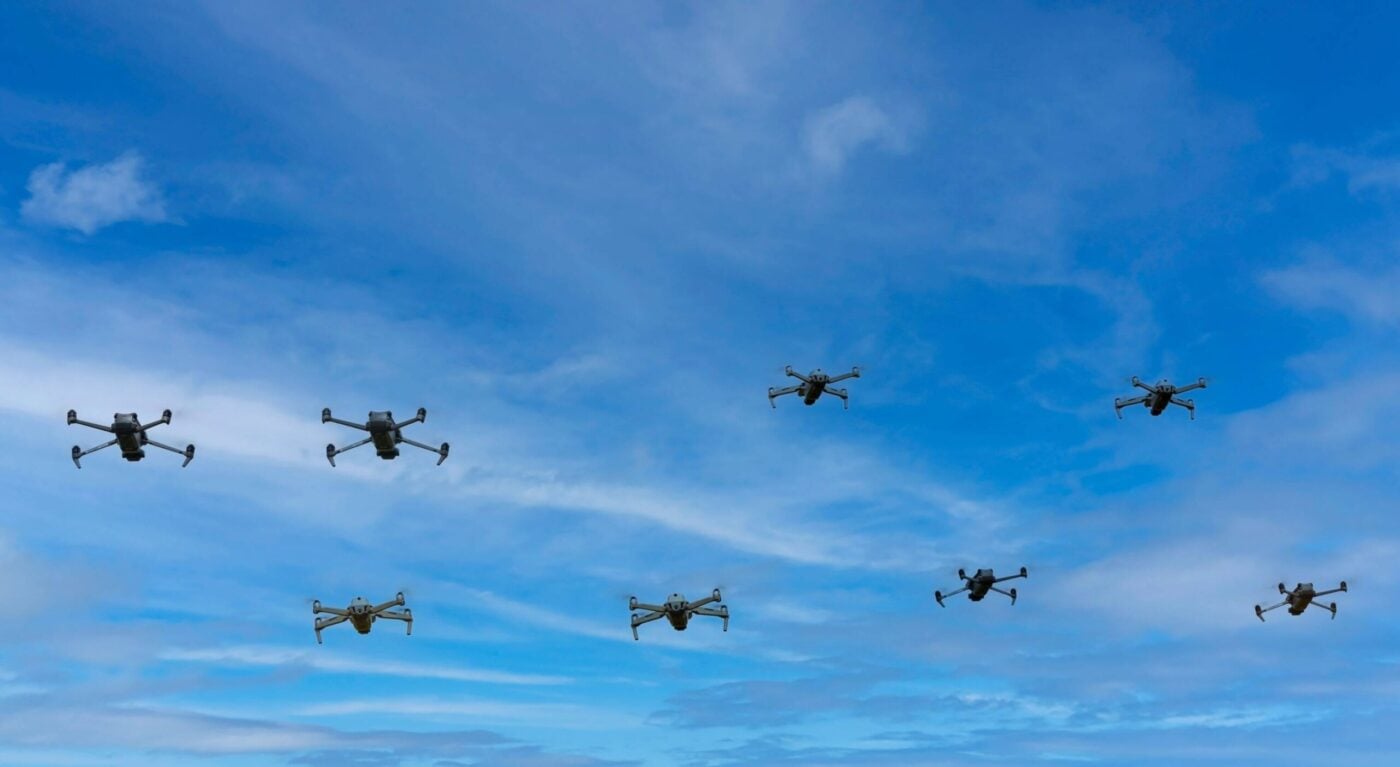
TLDR
- Federal officials are negotiating financing arrangements, including potential equity positions, with domestic drone manufacturers
- Pentagon’s Drone Dominance initiative seeks to procure 300,000 affordable drones by late 2027 with $1.1 billion allocated
- Unusual Machines skyrocketed 33%, Red Cat Holdings advanced 13%, Kratos Defense jumped 8.4% following the report
- Companies under consideration for financing include Unusual Machines, Performance Drone Works, and Neros Technologies
- Ondas Holdings finalized a $196.6 million purchase of defense software company Omnisys, diversifying its portfolio
The Trump administration has entered advanced discussions to extend direct financial assistance to multiple American drone manufacturers, as revealed in a recent Wall Street Journal investigation. These proposed arrangements may combine traditional lending with equity participation, potentially establishing government ownership stakes in select companies. Specific deal structures remain under negotiation.
The revelation triggered a substantial premarket rally across the drone sector on Thursday morning. Unusual Machines surged 33%. Red Cat Holdings advanced 13%. Kratos Defense climbed 8.4%. AeroVironment posted an 8% gain. AgEagle Aerial Systems increased 11.7%. ZenaTech rose 10.5% while Ondas Holdings jumped over 9%.
Pentagon’s Ambitious Drone Production Strategy
The government’s Drone Dominance program stands at the heart of this initiative. With a $1.1 billion budget, the Department of Defense plans to accumulate approximately 300,000 affordable attack drones before 2027 concludes.
Current domestic production reaches about 100,000 units annually. By comparison, Ukrainian factories manufactured roughly four million drones during the previous year. Most American-manufactured drones carry price tags tens of thousands of dollars above the Pentagon’s $5,000 unit cost objective.

The proposed capital infusion aims to enable manufacturers to expand operations and reduce per-unit expenses. Defense planners have requested over $54 billion for the Defense Autonomous Warfare Group, representing a dramatic increase from the current year’s approximately $225 million allocation.
Companies identified as prospective funding recipients include Performance Drone Works, which secured an Army reconnaissance drone agreement, Neros Technologies, backed by Sequoia Capital, and Unusual Machines, a drone component distributor.
Unusual Machines maintains connections to Donald Trump Jr., who holds shares and serves on the advisory board. The firm’s collaborator Powerus received selection for the Drone Dominance Program’s Phase II with its MatrixFold drone system.
Individual Company Positioning and Performance
Red Cat specializes in compact battlefield reconnaissance drones. The organization has been expanding Black Widow drone manufacturing while integrating artificial intelligence capabilities. Share prices have climbed more than 34% since January.
Kratos produces larger-scale autonomous military aircraft, including the XQ-58A Valkyrie platform. First-quarter results showed 22% revenue expansion. Year-to-date, the stock has declined 24%.
Ondas Holdings just finalized its $196.6 million all-stock purchase of Omnisys, a defense technology firm. This transaction shifts Ondas’s focus beyond physical drone manufacturing into sophisticated military software platforms.
Volatus Aerospace earned advancement to subsequent stages of the U.S. Drone Dominance Program. The initiative targets acquisition of more than 300,000 low-cost autonomous platforms across roughly two years.
Palantir delivers artificial intelligence and analytical software deployed in defense operations and combat coordination. Major defense contractors such as Northrop Grumman, Lockheed Martin, and Leidos maintain exposure through their autonomous platform divisions.
Prior to Trump’s current administration, Pentagon drone acquisitions represented under 2% of total American commercial and governmental drone transactions each year. Industry analysts anticipate this percentage will expand significantly as defense appropriations accelerate through 2026 and the years following.
Get 3 Free Stock Ebooks
Discover top-performing stocks in AI, Crypto, and Technology with expert analysis.
- Top 10 AI Stocks - Leading AI companies
- Top 10 Crypto Stocks - Blockchain leaders
- Top 10 Tech Stocks - Tech giants



