


TLDR
- Industry analysts forecast the humanoid robotics sector expanding from approximately $2–3 billion currently to $200 billion by 2035, according to Barclays research
- Manufacturing expenses for humanoid robots have plummeted from $3 million per unit ten years ago to roughly $100,000 currently
- AeroVironment delivered 143% revenue expansion reaching $408 million alongside a funded backlog of $1.1 billion
- Rockwell Automation achieved 12% sales expansion and 36% operating earnings increase during fiscal Q1 2026
- Symbotic achieved profitability with $630 million revenue, representing 29% annual growth
The robotics industry is experiencing unprecedented momentum, with several publicly traded companies already capitalizing on this technological shift. The financial data tells a compelling story.
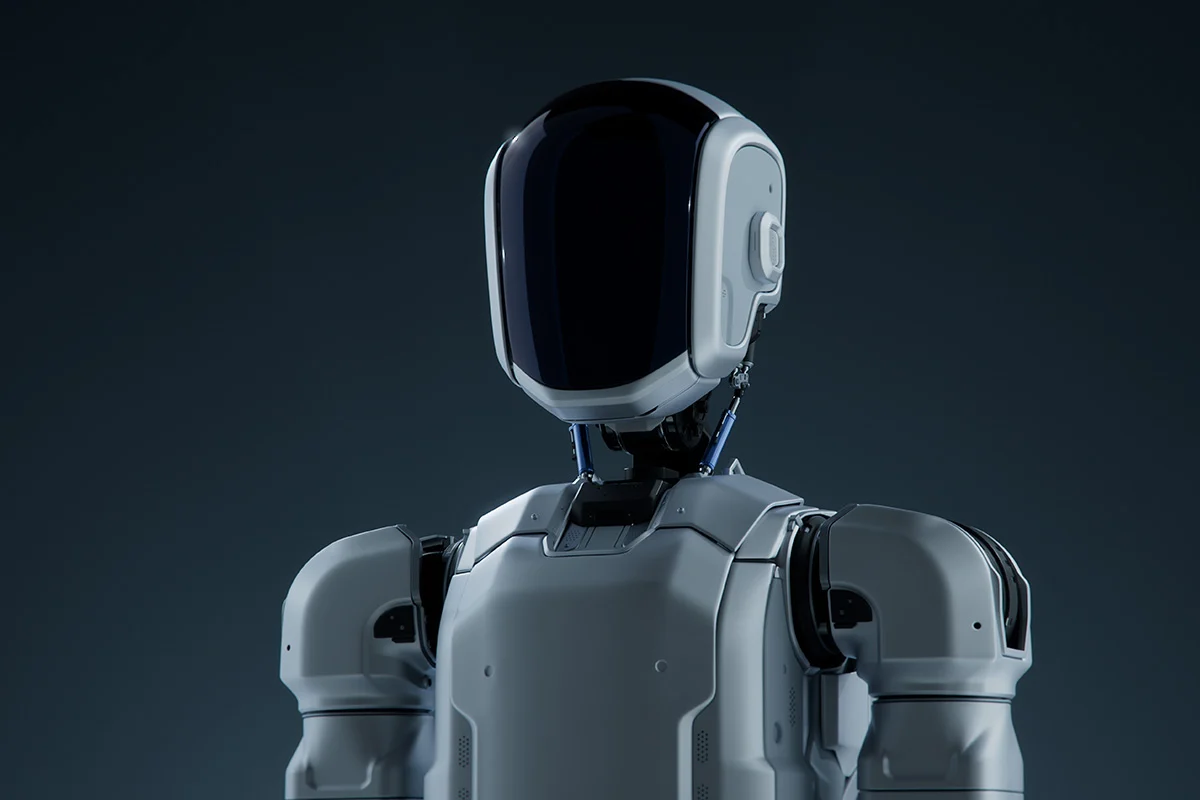
Barclays analysts project humanoid robotics evolving into a $200 billion industry by 2035. The current market valuation sits between $2 and $3 billion. While this represents substantial growth, underlying fundamentals support these projections.
Manufacturing economics have transformed dramatically. Humanoid robots that cost approximately $3 million to produce ten years ago now run about $100,000 per unit. Chinese producers have driven costs lower still through mass production techniques and vertically integrated manufacturing ecosystems.
Deployment velocity is intensifying rapidly. Approximately 2,000 units entered service during 2024. This expanded to 15,000 throughout 2025, with projections indicating 60,000 installations in 2026. China represents roughly 85% of worldwide deployments, supported by strategic government initiatives.
Barclays characterizes humanoids as automation’s next evolution following industrial machinery and software-driven artificial intelligence. Unlike previous robots engineered for narrow applications, humanoids function in human-designed environments, utilizing standard tools and existing infrastructure without requiring extensive modifications.

Market drivers include demographic aging, workforce scarcity, and increasing challenges recruiting workers for physically intensive roles across manufacturing, distribution, healthcare, and elderly care sectors.
Analysts identify what they term the “Three Bs” enabling humanoid advancement: brains, encompassing AI algorithms and sensory systems; brawn, including actuators and mechanical components; and batteries providing operational power.
Robotics Stocks Delivering Real Results
Beyond long-range forecasts, certain corporations are generating substantial financial performance currently.
AeroVironment, a defense drone and unmanned systems manufacturer, announced fiscal third quarter revenue of $408 million. This represented 143% annual growth. The company maintains a funded backlog totaling $1.1 billion, with management establishing fiscal 2026 revenue guidance between $1.85 billion and $1.95 billion.
Rockwell Automation, an industrial automation industry leader, generated sales of $2.105 billion during fiscal Q1 2026, representing 12% year-over-year expansion. Total segment operating earnings climbed 36% during this period. Annual recurring revenue increased 7%.
Symbotic, specializing in warehouse robotics and automated distribution technologies, recorded $630 million revenue for fiscal Q1 2026, up 29% annually. The company crossed into profitability, recording net income of $13 million versus a $17 million net loss one year prior. Second quarter revenue guidance ranges from $650 million to $670 million.
What This Means for Investors
Financial markets have shifted away from rewarding robotics firms solely on aspirational narratives. Emphasis now centers on quantifiable performance: revenue expansion, margin improvement, and robust order pipelines.
Barclays estimates the comprehensive physical AI ecosystem, encompassing autonomous vehicles, aerial drones, and sophisticated robotics, potentially reaching $1 trillion by 2035.
Investment exposure pathways include humanoid manufacturers, component providers, and robotics-concentrated exchange-traded funds.
The three corporations examined here each represent distinct segments of the robotics spectrum, spanning defense drones to factory automation to warehouse infrastructure. All three delivered recent quarterly performance showing sustained growth with forward guidance indicating continued momentum.
Get 3 Free Stock Ebooks
Discover top-performing stocks in AI, Crypto, and Technology with expert analysis.
- Top 10 AI Stocks - Leading AI companies
- Top 10 Crypto Stocks - Blockchain leaders
- Top 10 Tech Stocks - Tech giants



