


Key Takeaways
- BitMEX co-founder Arthur Hayes urged President Donald Trump to reject the Clarity Act should Congress approve it.
- Hayes acknowledges banks may provide Bitcoin offerings for clients seeking exposure, yet opposes legislative frameworks that embed Bitcoin within conventional finance.
- According to Hayes, Bitcoin derives its worth from existing beyond regulatory structures rather than requiring governmental validation.
- Hayes characterizes bank-issued Bitcoin offerings as derivative instruments that track Bitcoin’s value while introducing institutional risk.
- Hayes emphasizes the difference between direct Bitcoin ownership and holding financial claims backed by intermediaries.
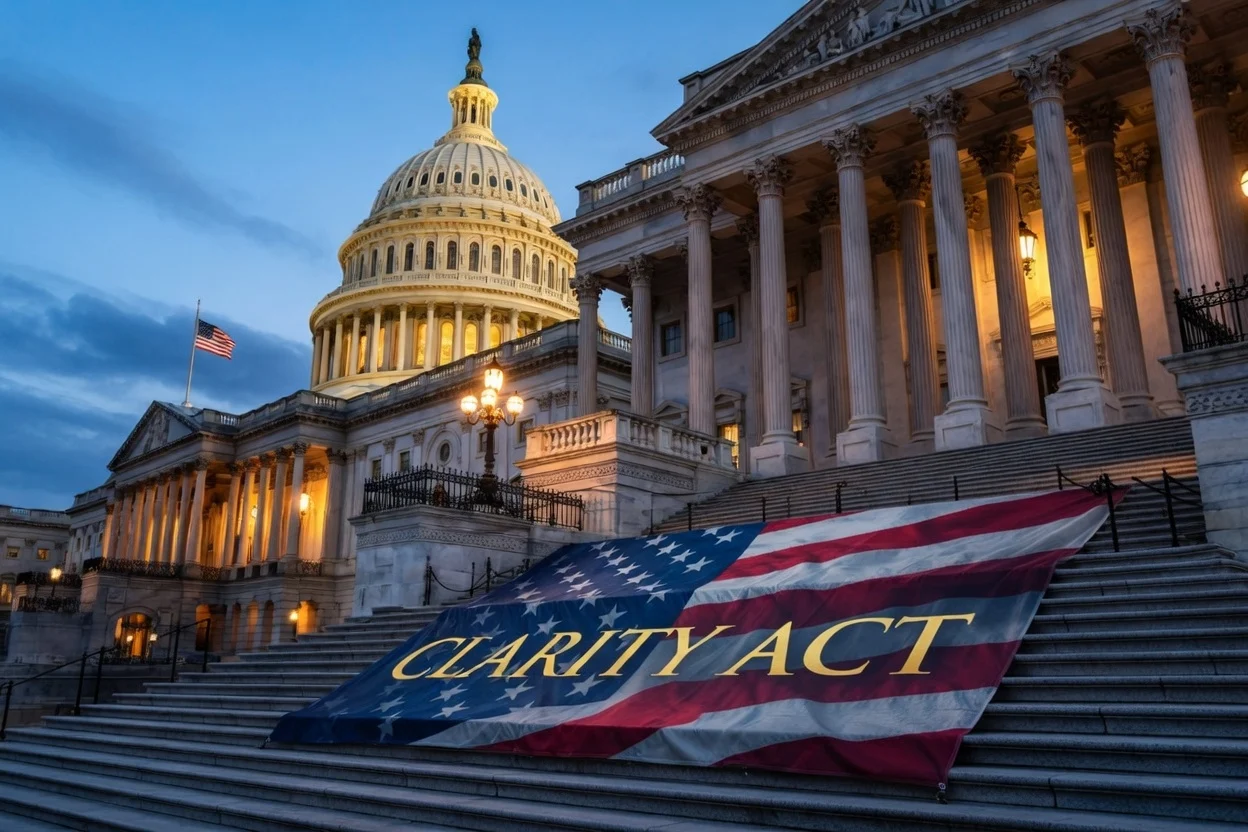
Arthur Hayes contends President Donald Trump should reject the Clarity Act if lawmakers pass it and send it for presidential approval. The BitMEX co-founder maintains the legislation would integrate Bitcoin further into conventional financial regulation, contradicting the cryptocurrency’s foundational design. Hayes believes Bitcoin maintains intrinsic value independent of government endorsement, a position he connects directly to his stance on the Clarity Act.
Hayes Distinguishes Between Bank Bitcoin Services and Structural Regulatory Change
Arthur Hayes separates institutional appetite for cryptocurrency offerings from the legislative intent driving new regulations. He acknowledges financial institutions can provide Bitcoin exposure because customer portfolios demand it.
He connects this appetite to investor strategies during inflationary cycles and monetary expansion. Clients frequently pursue assets with low correlation that have delivered strong returns during such economic conditions.
Hayes accepts certain regulatory oversight within crypto markets. Yet he challenges initiatives that position Bitcoin as a conventional financial instrument.
He identifies the Clarity Act as embodying this broader agenda. According to his interpretation, the legislation would codify Bitcoin’s integration within established institutional frameworks.
Hayes contends this result contradicts Bitcoin’s core mission. He maintains the digital asset was created to operate independently of regulatory validation or institutional gatekeepers.

He articulates this perspective clearly when addressing Bitcoin’s valuation. Hayes asserts that Bitcoin requiring regulatory approval for legitimacy “would not be worth anything.”
He frames the discussion around infrastructure rather than market access. Financial institutions offering products represents one matter, while restructuring regulation to accommodate Bitcoin constitutes another entirely.
Hayes Explains His “Fugazi Derivative” Description for Regulated Bitcoin Offerings
Hayes applies the phrase “fugazi derivative” to Bitcoin-linked instruments held within traditional financial systems. His description focuses on structure rather than alleging deception.
He explains these instruments replicate Bitcoin price movements while introducing institutional dependency risks. These risks stem from the issuing bank and the custody arrangements supporting the product.
Direct Bitcoin ownership eliminates counterparty exposure entirely. Bank-created Bitcoin products simultaneously introduce dependence on the financial institution’s continued viability.
Hayes emphasizes this distinction carries significance beyond simple price tracking. Clients may monitor Bitcoin’s market performance while depending entirely on their bank’s financial health.
He maintains this arrangement reproduces the systemic vulnerabilities Bitcoin was designed to eliminate. Should a financial institution collapse, customer Bitcoin claims may vanish alongside it.
Hayes expresses this concern directly. “What you’ve actually built for the last 15 years is a zero,” he states.
He argues custodial products could theoretically exist without Bitcoin’s decentralized infrastructure. Under that scenario, fifteen years of network development would fail to justify the resulting product.
The culmination of Hayes’ position is his appeal for presidential action. He believes Trump should veto the Clarity Act should Congress present it for signature.
Get 3 Free Stock Ebooks
Discover top-performing stocks in AI, Crypto, and Technology with expert analysis.
- Top 10 AI Stocks - Leading AI companies
- Top 10 Crypto Stocks - Blockchain leaders
- Top 10 Tech Stocks - Tech giants



