



Key Highlights
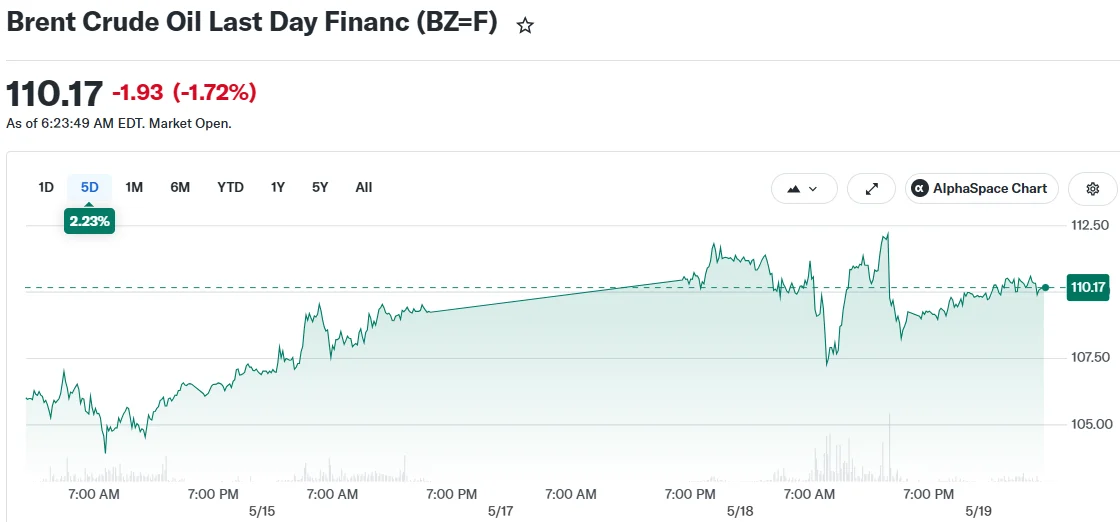
- Brent crude declined 1.5% to settle at $110.39 per barrel following Trump’s announcement of a delayed Iran operation
- Gulf nations including Saudi Arabia, Qatar, and the UAE urged the US to postpone action while “serious negotiations” continue
- Year-to-date, oil benchmarks have surged more than 80%, with a 20% gain recorded over the last month alone
- Iran’s Kharg Island oil terminal has remained offline for a minimum of 10 days due to a US naval blockade
- Washington granted a 30-day extension to its sanctions waiver covering Russian crude oil already at sea
Crude oil markets experienced a pullback on Tuesday following President Donald Trump’s declaration that he had postponed planned military operations against Iran after receiving requests from Middle Eastern allies.
Brent crude futures declined 1.5% to reach $110.39 per barrel. West Texas Intermediate dropped 0.7% to settle at $103.64. Despite the retreat, both major benchmarks continue trading significantly higher than their year-opening levels.
Gulf State Leaders Persuade Trump to Delay Military Action
In a social media statement, Trump revealed that leadership from Saudi Arabia, Qatar, and the United Arab Emirates had requested the United States postpone strikes scheduled for Tuesday. According to the president, “serious negotiations” with Iran are currently in progress.
“I put it off for a little while, hopefully maybe forever, but possibly for a little while,” Trump stated during a Monday evening appearance at the White House.
The president emphasized that military action remains an option if negotiations fail to produce an acceptable agreement, though no specific timeline was provided.
Market participants seem to have already incorporated this uncertainty into pricing. Industry analysts note that Trump’s public statements are generating diminished market volatility compared to earlier periods.
“These hot air verbal interventions from Trump used to have a heavy bearish impact on prices, but they now seem to have less and less effect unless they are backed by reality,” said Bjarne Schieldrop, chief commodities analyst at SEB AB.
Tehran has not yet publicly acknowledged that new diplomatic discussions are taking place.

Hormuz Strait Blockade Continues Supporting Elevated Price Levels
The Strait of Hormuz situation remains central to market concerns. This critical waterway serves as a primary transit point for Persian Gulf crude exports, and its near-complete shutdown has constrained worldwide supply.
A naval blockade implemented by the United States has kept Iran’s Kharg Island petroleum terminal non-operational for no less than 10 days. This action has eliminated Tehran’s oil revenue stream and removed millions of barrels from global circulation.
During the conflict’s initial weeks, Iran had prevented other countries’ vessels from using the strait, positioning itself as the primary crude shipper through the passage during that period. The situation has subsequently changed.
Market experts suggest that substantial price decreases are improbable until a definitive plan emerges for reopening the strategic waterway.
Oil benchmarks have climbed more than 80% year-to-date and advanced 20% during the previous month, demonstrating the extent to which the conflict has impacted worldwide petroleum supply.
Washington Extends Russian Crude Sanctions Exemption
In a related development, the United States has prolonged its sanctions exemption covering Russian crude oil currently aboard vessels for an additional 30-day period.
Treasury Secretary Scott Bessent indicated the extension would contribute to stabilizing physical crude markets and guarantee oil delivery to nations facing the greatest “energy vulnerability.”
The prior exemption had expired only days before the renewed waiver took effect.
As of Tuesday’s close, petroleum prices remain significantly elevated with no definitive solution emerging for the Strait of Hormuz standoff.
Get 3 Free Stock Ebooks
Discover top-performing stocks in AI, Crypto, and Technology with expert analysis.
- Top 10 AI Stocks - Leading AI companies
- Top 10 Crypto Stocks - Blockchain leaders
- Top 10 Tech Stocks - Tech giants



