


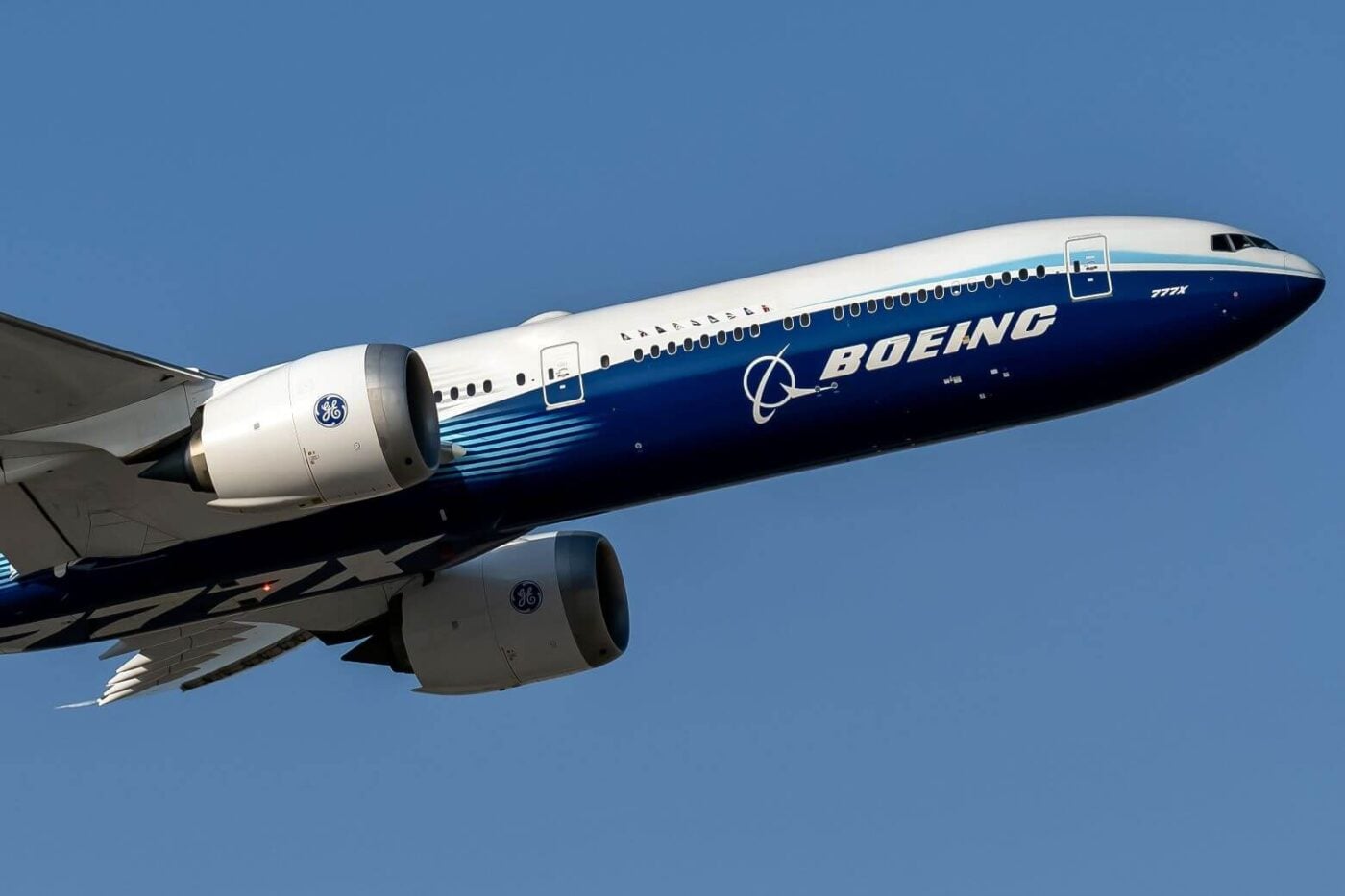
TLDR
- Shares of Boeing declined 4.7% Thursday following Trump’s announcement of a 200-aircraft order from China — significantly below Wall Street’s 500-plane expectation.
- Trump subsequently stated China committed to 200 jets initially, with possibilities extending to 750 aircraft, all equipped with GE engines.
- Chinese airlines haven’t placed orders for new 737s in several years, with the nation representing approximately 2% of Boeing’s existing order book.
- The aerospace manufacturer maintains more than 6,800 pending orders worldwide while continuing its recovery from prolonged production and engineering challenges.
- Through Thursday’s market close, BA shares had gained 6% for the year and 12% over the trailing twelve months.
Boeing’s anticipated comeback in China’s aviation market is materializing — though the scale and pace fell short of investor expectations.
During Thursday remarks to reporters, Trump revealed a pending 200-aircraft purchase from China. Boeing shares tumbled 4.7% following this disclosure, extending losses another 1.3% during Friday’s premarket trading session.
Wall Street’s negative response speaks volumes. After months of anticipation for a Chinese agreement, market participants had anticipated an order approaching 500 aircraft.
Boeing stock hovered near $220 Thursday. Both the S&P 500 and Dow advanced approximately 0.8% during the session, highlighting Boeing’s underperformance.

Trump expanded the opportunity’s scope on Friday, informing reporters that China committed to purchasing 200 Boeing aircraft initially, with potential expansion reaching 750 planes. General Electric will provide engines for these aircraft.
Should the agreement reach its full potential, this would mark Boeing’s largest Chinese contract in close to ten years.
Critical Territory for Boeing’s Growth Strategy
China hasn’t issued fresh 737 orders for multiple years. Chinese carriers have remained predominantly inactive regarding aircraft acquisitions following Covid’s disruption of international aviation.
Between 2010 and 2019, China represented over 20% of Boeing’s aircraft deliveries. Currently, the country comprises merely 2% of Boeing’s outstanding order backlog.
Boeing projects China will require approximately 8,800 additional aircraft during the next two decades to accommodate expanding passenger demand. No aircraft manufacturer can disregard such substantial market potential.
CEO Kelly Ortberg, appointed in 2024 to spearhead the company’s recovery efforts, accompanied the U.S. delegation during Trump’s China visit.
Understanding Boeing’s Current Position
Independent of the China agreement, Boeing maintains substantial order volume. The manufacturer currently holds over 6,800 outstanding jet orders across global markets.
Production capacity remains the primary constraint. Boeing has navigated years of internal production complications and engineering difficulties that hampered output rates.
These persistent challenges explain why shares remain approximately 45% below their early 2019 peak levels.
Boeing shares rebounded from March 2026 troughs, which resulted from elevated oil prices following Iranian conflict escalation. International benchmark crude prices continue trading above $105 per barrel.
Elevated oil prices present challenges for Boeing as they compress airline profitability, potentially weakening appetite for new aircraft purchases.
Treasury Secretary Scott Bessent told CNBC before Trump’s announcement that he anticipated “large Boeing orders” from China, fueling heightened investor expectations.
Through Thursday’s closing bell, Boeing shares had advanced 6% year-to-date and posted 12% gains over the previous twelve months.
Get 3 Free Stock Ebooks
Discover top-performing stocks in AI, Crypto, and Technology with expert analysis.
- Top 10 AI Stocks - Leading AI companies
- Top 10 Crypto Stocks - Blockchain leaders
- Top 10 Tech Stocks - Tech giants



