


Quick Summary
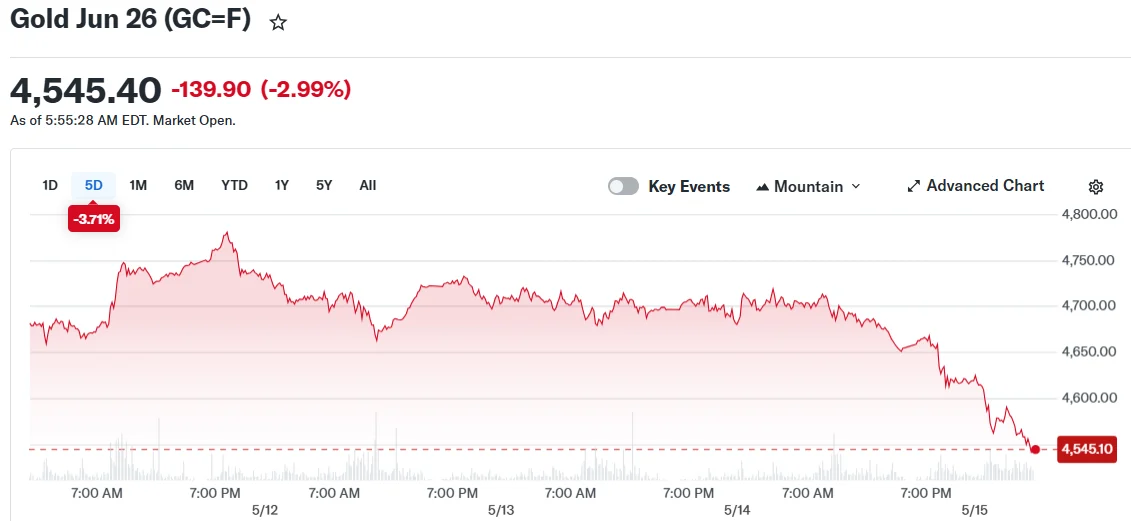
- Gold plunged as much as 2.2% to approximately $4,550 per ounce, marking a weekly decline of roughly 3.4%
- April’s US producer price index recorded its steepest yearly increase in four years; consumer price data also surpassed projections
- Market participants reduced Federal Reserve rate cut expectations while some started factoring in potential additional increases
- The Strait of Hormuz closure persists amid Iran conflict, sustaining elevated energy costs and inflation concerns
- ANZ Group revised its $6,000 gold forecast to mid-2027, postponing from the original early next year timeline
Precious metals experienced significant declines Friday following new US inflation figures that elevated the dollar and Treasury yields, diminishing the attractiveness of non-yielding assets.
Spot gold tumbled as much as 2.2% toward $4,550 per ounce and headed for approximately 3.4% weekly depreciation. The yellow metal has declined over 13% since the Iran conflict commenced.
Silver suffered steeper losses, plummeting as much as 7.1% during trading sessions. It closed down approximately 6% at $78.50 per ounce. Both platinum and palladium recorded declines as well.
The US Dollar Index advanced 0.3% during the session and gained more than 1% across the week. Dollar strength makes gold costlier for international purchasers, generally dampening demand.
Two-year Treasury yields reached multi-month peaks. Elevated yields diminish the appeal of assets that generate no income, such as gold.

Inflation Pressures Fuel Precious Metals Retreat
US producer prices accelerated at their quickest annual rate since 2022 during April. Consumer price figures similarly exceeded analyst forecasts. Retail spending data demonstrated resilient consumer demand despite elevated energy expenses.
The economic reports prompted traders to diminish expectations for Federal Reserve rate reductions this year. Certain investors advanced further, beginning to incorporate the potential for additional rate tightening.
Gold typically thrives during periods of uncertainty and inflation anxiety, but when markets anticipate inflation will trigger higher rates, this advantage dissipates. Elevated rates raise the opportunity cost associated with holding gold.
The Strait of Hormuz, the critical passage for worldwide oil transport, stays shuttered due to the continuing Iran conflict. Oil prices moved toward weekly gains, maintaining global inflation pressure.
“Inflation expectations, higher yields and a stronger dollar are likely to keep gold under pressure in the near term,” wrote ANZ analysts Daniel Hynes and Soni Kumari. ANZ pushed back its $6,000 per ounce gold target to mid-2027.
Beijing Summit and Middle East Tensions Compound Uncertainty
Market participants monitored the Trump-Xi summit in Beijing intently for indications regarding trade relations and the Iran crisis. The gathering concluded without substantial progress, although both nations characterized the discussions as productive.
Chinese official media reported both countries committed to preserving stable trade relationships and coordinating on global matters. Trump described the US-China relationship as “very strong” and noted Xi pledged assistance concerning the Hormuz situation.
However, Trump also posted on Truth Social that “the military decimation of Iran (to be continued!),” raising fears of further escalation.
Copper prices also retreated, with London Metal Exchange futures dropping 2.6% to $13,644 per ton. Copper had received support from the AI-driven equity rally, which the bond market selloff disrupted.
India contributed to gold’s negative momentum, implementing stricter import regulations to support the rupee following recent import duty increases. India ranks as the world’s second-largest gold consumer market.
Gold has remained within a narrow trading band since its sharp decline when the Iran conflict erupted. Markets continue navigating between inflation anxieties that could sustain elevated rates and economic growth worries that might ultimately compel central banks toward monetary easing.
Get 3 Free Stock Ebooks
Discover top-performing stocks in AI, Crypto, and Technology with expert analysis.
- Top 10 AI Stocks - Leading AI companies
- Top 10 Crypto Stocks - Blockchain leaders
- Top 10 Tech Stocks - Tech giants



