


Key Takeaways
- Hapag-Lloyd recorded a Q1 net loss of $256 million, a significant reversal from the $469 million profit achieved in the same quarter last year.
- Liner shipping revenues declined 18% year-over-year, falling to $4.92 billion from $5.32 billion.
- Closure of the Strait of Hormuz necessitated extended rerouting, driving up fuel expenditures and transportation expenses.
- Shipping volumes decreased by 0.7% while average freight rates declined 9.5% during the three-month period.
- The company reaffirmed its full-year EBITDA projection of $1.1 billion to $3.1 billion, though it emphasized substantial uncertainty ahead.
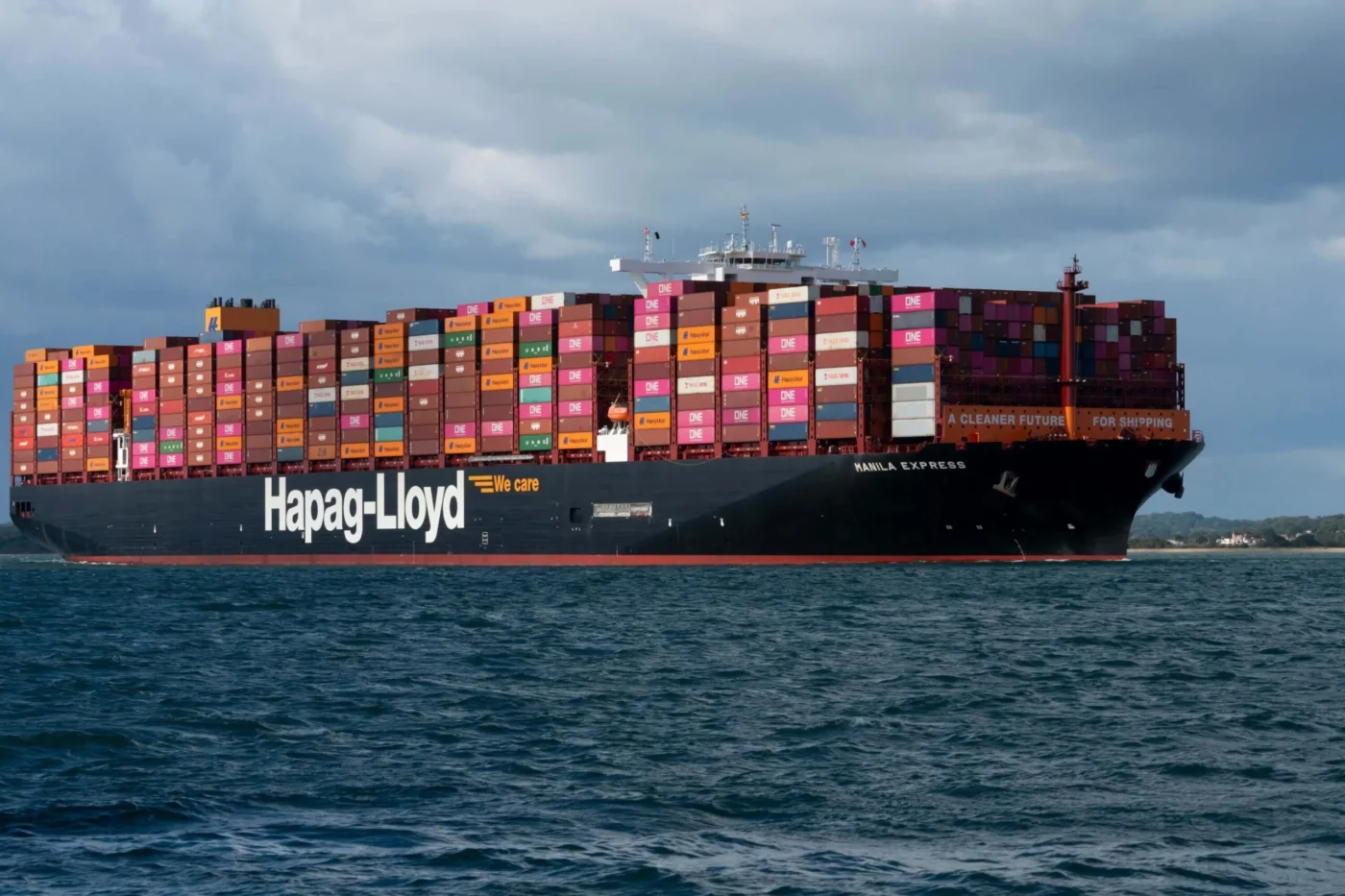
Hapag-Lloyd kicked off 2026 with challenging results, reporting a net loss of $256 million for the first quarter compared to a $469 million profit during the corresponding period in 2025. Despite the disappointing financials, shares gained approximately 2.65% in morning trading.
The company generated $4.92 billion in revenue, marking a decline from $5.32 billion the previous year. However, this figure exceeded Wall Street expectations, which had projected revenues around $3.9 billion.
EBITDA reached 422 million euros during the quarter, a steep drop from 1.05 billion euros in Q1 2025. The result nonetheless topped analyst estimates of approximately 407 million euros.
Chief Executive Rolf Habben Jansen characterized the first quarter as “unsatisfactory,” citing weather-induced supply chain challenges combined with downward pressure on freight pricing.

Beyond meteorological issues, escalating tensions in the Middle East at February’s close forced Hapag-Lloyd to halt operations through the Strait of Hormuz and Gulf of Oman. Vessels were redirected along extended routes, inflating both transit duration and operational expenses.
Shipping volumes contracted 0.7% during the period. Average freight rates tumbled 9.5%, pressured by softening demand conditions.
Overall transportation expenses decreased 6%, partially attributable to the weakening U.S. dollar relative to the euro. However, excluding currency fluctuations, these costs would have climbed 4.6%, equivalent to roughly 147 million euros — predominantly due to Middle East rerouting requirements and prolonged voyage times.
Adverse weather conditions across Europe and North America compounded difficulties, triggering port congestion and broader supply chain inefficiencies.
Geopolitical Crisis Erodes Profitability
The Strait of Hormuz crisis intensified throughout March, disrupting commercial flows during the quarter’s closing weeks. This introduced additional cost burdens that the organization couldn’t fully mitigate.
Hapag-Lloyd indicated that anticipated increases in average freight rates should partially counterbalance escalating expenses moving forward. However, management emphasized “considerable uncertainty” regarding both freight rate trajectories and conflict developments for the remainder of 2026.
Annual Forecast Maintained Despite Challenges
Notwithstanding the difficult opening quarter, Hapag-Lloyd preserved its annual EBITDA guidance ranging from $1.1 billion to $3.1 billion, with EBIT projected between a loss of 1.3 billion euros and a profit of 400 million euros.
This represents an unusually broad range — intentionally structured to reflect current unpredictability. Management acknowledged that freight rate volatility combined with persistent Middle East instability renders precise forecasting extremely challenging.
As the world’s fifth-largest container shipping operator by capacity, Hapag-Lloyd’s performance mirrors broader industry headwinds affecting the maritime transport sector.
The organization maintains continuous monitoring of Middle Eastern developments, adjusting routing strategies dynamically based on evolving security conditions.
Get 3 Free Stock Ebooks
Discover top-performing stocks in AI, Crypto, and Technology with expert analysis.
- Top 10 AI Stocks - Leading AI companies
- Top 10 Crypto Stocks - Blockchain leaders
- Top 10 Tech Stocks - Tech giants



