


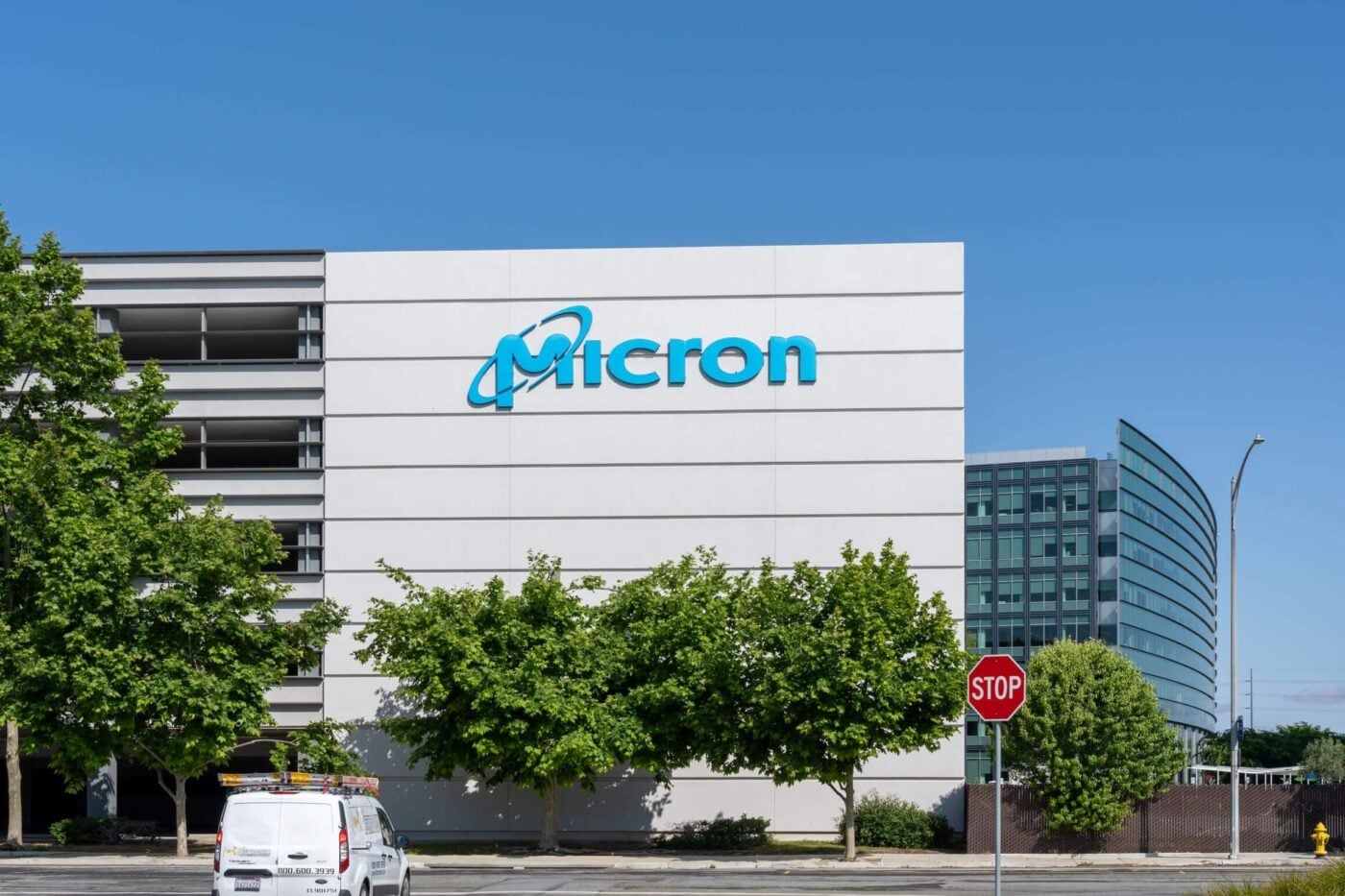
Key Takeaways
- Micron shares jumped approximately 5% Monday while the S&P 500 remained essentially unchanged
- The stock has advanced in 11 out of 15 recent trading sessions and has more than doubled since March’s end
- D.A. Davidson maintained its Buy recommendation with a $1,000 price objective on May 11
- Constrained memory supply dynamics combined with hyperscaler AI infrastructure buildouts are fueling the advance
- Industry watchers forecast global memory margins exceeding 75% by 2026, supported by HBM adoption and extended contract terms
Micron shares climbed roughly 5% during Monday’s trading session, building on a remarkable surge that has lifted the stock to more than double its value from late March levels.
The wider equity markets showed little movement, as the S&P 500 ended nearly unchanged while most sectors faced headwinds from elevated energy costs and geopolitical uncertainty. Micron, however, charted its own course upward.
MU has now posted gains in 11 of its past 15 trading days. Such persistent strength commands attention from market participants.
The Roundhill Memory ETF (DRAM) similarly rose alongside Micron during Monday’s action. Meanwhile, South Korean memory giants SK Hynix and Samsung Electronics both logged advances in step with the semiconductor industry.

The upward momentum stems from a dual catalyst: restricted supply availability in memory markets paired with escalating demand from cloud hyperscalers expanding their AI infrastructure. Market observers note both dynamics are simultaneously benefiting Micron’s positioning.
Analyst Firm Doubles Down on $1,000 Price Objective
D.A. Davidson confirmed its Buy stance on Micron on May 11, maintaining its $1,000 price objective. The firm characterized the opportunity as a “table-pounding buy.”
Following discussions with investors, the firm stated it has heightened confidence in its thesis. “We are blissfully unencumbered by the memory industry’s past,” analysts wrote in their note.
D.A. Davidson recognized that numerous market participants continue viewing Micron through a cyclical lens shaped by historical memory industry patterns. The firm takes a contrasting view.
Analysts highlighted three transformative elements reshaping the narrative: high-bandwidth memory (HBM) proliferation, the oligopolistic structure of DRAM manufacturing, and a transition toward extended customer agreements. These factors collectively support a more resilient and lucrative operating model.
The firm further suggested that investors are failing to appreciate “the new math of memory in the AI age” and the substantial upside potential the current cycle presents for Micron.
Profitability Outlook Strengthens Industry-Wide
Optimism around profitability metrics continues building among market analysts. Industry trackers project global memory margins will surpass 75% by 2026.
Such profitability levels would have appeared unrealistic during earlier industry cycles. The prevailing argument centers on AI-fueled demand representing a fundamental structural shift compared to previous consumer electronics or PC-centric cycles.
Micron secured the fifth position on a recent compilation of 12 AI-focused stocks garnering Wall Street attention.
The stock’s recent trajectory places it among an elite group. Few large-capitalization names have managed to more than double their value within approximately six weeks.
Through Monday’s close, Micron continued demonstrating independence from broader market trends — indicating that semiconductor-specific fundamentals are currently the primary driver behind its performance.
Get 3 Free Stock Ebooks
Discover top-performing stocks in AI, Crypto, and Technology with expert analysis.
- Top 10 AI Stocks - Leading AI companies
- Top 10 Crypto Stocks - Blockchain leaders
- Top 10 Tech Stocks - Tech giants



